


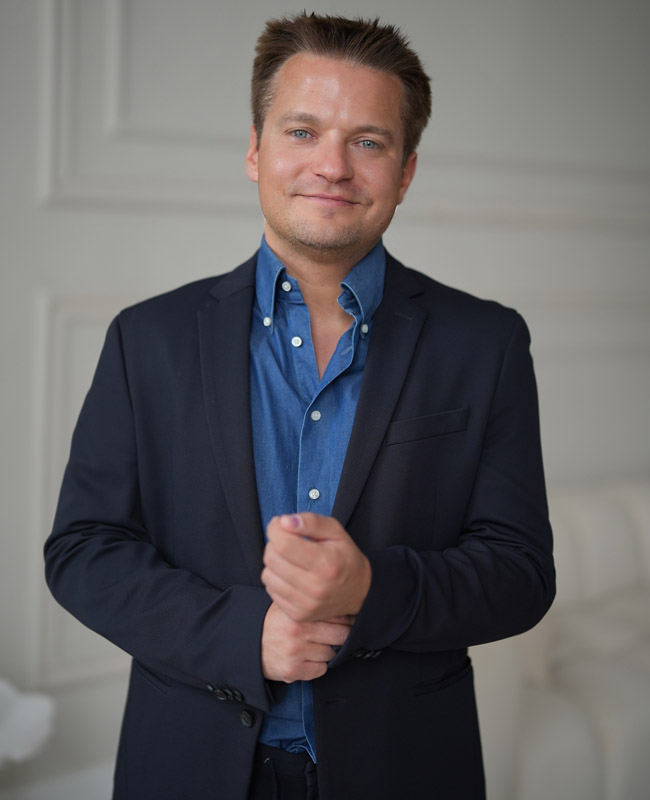
Piotr Turkowski, MD, PhD
- 13 years of experience and over 1,000 transplants performed
- Approximately 170 hair transplants performed annually

If you’ve ended up here, you’ve probably been taking photos of the back of your head with your phone for a while now. Or maybe you’ve started avoiding harsh light. Or perhaps you’re simply fed up with trying to figure it all out on your own because the internet is saying five different things at once. This site is here to give you one honest answer.
Hair wasn't my plan. It was my fascination.
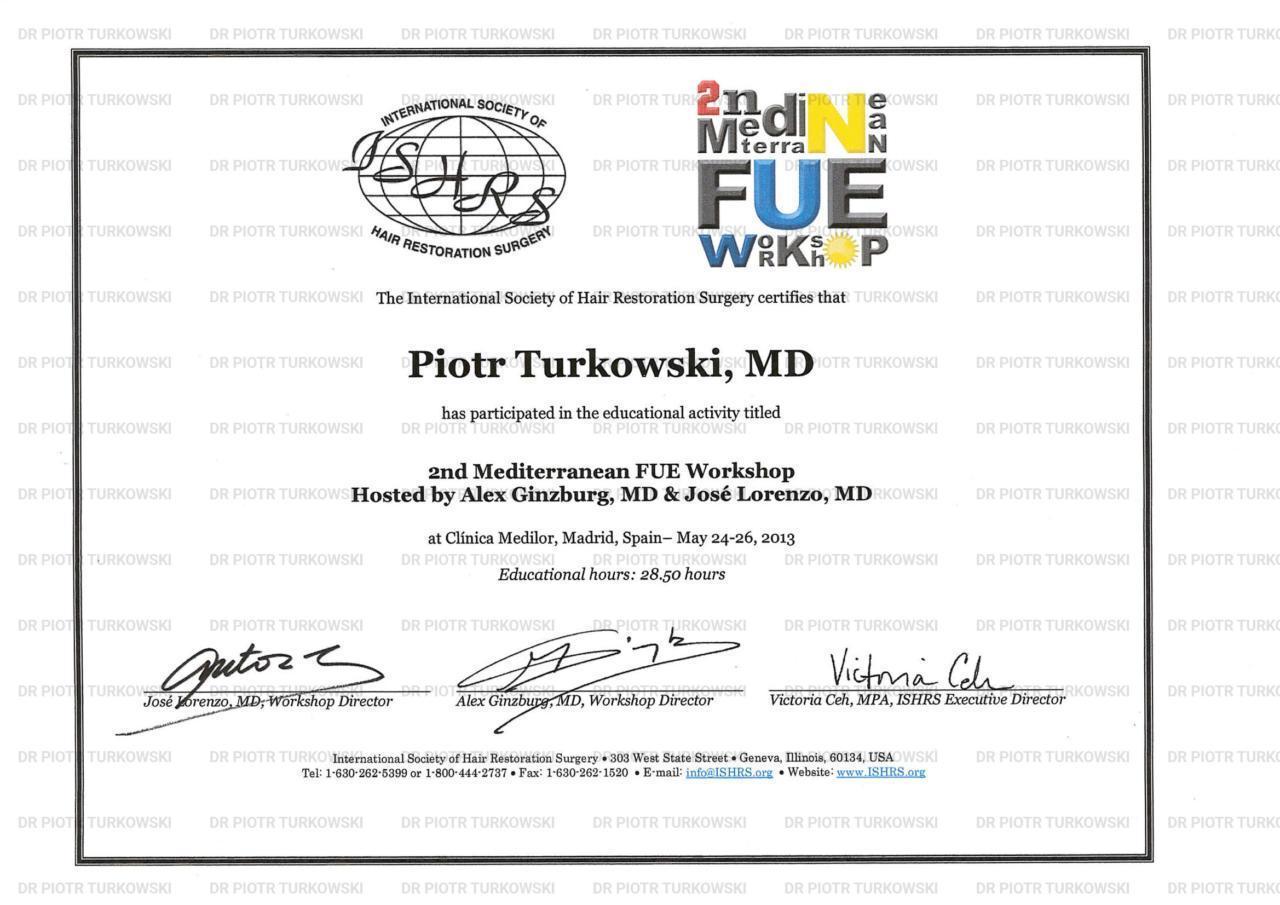
I received my medical degree in Poznań in 2012. A year later, I attended a European workshop on the FUE method; I had read that something new was emerging in Europe and wanted to see it before it became the standard. Those conversations and meetings with pioneers in the field determined the path I wanted to pursue.
I have always followed the path that seemed most interesting—and every time, it turned out to be the right decision. Thirteen years have passed since then, during which I have performed over a thousand hair transplants.
An individual approach and complete honesty with the patient are key to my practice. Before we do anything, we start by calculating exactly how much donor hair is available and discussing what your hair loss might look like in ten or twenty years. Sometimes I advise against the procedure or suggest a smaller one than expected—because a surgeon who doesn’t do the math isn’t planning for your hair’s future; they are simply planning a single procedure.
The path to mastery alongside global pioneers
You cannot learn hair surgery skills by reading about them. You have to stand next to someone who does it better—and watch their hands. I did this consistently, several times a year, for over a dozen years:
- Dr. Russell Knudsen (Sydney): Two months of joint surgeries in Australia and New Zealand. Russell is a past president of the ISHRS and a leading figure in global hair restoration surgery.
- Dr. Jean Devroye (Brussels): Creator of the WAW FUE technique. I learned it from the man who invented it, not from an instructional video.
- Dr. José Lorenzo (Madrid): I spent many days with him, observing the work of a pioneer of modern FUE in Europe.
- Dr. Alex Ginzburg (Israel) and Dr. Koray Erdogan (Türkiye): The Mediterranean workshops where my journey in this field began.
- Dr. Matt Leavitt (Orlando, USA): Participation in the world's longest-running workshop series featuring live surgeries.
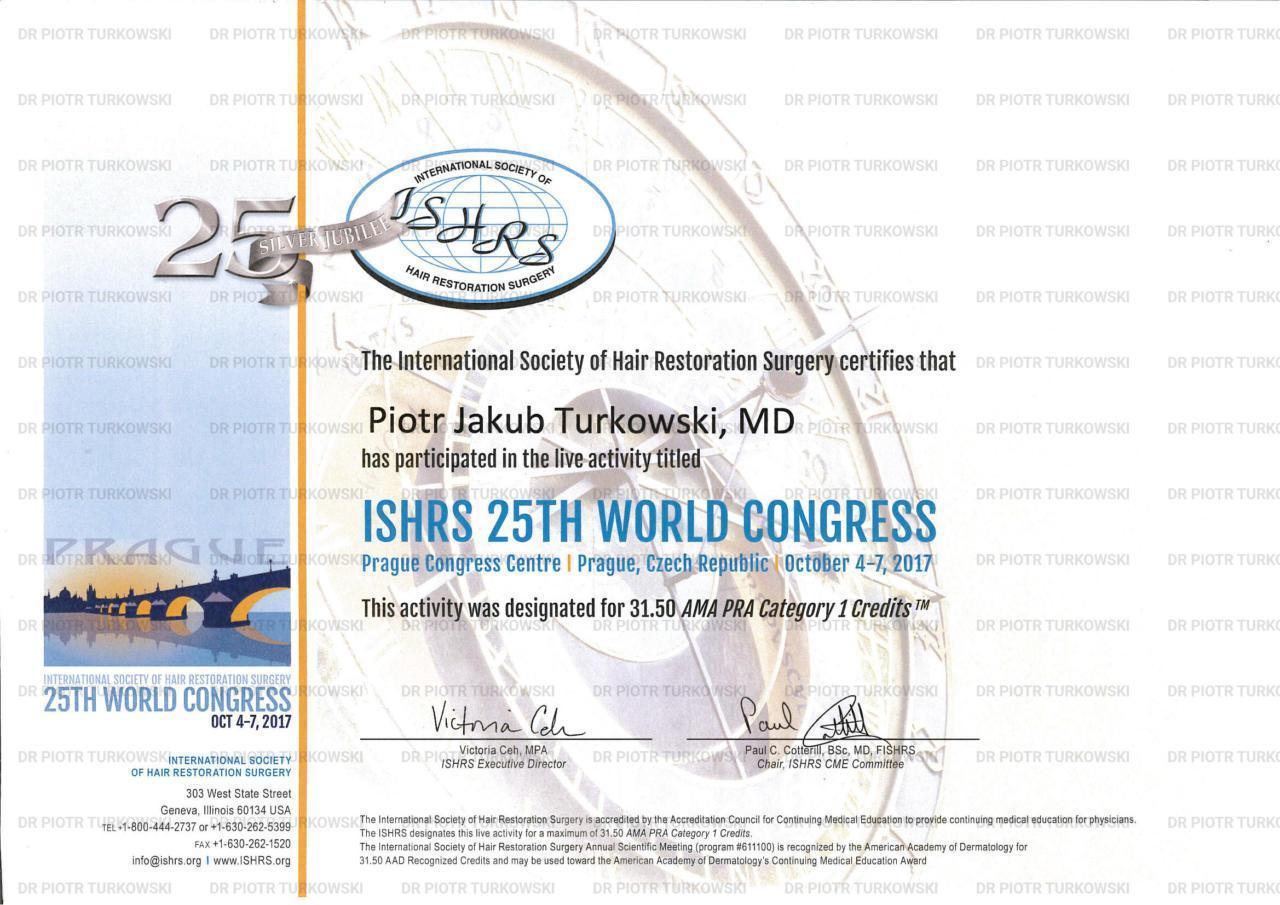
- ISHRS World Congresses: Continuous participation, year after year—including in Prague and Berlin.
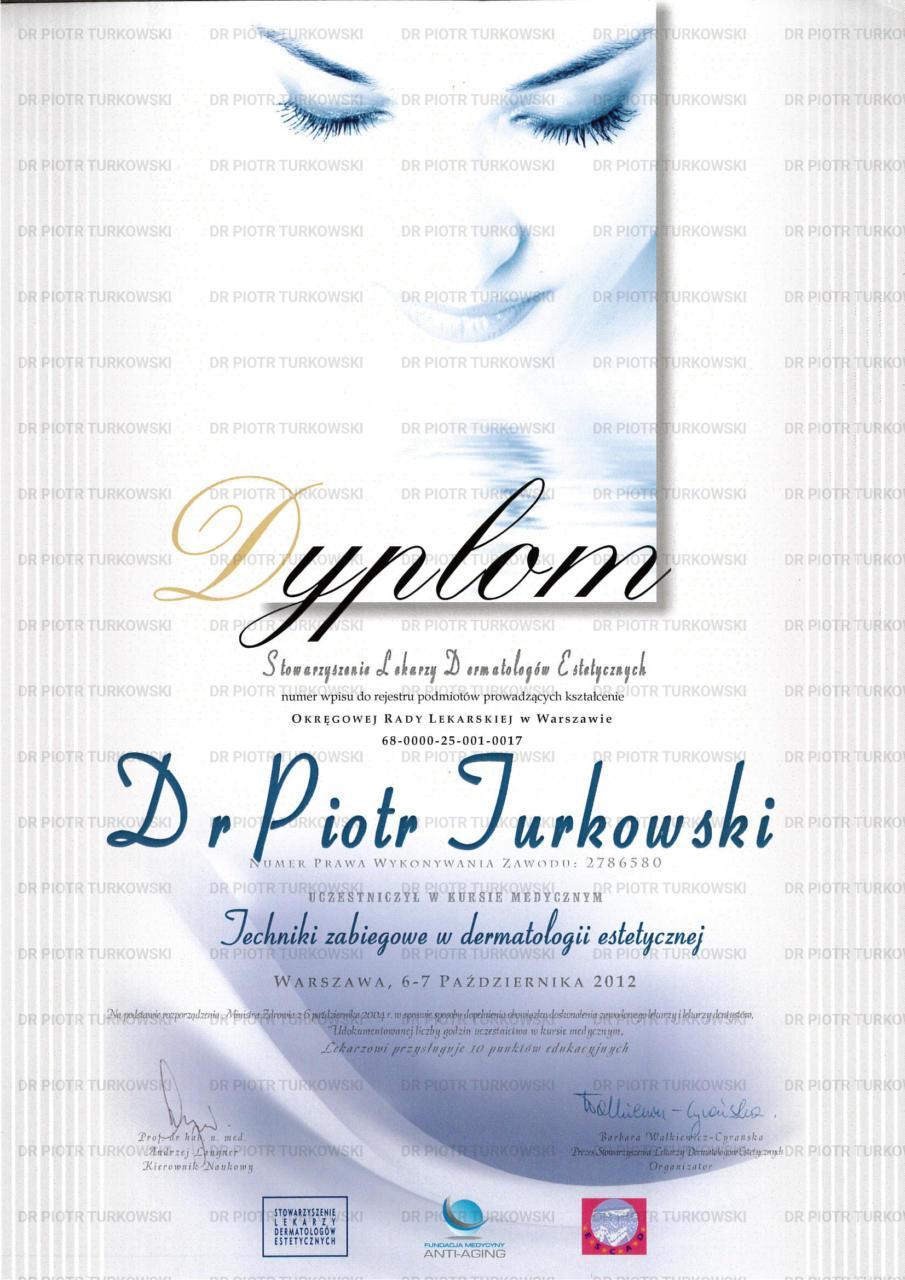
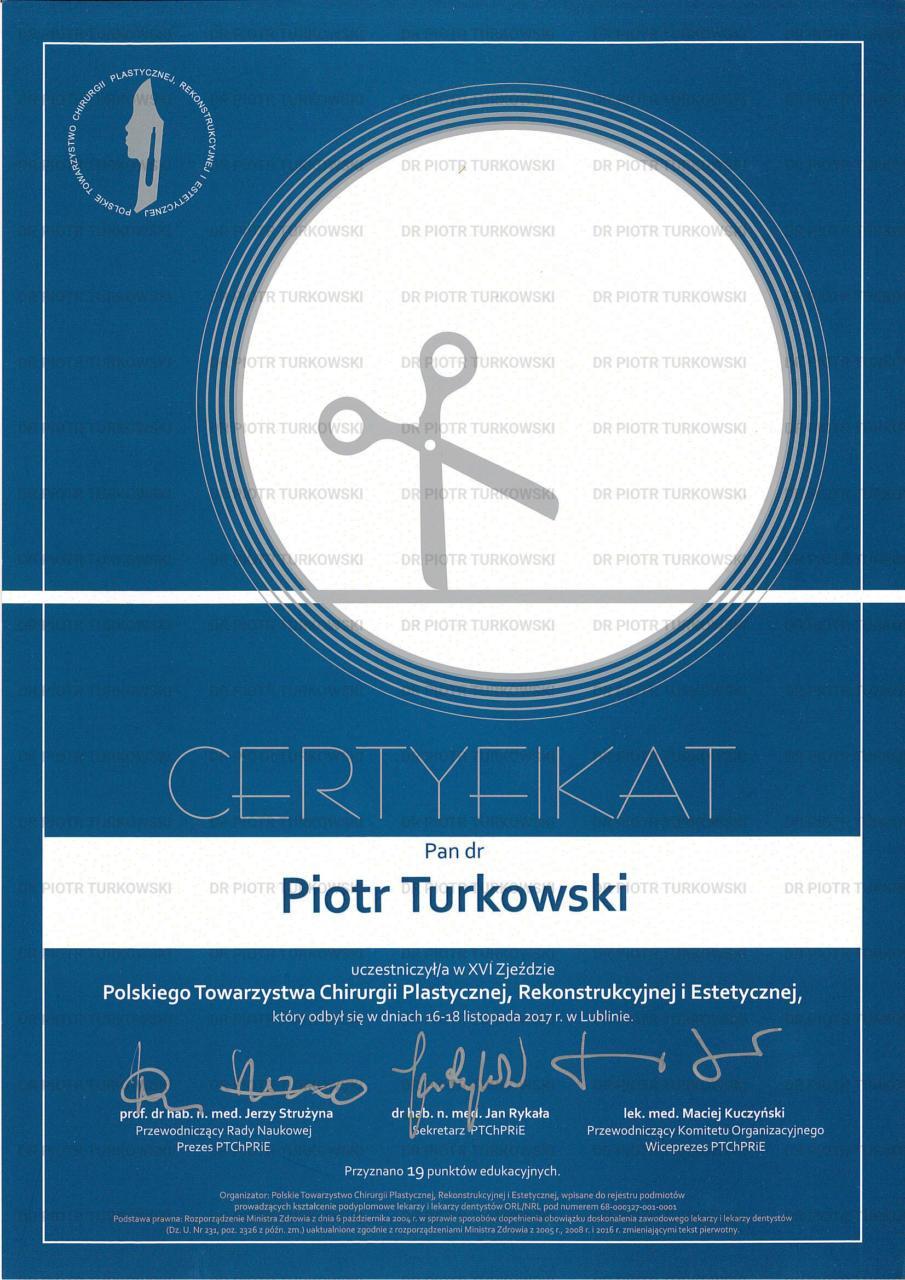
Certificates and Diplomas






Berlin 2025 — session moderation at the ISHRS World Congress
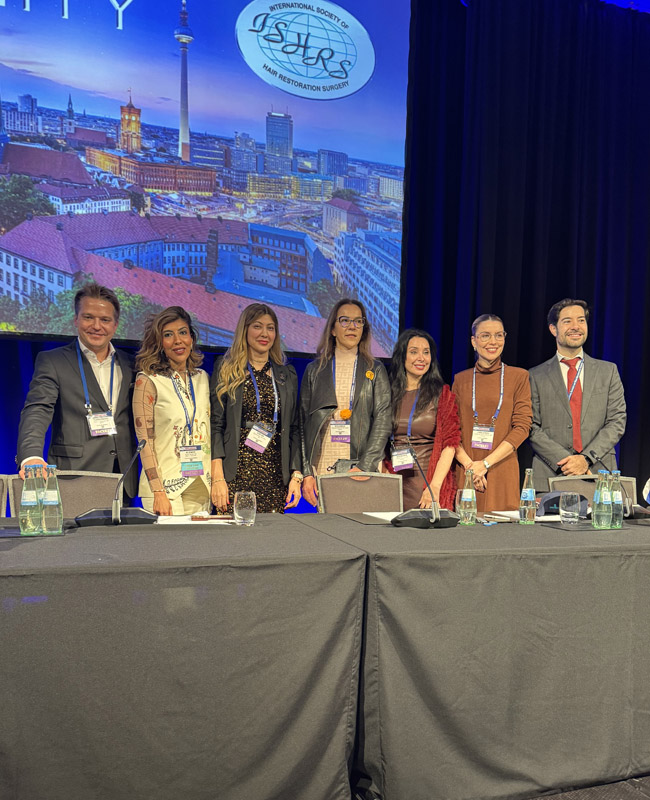
In October 2025, the 33rd ISHRS World Congress took place in Berlin—the premier annual gathering of hair restoration surgeons worldwide, bringing together hundreds of physicians from dozens of countries. I was invited to moderate two key scientific sessions:
Session on scarring alopecia: A panel dedicated to the most challenging category in the field, where the hair follicle is permanently destroyed by an inflammatory process (such as lichen planopilaris or discoid lupus erythematosus). I co-moderated this session with Dr. Nina Otberg from Germany, and the panel included experts from Kuwait, Brazil, Egypt, and Spain, including the congress’s guest of honor, Dr. David Saceda.
Session featuring the congress’s honorary lectures: I moderated a particularly prestigious session that hosted the organization’s two most important named lectures—the Norwood Lectureship and the Stough Lectureship. These lectures were delivered by Prof. Ulrike Blume-Peytavi from Charité Berlin and Prof. Leslie Castelo-Soccio from the United States.
At the same congress, I also presented two original papers based entirely on clinical data from my own patients: one regarding the relationship between the stage of hair loss and transplant outcomes, and another on hair transplantation into scarring resulting from autoimmune disease.
A textbook unlike any other in Poland
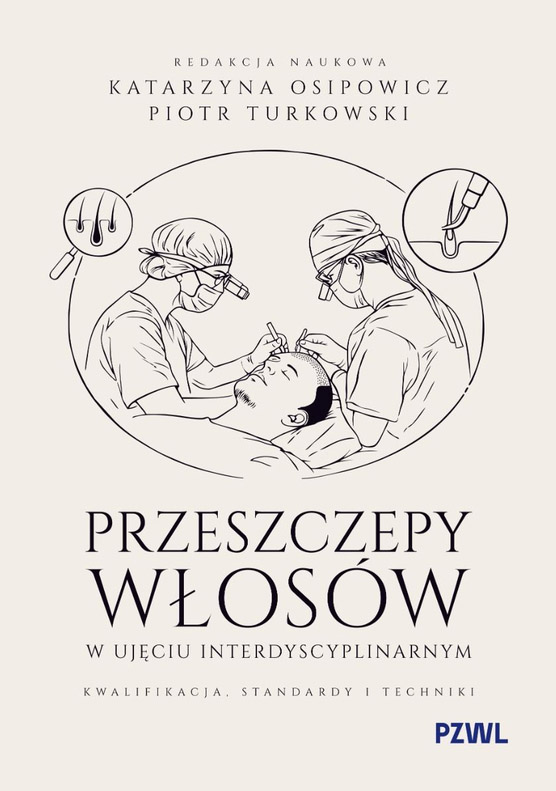
On September 7, 2026, the book “Hair Transplants: An Interdisciplinary Approach – Patient Selection, Standards, and Techniques” is being released. Scientific editors: Piotr Turkowski, MD, PhD, and Katarzyna Osipowicz, MD, PhD (Habil.). Hardcover, 382 pages. Publisher: PZWL Medical Publishing.
The publisher’s name might not mean much to the average patient, but in the medical world, PZWL is Poland’s oldest and most important medical publishing house—operating since 1945, and the source of the textbooks Polish doctors use throughout their medical studies and specialization training. When a doctor says, “I got this from PZWL,” it implies the established standard of care.
Until now, there simply hasn’t been a book like this on hair transplants in Poland. Serving as “scientific editors” meant the publisher entrusted us with designing the entire book: from determining its content to selecting the authors for individual sections. When PZWL decided to publish the first Polish textbook on this subject, they turned to us.
The standards applied during your surgery are the exact same principles we have outlined for the rest of the medical community.
We test hair loss medications before they reach pharmacies.
Together with Dr. Katarzyna Osipowicz, we run our own clinical research center at our clinic in Warsaw.
The OT.CO Clinic is listed as an official research center in the ClinicalTrials.gov registry, maintained by the U.S. National Institutes of Health. Thirteen of our studies are listed there—all in Phase II or III—with a total of twenty-five studies in our portfolio. We work with Pfizer, AbbVie, Amgen, Sun Pharma, and Concert Pharmaceuticals.
We are responsible for documentation, procedures, and results, and we undergo inspections by sponsor auditors and regulatory inspectors. Six of these studies focus on alopecia areata. In recent years, the first drugs capable of truly regrowing hair for this condition have emerged, and our center has participated in the trials for every one of them.
We are conducting two of these studies with children aged six and older. Pediatric trials are entrusted to only a handful of centers worldwide because they require the highest level of confidence in the quality of documentation. We are also among the top-recruiting centers globally for this indication. For patients, this means that—upon qualifying—some individuals can participate in an ongoing trial and receive, free of charge, a therapy that is not yet commercially available in Poland.

I don’t work alone—dermatologist and surgeon in one place.
Hair loss sits at the intersection of two specialties. A dermatologist understands the disease, while a surgeon understands the procedure—yet patients often shuttle between the two, hearing conflicting opinions.
Dr. Katarzyna Osipowicz is a dermatologist, venereologist, and trichologist. She has authored over fifty scientific publications, earned her PhD at the Medical University of Warsaw, and achieved her habilitation based on work that includes the innovative use of hair transplantation into lichen planus scars. She trained under leading global authorities in dermatology: Prof. Rodney Sinclair in Melbourne, Prof. Dedee Murrell in Sydney, and Prof. Cristina Has in Freiburg.
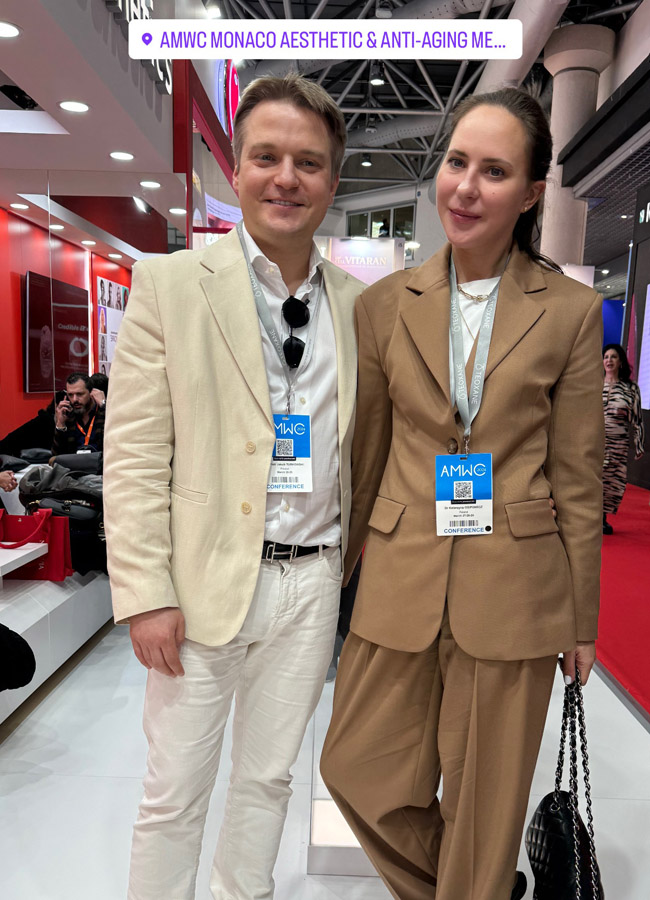
In our private lives, we are a married couple. Professionally, we run a clinic and a clinical research center together, and we serve as scientific editors for a PZWL textbook.
Our clinic is supported by a broad team: dermatologists, trichologists, over a dozen nurses, an anesthesiology team, clinical research coordinators, and an epidemiologist. This means you receive diagnostics, treatment, and surgery all in one place, from professionals who communicate with each other daily. Kasia performs hair transplants herself but refers the most advanced and complex cases to me.
A surgeon working without a dermatologist sees an empty space to fill. A surgeon working with a dermatologist sees the underlying cause.
The road that wasn't the shortest
I completed my specialization training in two completely different worlds, and I consider this one of the most significant professional experiences of my career.
I spent three years at the Specialist Medical Center in Polanica-Zdrój—home to Poland’s oldest plastic surgery department and, for decades, a training ground that shaped the profession. There, you learn things impossible to master in a private clinic: reconstruction following trauma and cancer, the management of complex wounds, and cases requiring a choice between the “least bad” options. I spent the subsequent three years at the Department of Plastic Surgery at the Centre of Postgraduate Medical Education in Warsaw, under the guidance of Professor Bartłomiej Noszczyk.
Over the course of my six-year specialization, I performed over a thousand surgeries—more than any other resident at my center. Surgical skill is honed by the number of operations performed, not merely by the years spent working. That was when I learned lessons found in no textbook: how tissue behaves, what to do when things don’t go according to plan, where the limits lie, and the importance of not rushing in critical moments.
Along the way, I also spent six weeks at Chang Gung Memorial Hospital in Taiwan—specifically in the Department of Reconstructive Surgery and Microsurgery, one of the best in the world. There, you learn a level of precision that is invisible in the final aesthetic result; its absence, however, is immediately apparent. A surgeon trained in microsurgery treats tissue differently—more gently and conservatively, always mindful of blood supply. In hair transplantation, where one works with structures thinner than a millimeter, this is no mere detail.
A doctor who can say “no”
What you won't find here
- I will not perform a transplant in the presence of an active, untreated scalp condition—treatment comes first.
- I won’t design a hairline as low as a twenty-year-old might want—I’ll design it so it looks natural when that twenty-year-old turns fifty.
- I won't promise 5,000 grafts to someone who has a supply of 2,500.
Seven questions worth asking every surgeon—including me
There are a dozen or so truly excellent hair transplant surgeons in Poland, and I have no intention of criticizing any of them. However, there are real differences between us, and patients often don’t know what to ask to spot them. Here are seven questions. Ask them at every clinic you visit. I’m answering them right here, for the sake of transparency:
Before You Buy a Ticket to Istanbul
There are excellent surgeons working in Turkey—I met one of them, Dr. Koray Erdogan, twelve years ago and hold him in high regard. The problem lies elsewhere.
When you book a package that includes a hotel and airport transfer, you often don’t end up with a top-tier surgeon. Instead, you find yourself in a clinic where the doctor marks the hairline and leaves, while technicians with no medical training perform the rest of the procedure. It’s not about the fact that a team performs the procedure—teams work everywhere. The issue is that the doctor isn’t actually in the room.
The second point is even more important. A hair transplant doesn’t end on the day of the procedure; it concludes twelve months later. If your surgeon is two thousand kilometers away at that stage, you are left to deal with it on your own.
And the third, most painful point: you only have one donor area. If it is thinned out too aggressively, there is no way to fix it.
You don’t have to leave Poland to get world-class results. I spent twelve years traveling abroad for that very reason—so that you wouldn’t have to.
What isn't talked about openly
Going bald almost never hurts. It simply takes a little bit away at a time.
At first, you stop liking photos taken from above. Then, you start sitting with your back to the window because the light is kinder there. You buy a hat—one you wear even indoors. And at some point, you realize you’re thinking about it every day—not in a dramatic way, just constantly, in the background.
No one will tell you it matters. You even tell yourself it’s silly. But that doesn’t change the fact that it affects *you*—and that no one else has to live with it.
Over the past twelve years, I’ve talked to so many people about this. I have yet to meet anyone who came in just for the hair. Everyone comes for the same reason: to stop thinking about it.
The best result of a transplant isn’t having more hair. It’s the fact that, a year later, you can’t even remember the last time you thought about it.
What does the first step look like?
We begin with a consultation and trichoscopy—a high-magnification examination of the scalp. We will assess the condition of the hair follicles, the density of the donor area, and the underlying cause of the issue.
You dedicate just one hour to save yourself years of wondering. You receive a clear answer: whether the procedure makes sense, which technique we would use, how the hairline would be planned, and what results you can realistically expect. No empty promises, and no pressure to undergo procedures you don’t need.
You don't have to take my word for it.
Most patients do not speak publicly about the procedure, and that is completely understandable—I respect their privacy. But a few have chosen otherwise and openly shared their stories:
What is a hair transplant like from the patient’s perspective, and what are the actual costs and results of the procedure? Watch a candid account by influencer GilathissNew following a transplant performed by Dr. Piotr Turkowski.
What did the hair transplant for the popular creator Yachuprodukcja—performed at PT.Clinic under the supervision of Dr. Piotr Turkowski—look like? Watch the account of the procedure and evaluate the transplant results.
What does a hair transplant look like from the patient’s perspective—step by step, from the procedure itself to the results after a year? Watch this candid video in which the creator of the “Sprawdzam Jak” channel shares his experience with a transplant performed in Poland.
Schedule an individual consultation
During the appointment, I assess the cause of the problem and the realistic treatment options, and propose solutions tailored to the patient’s individual situation.
Our team usually responds within 24 hours.