Modern Regenerative Medicine

Platelet-rich plasma for hair

dr n. med. Piotr Turkowski (PWZ: 2786580) wrzesień 2026
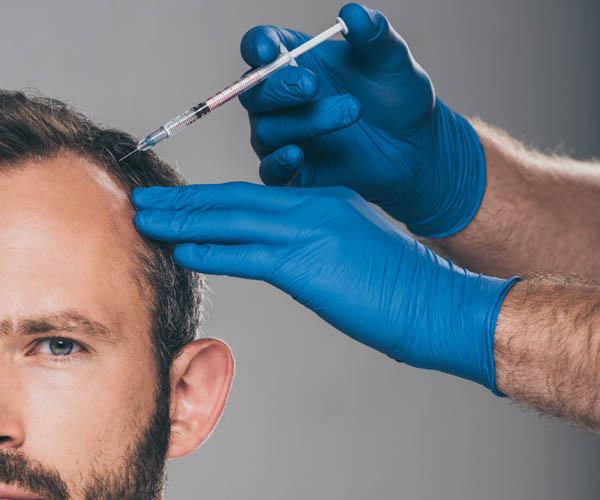
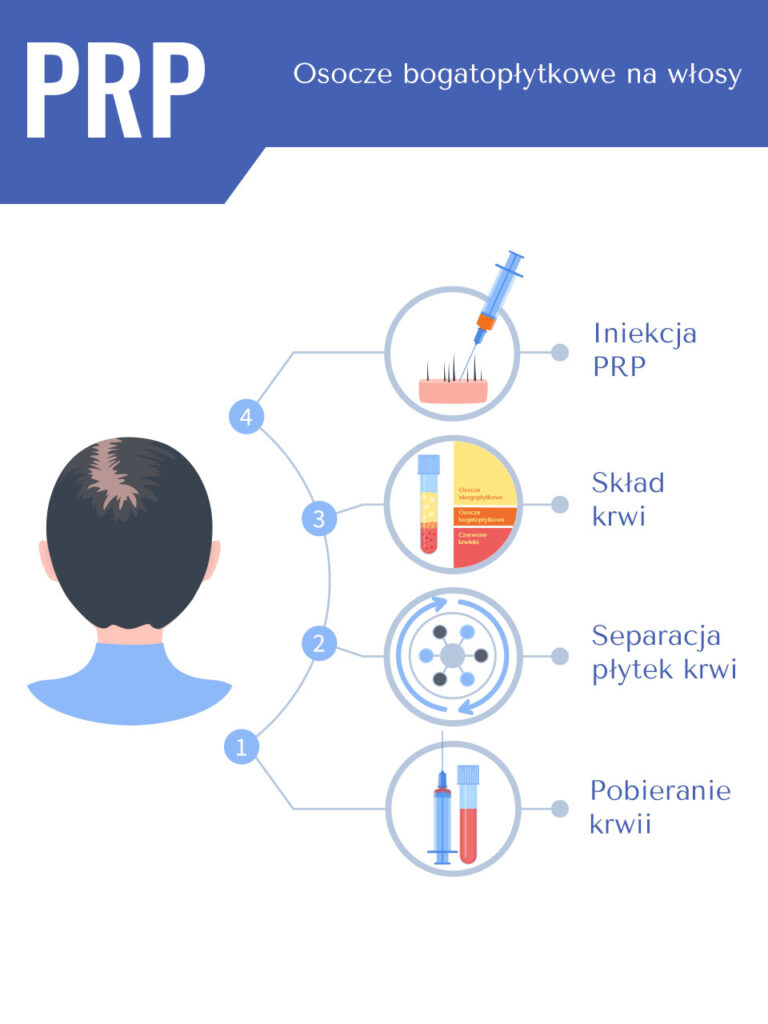
Platelet-rich plasma (PRP) can be used as part of the treatment for certain types of hair loss. The procedure is preceded by a medical consultation and assessment of suitability. During the treatment, a small amount of the patient’s blood is drawn and processed to obtain platelet-rich plasma, which contains platelets and other components. The preparation is then administered to specific areas of the scalp in accordance with an individual treatment plan.
  • Autologous preparation derived from the patient's blood
  • The scope of the procedure is determined individually following a consultation and medical assessment.
EXPERIENCE
0+
years of experience in regenerative medicine and PRP therapy
SCALE OF SUCCESS
0+
procedures performed using platelet-rich plasma
PRECISION
0%
autologous growth factors of natural origin
CONFIDENCE
0%+
the effectiveness of stimulating growth and activating dormant hair follicles

*Stimulation and efficacy rate (90%+) based on PT Clinic’s internal clinical studies and international medical literature in the fields of regenerative medicine and dermatology. The final treatment outcome depends on the patient’s individual biological characteristics and adherence to post-treatment recommendations.

What does platelet-rich plasma (PRP) treatment for hair involve?

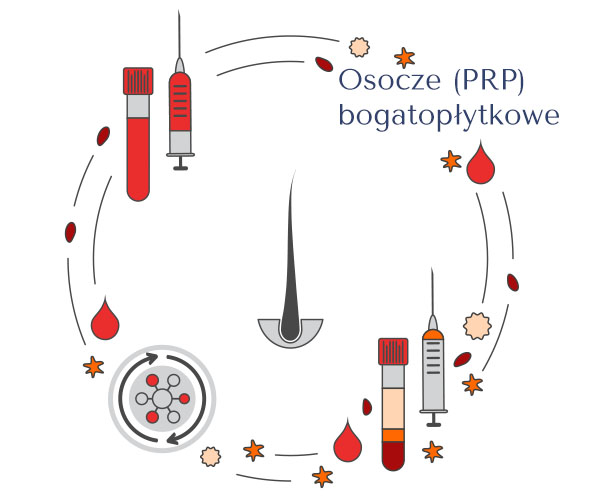
Platelet-rich plasma (PRP) therapy is a medical procedure used for patients with specific types of hair loss, following a preliminary medical assessment. The procedure involves drawing the patient’s blood, centrifuging it to isolate a concentrated platelet-rich fraction containing natural growth factors, and then administering this preparation to the scalp area requiring stimulation and regeneration. The scope of the procedure and the treatment plan are determined individually during a consultation with a physician.

At PT CLINIC, the platelet-rich plasma (PRP) hair treatment is performed using a preparation derived from the patient’s own blood. This is an autologous material produced in accordance with current medical standards.

The PRP preparation is obtained using specialized medical kits, in accordance with established clinical standards. Both the preparation method and the procedure itself are tailored to the patient’s specific indications and treatment plan. Platelet-rich plasma (PRP) therapy is used as an adjunctive treatment for certain scalp and hair conditions, following a patient consultation and eligibility assessment that takes into account the specific diagnosis and current medical knowledge.

Detailed information

What do you need to know?

Before deciding on the procedure, check the key details of platelet-rich plasma therapy in one place—such as the treatment duration, type of anesthesia used, recovery process, and the longevity of the results.

Indications
Excessive hair loss, androgenetic and telogen effluvium-type hair loss, weakened hair roots, miniaturization of hair follicles, and the need for natural biological stimulation.
Duration
45–60 minutes (depending on the plasma collection and preparation process).
Anesthesia
Local (optionally in the form of a cream for the patient's complete comfort).
Convalescence
Lack
Final results
Treatment outcomes vary by individual and depend primarily on the cause of hair loss, as well as the severity of the condition and the treatment plan implemented. Results are assessed during follow-up visits.
Continuation of treatment
Depending on medical indications, the doctor may recommend further procedures or follow-up visits. The frequency of therapy is determined on an individual basis.
Recommended number of repetitions
3–4 treatments at set intervals (to maintain the effect: follow-up and booster visits once every few months).

“Platelet-rich plasma (PRP) therapy is a medical procedure that should always be preceded by a thorough medical assessment to determine suitability. The decision to use PRP on the scalp is based primarily on the diagnosis, as well as the patient’s health status and an individual evaluation of medical indications.”

– DR N. MED. PIOTR TURKOWSKI

Who is platelet-rich plasma (PRP) therapy for hair suitable for?

Platelet-rich plasma (PRP) therapy is a medical procedure used to treat specific types of hair loss. Most patients experiencing hair thinning are eligible for the treatment; therefore, a medical consultation and assessment are essential steps. This process involves evaluating the extent of hair thinning, the underlying cause of hair loss, the progression of the condition, and the current state of the scalp.

Who is eligible for platelet-rich plasma therapy?

Individuals with certain types of hair loss may be eligible for the PRP procedure. However, a medical consultation and assessment are required, during which the doctor evaluates factors such as the nature of the hair loss, the condition of the scalp, and other elements relevant to planning the therapy.

A good candidate for platelet-rich plasma therapy is a person in whom:
  • early signs of hair miniaturization and excessive hair loss are present,
  • the scalp and hair follicles require strong biological stimulation,
  • no acute, active inflammation is observed at the site of the planned procedure,
  • expectations regarding the results of the procedure are realistic and consistent with medical capabilities,
  • The scalp is prepared for the autologous procedure.

When is platelet-rich plasma therapy not recommended?

There are situations where a PRP procedure is not the optimal solution or should be postponed.
Platelet-rich plasma therapy is not recommended when:
  • there are active, acute infections or inflammatory conditions of the scalp at the planned site of product administration,
  • severe blood clotting disorders are present, or the patient is taking anticoagulant medications that cannot be safely discontinued,
  • uncontrolled systemic diseases are present (e.g., severe, uncontrolled diabetes),
  • The patient has active cancer,
  • there are immunological disorders or other medical contraindications to blood collection and the administration of autologous preparations.

What should be done if the patient does not qualify for platelet-rich plasma?

Not qualifying for platelet-rich plasma (PRP) therapy for the scalp does not mean there are no other treatment options available. Depending on the specific diagnosis, the doctor may propose alternative approaches tailored to the cause of hair loss, the condition of the scalp, and individual medical indications.

An individualized treatment plan may include—as alternatives to platelet-rich plasma (PRP) therapy for the scalp—procedures such as carboxytherapy, exosome therapy, pharmacological treatment, or other methods used to support the management of specific types of hair loss. Follow-up visits are also a crucial part of the process, allowing the physician to assess the course of treatment and modify the approach if necessary. Depending on the medical indications, other therapeutic methods may also be considered.
Schedule a medical consultation during which the doctor will thoroughly assess the condition of your scalp and the extent of hair thinning, and determine whether platelet-rich plasma (PRP) therapy is the right treatment for you.
Schedule a consultation

Effects of platelet-rich plasma on hair

The effects of platelet-rich plasma on hair depend on the cause of hair loss, the concentration of platelets in the preparation, and the patient’s individual physiological response. The treatment does not yield identical results in all patients and does not serve as a standalone therapy for advanced hair disorders.

As part of adjunctive therapy, platelet-rich plasma may contribute to:
  • improvement of scalp microcirculation
  • supporting cellular metabolism within hair follicles through autogenous growth factors
  • improving the condition and nourishment of the scalp
  • reducing the severity of hair loss in selected cases
  • creating better conditions for hair growth during causal treatment

What does the platelet-rich plasma (PRP) hair treatment involve?

A visit to PT Clinic includes an assessment of the scalp and hair, as well as an evaluation of suitability for therapy. Based on the medical history and examination, the doctor determines whether platelet-rich plasma can be a justified component of an individualized treatment plan.

Medical consultation and eligibility assessment for therapy

The visit begins with a detailed medical history regarding hair loss, co-existing conditions, medications being taken, and previous treatments. The doctor assesses the condition of the scalp and hair follicles and then determines whether platelet-rich plasma can be incorporated as an adjunctive therapy in the specific case.

Blood draw, centrifugation, and PRP procedure

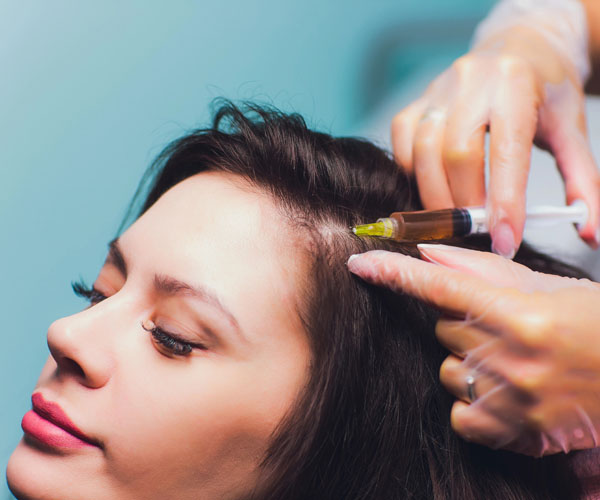
Once the patient is cleared for the procedure, a small amount of their blood is drawn and processed in a certified centrifuge to obtain a concentrated platelet-rich fraction. The resulting preparation, containing autologous growth factors, is injected intradermally into the scalp. The procedure is performed on an outpatient basis and typically takes several dozen minutes.

Overview of the procedure and follow-up

Upon completion of PRP therapy, the patient receives recommendations regarding scalp care and further treatment. The physician discusses potential post-procedure reactions and—if necessary—plans subsequent stages of therapy or the combination of platelet-rich plasma with other treatment methods.

How much does platelet-rich plasma (PRP) treatment for hair cost?


The cost of platelet-rich plasma (PRP) therapy is determined individually during a medical consultation. The final price depends on factors such as the scope of treatment, the number of planned sessions, and specific medical indications. An individualized treatment plan is developed following a medical assessment, taking into account the severity of the condition and the state of the scalp. Based on this evaluation, the doctor determines the scope of therapy and presents a personalized cost estimate. The price differs depending on whether the patient opts for a single treatment or a full series comprising multiple scheduled sessions.

At PT CLINIC, the procedure is performed using only certified kits designed for the preparation of PRP. The material used during the therapy is derived from the patient’s own blood—making it an autologous material—and both the preparation method and the procedure itself comply with current medical standards.

FAQ

Below, we have compiled answers to the most frequently asked questions regarding platelet-rich plasma (PRP) therapy for hair. We explain aspects related to the procedure’s safety, indications, the treatment process, and expected results to help you make an informed decision based on reliable medical knowledge.

Sensations experienced during the procedure vary from person to person. When the product is administered to the scalp, patients may sometimes experience slight discomfort associated with the micro-injections. If necessary, the doctor can apply a topical anesthetic cream. The intensity of the sensation and the level of tolerance depend on the individual’s pain threshold.

When administered to the scalp, platelet-rich plasma delivers platelets and the growth factors they contain. Their role in hair loss therapy is the subject of scientific research. PRP can be used as an adjunct treatment for certain forms of alopecia. In every case, the decision to use it is made by a physician following patient assessment.

Initial results—specifically the halting of excessive hair loss and improved scalp condition—are typically noticeable a few weeks after the first treatments. The final outcome, involving increased hair density and improved strand quality, develops gradually throughout the course of the entire treatment series and depends on the patient’s individual biological characteristics.

A standard treatment plan at PT Clinic typically involves a series of 3 to 4 treatments performed at specific intervals (e.g., every 3–4 weeks). The number of sessions is determined individually by the doctor during the initial consultation, based on the degree of hair thinning and the body’s response. Maintenance treatments are recommended to sustain the results.

PRP therapy utilizes a preparation derived from the patient’s own blood; it is, therefore, an autologous material, and the procedure is preceded by a medical assessment. The treatment is performed on an outpatient basis by qualified medical personnel. However, like any medical treatment, it involves a medical intervention, which may entail the risk of adverse effects or transient local reactions.

Not every patient is eligible for the procedure to be performed immediately. Contraindications for PRP therapy include, among others, active scalp infections or inflammation, blood clotting disorders, the use of anticoagulants, cancer, and severe systemic diseases. Patient eligibility is assessed by a physician in each case.

Platelet-rich plasma therapy requires no recovery period. Immediately after the procedure, the patient can return to their daily professional and social activities. Minor redness or injection marks may appear at the treatment site, but these resolve on their own after a short time.

Why do patients choose platelet-rich plasma (PRP) treatment for hair at PT Clinic?

At PT CLINIC, platelet-rich plasma (PRP) therapy can be part of a personalized treatment plan for specific hair loss and scalp issues. However, every procedure must be preceded by a medical consultation and assessment to evaluate the medical indications and tailor the treatment approach to the diagnosis and the patient's health status, in accordance with current medical knowledge.

Clinical experience and medical qualifications

The platelet-rich plasma procedure is performed as part of a treatment plan managed by a physician specializing in the diagnosis and therapy of scalp conditions. Each case is assessed individually, taking into account the patient’s medical history, clinical presentation, and previous treatments.

Personalized selection of therapy

At PT Clinic, a single, standardized PRP therapy protocol is not used. The choice of preparation, the scope of the procedure, and the frequency of sessions are tailored to the current condition of the scalp, allowing for the informed integration of the treatment into the overall care plan.

Consistency with causal treatment

Platelet-rich plasma therapy can be part of an individualized treatment plan, depending on the diagnosis and medical indications. A physician may incorporate it into a treatment plan that also includes pharmacological treatment or other methods used to treat specific types of hair loss.

Safety and medical standards

The platelet-rich plasma (PRP) scalp treatment is performed on an outpatient basis, in accordance with established medical standards. Before the procedure, the physician assesses the indications and contraindications for this type of treatment and establishes an individualized treatment plan. During the visit, the patient also receives post-procedure care instructions.
CONSULTATION AND TREATMENT PLAN

Preliminary qualification

Fill out a short form to schedule a consultation. A medical team led by Dr. Piotr Turkowski will conduct a detailed assessment of your scalp, identify the cause of the problem, and determine whether platelet-rich plasma (PRP) therapy is the right treatment for you. Following the assessment, you will receive information regarding the proposed treatment plan as well as a personalized price quote.

Our team usually responds within 24 hours.

Substantive verification

The medical content on this site has been verified by a doctor – Piotr Turkowski, MD, PhD (PWZ: 2786580).

Legal notice: The content of this website is for educational and informational purposes only. It does not constitute professional medical advice, diagnosis, or treatment. It does not constitute a commercial offer within the meaning of Article 66 § 1 of the Civil Code.