


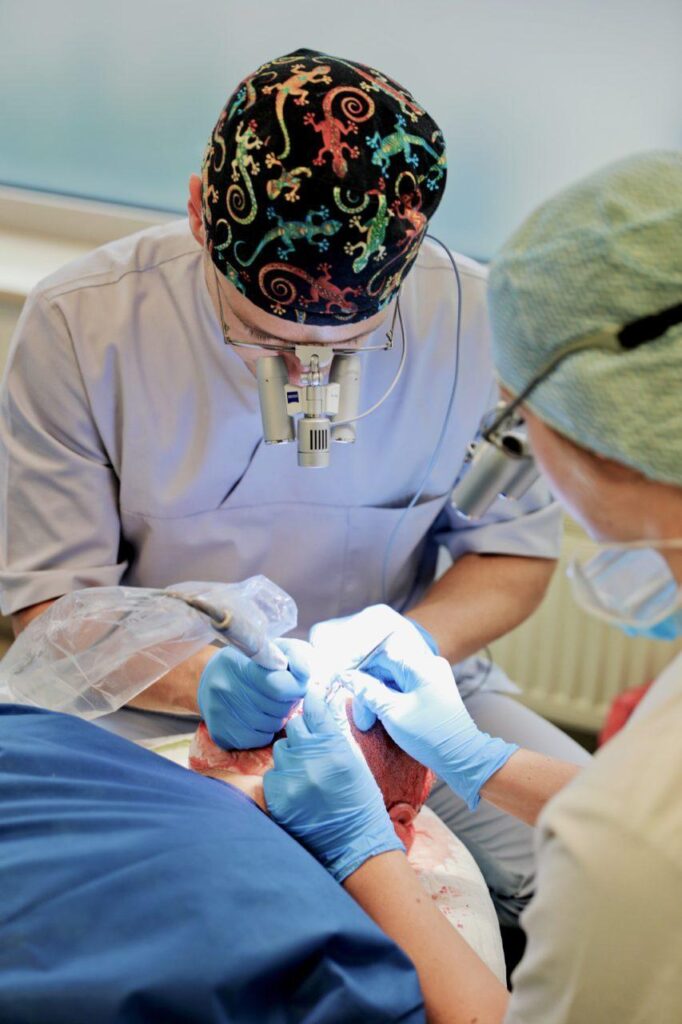
Hair transplantation is an advanced restorative surgical procedure that requires not only precise technical skill but, above all, a deep understanding of anatomy and a keen aesthetic sense. In recent years, medical travel abroad has gained immense popularity, leading many patients to search for terms like “hair transplant Poland” or “hair transplant Turkey” as they try to determine the best place to undergo the procedure. This material is intended for educational and informational purposes. From the perspective of clinical practice, it is worth examining the actual differences between procedures performed at specialized domestic clinics and those offered through mass-market medical tourism.
Hair Transplantation in Poland and Abroad: A Medical Perspective
The history of the surgical treatment of hair loss in Poland dates back to the 1980s, a period that has allowed for the development of high standards and proprietary therapeutic approaches. Medical statistics indicate that the miniaturization of hair follicles affects a significant portion of the male population, even at a young age; in Poland, hair transplantation remains the only permanently effective method for restoring hair density in areas such as the temples or the crown of the head. Individuals seeking the best place for a hair transplant often consult rankings and online forums, looking for a clinic that combines patient safety with natural-looking aesthetic results.
At PT CLINIC, this process is based on the state-of-the-art FUE (Follicular Unit Extraction) method. This technique involves the precise extraction of individual hair units using micro-instruments, which preserves the integrity of the donor area (most commonly the back of the head) and avoids visible, linear scarring.

Hair Transplants in Turkey: Attractive Pricing vs. Real Risks
Turkey has become a global hub for so-called “transplant tourism,” enticing patients with exceptionally low costs and all-inclusive packages. Common search terms used online—such as “cost of hair transplant in Turkey” or “how much does a hair transplant in Turkey cost”—point to the primary motivation for these trips: financial savings. However, from the perspective of plastic surgery and dermatology, this mass-market service model carries serious risks.
In many large-scale international clinics, procedures are not performed by certified surgeons, but rather by support staff. It has become standard practice there to harvest the maximum possible number of grafts—often as many as 4,000–5,000 units in a single session. Such over-extraction from the donor area leads to it being literally “stripped bare,” which makes any future corrective procedures impossible.

Comparing Costs and Standards: Poland vs. Türkiye
When considering a trip abroad, it is worth carefully analyzing structural differences and hidden costs. The table below outlines key aspects that should be taken into account before making a final decision.
| Comparison criterion | Hair transplant in Poland (e.g., PT CLINIC) | Mass-market hair transplant in Turkey |
|---|---|---|
| Person performing the procedure | A certified surgeon/physician operator with full medical responsibility | Often involves support staff and technicians working under remote supervision |
| Duration and quality | An individual session lasting 6–8 hours, focused on precision | A fast-paced, high-volume approach, aimed at maximizing the number of grafts |
| Postoperative care | Direct contact with the attending physician; in-person trichoscopic follow-up examinations | Difficulties in maintaining contact after returning home, should complications arise |
| Hidden costs | Transparent on-site pricing with no additional travel expenses | Flight tickets, hotels, insurance, transport, and medications are to be arranged independently |
The economics of a procedure: Why “cheap” means cutting corners on safety?
A properly performed FUE hair transplant typically takes between 6 and 8 hours and requires the full dedication of a medical team. The low costs of procedures offered by “clinic-factories” abroad stem from cutting expenses on sterilization and high-quality, single-use micropunches, as well as from the absence of proper anesthesiological support and postoperative care facilities.
Furthermore, when calculating the costs of a trip to Turkey, patients often overlook hidden expenses: round-trip airfare, hotel accommodation, local transportation, private medical insurance to cover potential complications, and any necessary anti-coagulant or anti-edema medications. When these factors are taken into account, the price difference shrinks significantly, while the risk of complications remains the patient’s responsibility.
Video Comparison: What to Consider Before Traveling for a Medical Procedure? [Expert Update 2026]
As part of the latest update to our clinical material, we have prepared a detailed video analysis that sheds new light on the realities of medical tourism abroad. The video below discusses actual cases of patients who sought help at our clinic following unsuccessful procedures performed abroad:
What will you learn from the attached video recording? This material dispels myths about “unlimited grafts” in an accessible way and explains why a patient’s anatomy—along with long-term hairline planning—is of critical importance. By watching this video, you will gain a clearer understanding of what a proper, safe medical assessment entails, as well as the consequences of entrusting your health to technical staff rather than a qualified surgeon.
Criteria for choosing a safe hair transplant clinic
Regardless of whether a patient decides to undergo a procedure domestically or abroad, the verification of a medical facility should be based on concrete medical criteria:
- Qualification by the operating physician: The procedure must be planned and supervised by a surgeon who holds Polish (or international) medical credentials.
- Transparency regarding the number of grafts: A reputable clinic calculates the required number of follicular units precisely, based on the patient’s existing hair density, rather than making promises of “unlimited hair.”
- Postoperative care: Access to direct contact with the attending physician throughout the healing process, as well as trichoscopic follow-up examinations.
When hair thinning is caused by hormonal or inflammatory factors, a detailed diagnosis—including essential laboratory tests for hair loss, such as a thyroid panel or ferritin level check—is necessary before deciding on surgery.

This post is extremely radiant. I really like this post. It is outstanding amongst other posts that I’ve read in quite a while. Much obliged for this better than average post. I truly value it!
Thank you very much for your kind words! I’m really glad you enjoyed the post and found it valuable. Your feedback truly means a lot.
Both Turkey and Poland are renowned for their hair transplant clinics, each offering distinct advantages. Turkey boasts a long-standing reputation for affordability and high-quality procedures, with a plethora of experienced surgeons and state-of-the-art facilities. On the other hand, Poland is gaining recognition for its competitive pricing and stringent medical standards, drawing patients with its skilled practitioners and modern techniques. Ultimately, the choice between the two countries depends on individual preferences, budget, and desired outcome. It’s crucial to thoroughly research clinics, read reviews, and consult with professionals to make an informed decision tailored to your needs.
You’ve summarized it perfectly. Both Turkey and Poland offer excellent standards of care — Turkey is well known for its large-scale experience, while Poland focuses on personalized treatment, strict safety protocols, and natural results. The best choice always depends on your expectations and comfort.
Hello.
I’m a 40 year old man with long hair and long beard. My son told me I have a bald spot and I’m thinking about a treatment.
How much are those treatments?
I’m a regular in Wroclaw but there is no problem travelling.
Good evening,
Please write e-mail on clinic reception desk and please send your pictures.
Regards,
Piotr Turkowski