


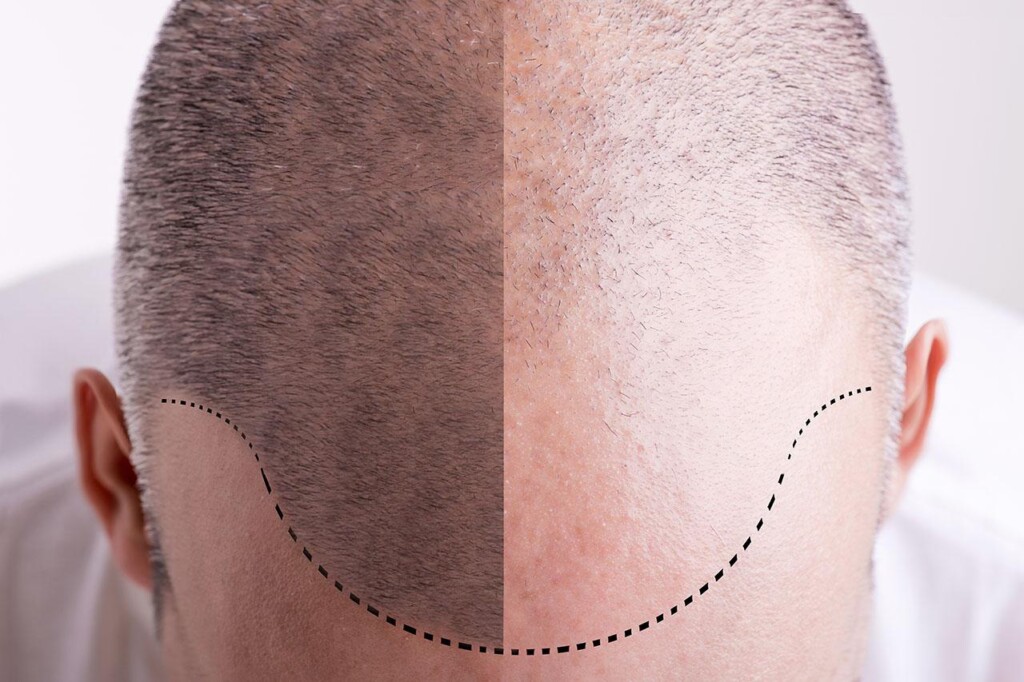
Hair transplantation using the ARTAS robotic system? Or a manual FUE hair follicle transplant performed by a top-tier surgeon? People affected by hair loss who are interested in hair transplantation are increasingly encountering media reports about the automation of the hair transplant process using the ARTAS device.
- Is the robotization of this process actually a positive development for the patient?
- Should the patient be pleased that the procedure on their head can be performed by an automated, logarithmic machine?
- Are hair transplants procedures that represent the pinnacle of body aesthetics? Or are they beginning to resemble an assembly line—densifying impersonal surfaces?
Modern hair restoration surgery offers patients various treatment options. The debate most often centers on the choice between the automated ARTAS system and the manual FUE (Follicular Unit Excision) method. Is the robotization of the transplant process a solution that genuinely enhances the quality of the procedure, or is it merely a marketing tool?
Limitations of robotization in hair transplantation
Robotic systems, including the ARTAS robot, have specific technical parameters that may limit their suitability for certain patients. The device’s license often restricts its use to specific groups—for example, individuals with straight, dark hair.
It is worth noting that the ARTAS robot does not perform the transplant on its own; it merely serves as a tool to assist in the extraction of hair follicles. Key stages, such as designing the hairline and precisely preparing the recipient sites for the grafts, require the surgeon’s manual work.
An expert on the FUE method – why is precision paramount?
As emphasized by Piotr Turkowski, MD, PhD – key factors for the highest quality of the transplant are, above all, such procedures as:
- Individual determination of the natural hairline.
- Professional graft selection (so-called sorting), tailored to a specific area of the scalp.
- Precise angling and placement of hair follicles, which guarantees a natural final result.
As things stand, all these steps are so exceptionally demanding and subtle that they should not be performed by automated systems, as this risks numerous shortcomings that could adversely affect both the aesthetic and medical outcomes of the procedure.
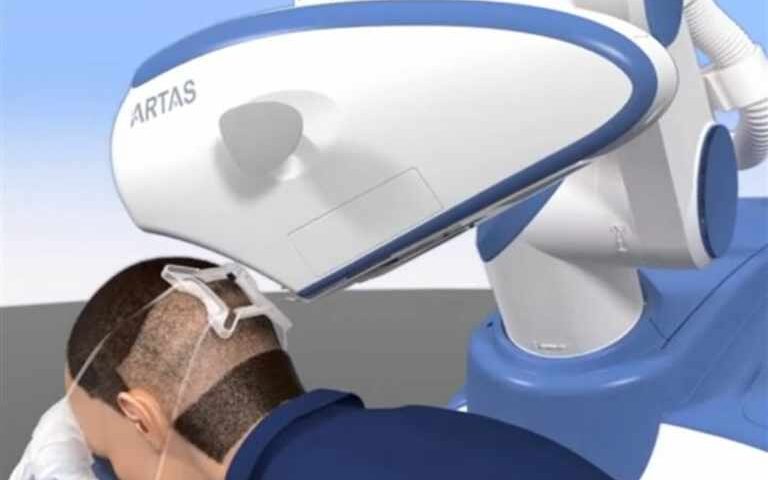
Marketing slogans claiming that a robot can perform better work than specialized surgeons are highly inappropriate and misleading to patients; they have no place in public discourse. After all, the robot does not operate autonomously. While this may seem like a very tempting option for technology enthusiasts, we advise against experimenting on your own body or focusing solely on the associated costs when choosing a surgical method and surgeon.
Professionalism and experience are paramount. Marketing for automated hair transplants often relies on a barrage of superficial slogans designed to entice the client while masking the method’s many shortcomings—as is the case with ARTAS robots. We, however, do not follow fads; instead, we prioritize substantive expertise, manual precision during the procedure, and a natural-looking final result. – emphasizes Piotr Turkowski, MD, PhD.
Automation and a surgeon’s talent
A surgeon’s skilled hand, backed by years of experience, ensures not only safety but also an aesthetic quality that no algorithm can replicate. Hair transplantation is a creative process; much like an artist, the surgeon must demonstrate a keen sense of density, growth direction, and natural distribution.
Robot or human?
The human element in the FUE method is truly irreplaceable. Transplants performed by a robot do not look as refined or natural as those achieved using the manual FUE technique. Hair transplantation is much like permanent makeup or other aesthetic medical procedures; talent and a sense of aesthetics are what count, and these qualities cannot be automated. We all expect exceptional care when it comes to something as unique as our own bodies and health. When undergoing an aesthetic procedure, such subtle nuances are of the utmost importance.
How to choose a hair transplant clinic?
When choosing a clinic, we should not be guided solely by the brand, name, or advertising. We should pay close attention to the person performing the procedure and their experience.
The mere fact that a clinic possesses a robot does not, therefore, guarantee a higher-quality transplant; it can only assist the process. The knowledge, experience, and professional skill level of the surgeon and their team remain the key elements of an effective hair transplant.
At the vast majority of the world’s most renowned and top-tier clinics, medical teams perform procedures manually, using only micro-punches. This is something that many prospective patients interested in hair transplants should consider.
ARTAS vs. FUE – a comparison
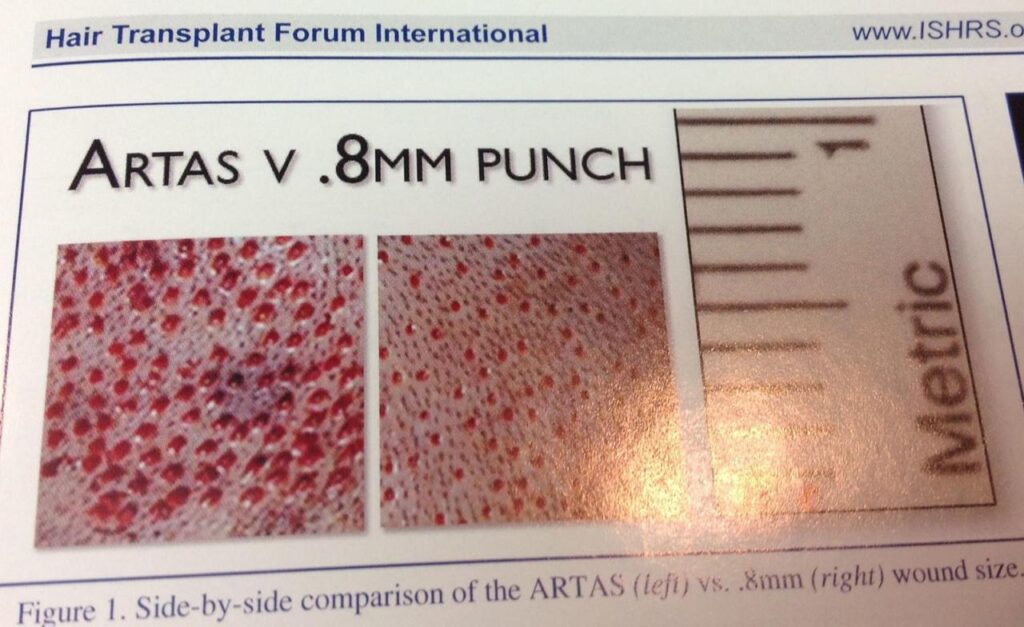
Below, we also present photos from the ISHRS (International Society of Hair Restoration Surgery) journal. The differences between the puncture sites from the ARTAS tool (photo on the left) and those from the device used in a manual procedure (photo on the right) are shown.
The contrast between the results of the methods employed is undoubtedly indisputable.
The Art of Hair Transplantation
The manual FUE hair transplant technique can be compared to the unique painting style of the great masters—a technique where one can admire the work’s texture or individual brushstrokes. They are not perfectly symmetrical and possess an element of artistic invention, yet they stand as outstanding works of art.
Art exists to unsettle. Knowledge strengthens. – Georges Bregue
The situation is similar with hair transplants, a procedure that requires a human sense of refinement and aesthetic judgment. An overly symmetrical, “robotic” placement of grafts on the scalp—resulting from automated transplantation—will not look natural. Robotic transplantation can thus be likened to a formulaic reproduction of a work of art: “almost the same,” yet—how very different.
Another opinion on the ARTAS robotic hair transplant – Can I trust a robot to do my hair transplant?

Sir
The article published on my website about the ARTAS robot is the quintessence of experience from recent years regarding repair procedures in patients after ARTAS hair transplantation. This is not only my opinion, but the opinion of many hair transplant specialists and pioneers in this field. At present, hair transplant robots are simply inaccurate. I do not deny that in the future they will be so improved and will do most of the work that the doctor should do. However, currently the robot is highly inaccurate and underdeveloped. Beginning with the size of the punch, the limited donor area for transplantation, ending with incisions making in an unnatural way. The robot has no intelligence in the choice of hair follicles, it will not adapt different sizes of the punch to the size of the transplants, it does not decide about the depth of the graft collection, or the angle at which the punch should collect the hair follicles. It will also not decide how extensive the donor area for hair follicle grafting can be. ARTAS cannot make decisions other than those that have been programmed for it. https://hairdoctorflorida.com/neograft-cons-artas-cons-what-they-arent-telling-you/
Hi Everyone,
The above article by Dr. P Turkowski is a real eye opener and good guide before making decision what method of hair transplant to choose. I wish I came across this piece earlier so my personal story would have had a different outcome.
Two years ago I have underwent a hair transplant with a use of Artas
FUE in one of the recognisable clinics in Poland. Unfortunately the whole process of the treatment turned out to be an extremely disappointing experience. My initial research in the subject of hair transplant procedures convinced me that Artas FUE would be the right choice however now I understand it was the worst decision I have ever made! And I truly regret it!
From start to end all went just wrong and my dream of having my good look and confidence back was just completely shuttered in 1 day! With final outcome of only 25 max 30% harvested transplants re-growth on my head I was devastated! Also the post-harvesting donor areas after the procedure did not look as good as I expected! With visible scarring and incisions marks after robot’s imprecise or I would rather say random punches. Which as stated by Dr. Turkowski in his article as well as my deeper research into this field proves to be less visible with manual FUE transplant method.
However so far no clinics mention these kind of risks and only focus on positives of robotic procedure what blindfolds potential patients.
Summarising on my Artas FUE disaster procedure I ended up with barely any hair growing back, lack of hair density in the donor areas and scarring! Not to mentioning the financial pressure and complete loss of self-confidence!
Now I am trying to pick up the pieces with real hair transplant specialists and hopefully with time things will look better. But from perspective of time, better research, specialists consultations and liaison with similar
patients cases I understand that manually driven FUE procedure gives you more guarantee for accuracy and precision of harvested hair follicles which leads to a successful hair re-growth and quality of final effect.
I have learned that it is important that your procedure is performed by a qualified doctors who specialise in hair transplantation field and not
“cow-boys” operating a robot!
I wish I could take back time as now I am more than sure I would have gone for human driven FUE procedure! Good luck and DON’T fall into the trap!
Dr. Turkowski, in your article, you make a number of bold and unsubstantiated claims, such as “Robotic hair transplant system does not provide natural looking results as compared to manual FUE hair transplant technique.”
Can you provide the data to back this up? I’m willing to bet that in a blinded study you could not tell the difference between a patient with an ARTAS procedure or handheld FUE. Until you have that data, it’s not appropriate to make claims like that, just as you say it’s not appropriate for other doctors or manufacturers to make unsubstantiated or misleading statements.
Some of the world’s most experienced and respected hair transplantation doctors in the world (who are also ISHRS members) use the ARTAS system. They would disagree with many of your assertions.
Thank you for the thoughtful critique. You’re right—the statement as written was too absolute. In my practice, manual FUE gives me finer control of punch alignment, depth, and angulation (especially in irregular exit angles or delicate hairlines). That said, experienced surgeons using robotic systems can also achieve excellent, natural results; outcomes depend far more on planning and surgeon skill than on the device itself.