


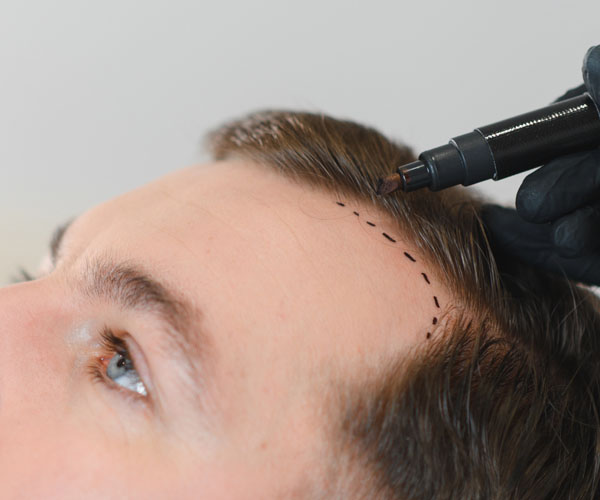
The outcome of a hair transplant procedure depends not only on the number of harvested grafts but, above all, on the design of the frontal hairline. A properly executed, natural-looking hairline must harmonize with the patient’s facial anatomy, age, and unique hair characteristics. For this reason, the process cannot rely on universal templates; an expert’s individual assessment is crucial.
Anthropometric principles in hairline design
When planning the procedure, the doctor takes into account facial proportions and natural anatomical structure. The frontal hairline forms a crucial transition between the forehead and the rest of the hair, and its final shape influences the aesthetic outcome over the long term. Key factors in designing the hairline include, above all:
- Width and height of the forehead and initial facial proportions.
- The patient’s biological age and the dynamics of aging processes.
- The shape of the eyebrows and the symmetry of facial features.
- Natural direction of hair growth in the frontal area.
- The shape and position of the temples, which define the male or female hairline contour.
- Hair density, thickness, and structure in the donor area.
There is no single, universal hairline height that suits everyone. The hairline contour is designed quite differently for young people compared to mature patients, as the hairline can undergo natural changes and recession with age.
How does a doctor design a natural hairline?
When designing the hairline, the transplant process begins with an assessment of the face and the current hair distribution. The doctor then analyzes the existing hairline, the extent of recession, and the areas requiring restoration. The path of the new hairline is determined to ensure it complements the individual’s unique features.
The transition zone is extremely important. Delicate, single grafts should be placed along its leading edge to create a soft, natural transition between the skin of the forehead and the denser area of transplanted hair.
Therefore, a hair transplant does not involve a perfectly straight line. A natural hairline is usually slightly irregular, with subtle variations in growth direction or hair density. It is precisely these subtle characteristics that ensure the result does not look artificial.
Why are a young age and an overly aggressive hairline a mistake?
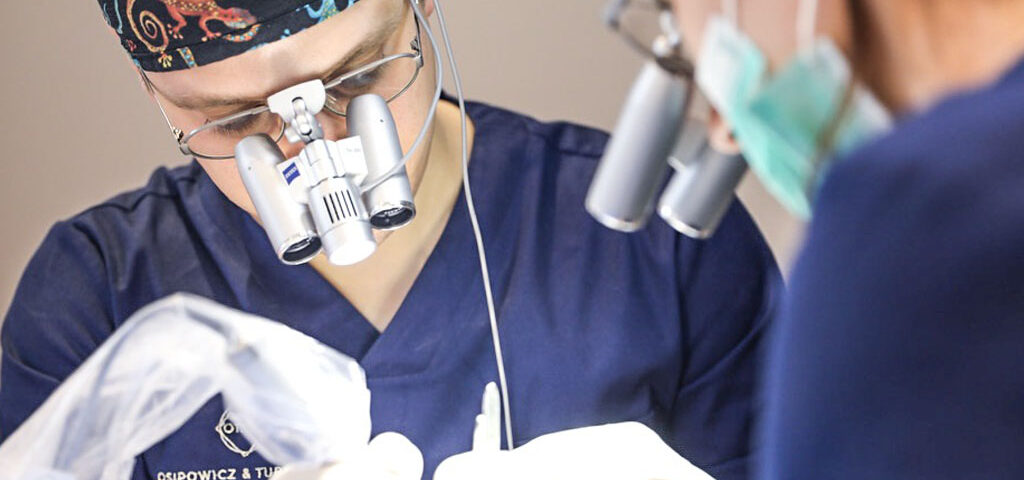
When designing the hairline, one of the most common issues—particularly among young patients—is the desire to lower the forehead as much as possible. While this may seem aesthetically appealing, it is not always a safe solution in the long run.
If androgenetic alopecia is progressive and natural hair exists behind the transplanted hairline, the hair in that area may fall out. The transplanted grafts will remain in place, resulting in a disproportionate appearance. Consequently, setting the hairline too low requires a larger number of grafts, thereby limiting the donor supply available for future transplant procedures.
Therefore, the physician should consider not only the individual’s current appearance but also the potential progression of hair loss. A more conservative hairline often yields a far better long-term result.
Density and growth direction matter.
Achieving a natural-looking result requires more than just the proper placement of grafts; the angle of implantation and the direction of growth are equally important. Hair grows in specific patterns across different areas of the scalp, so the transplant procedure should faithfully replicate this natural hair architecture.
In the frontal area, individual follicular units are of particular importance. Moving further back, their density can be gradually increased to create a seamless transition between the new hairline and the existing hair. Consequently, the aesthetic outcome of FUE transplants depends on more than just the number of grafts transplanted; proper placement, direction, angle, and alignment with each patient’s natural appearance are equally crucial.
Cheap mass-market service or an expert’s personalized approach?
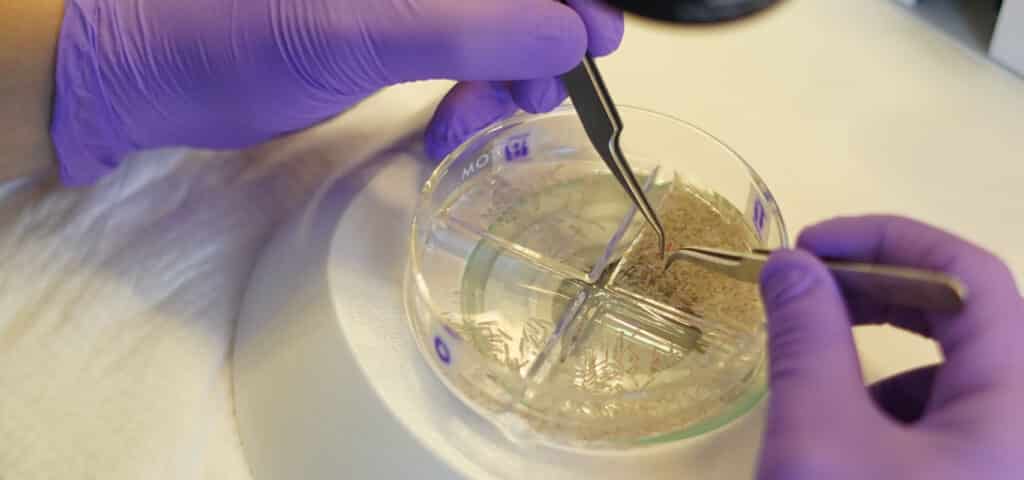
In hair transplantation, transplanting a larger number of grafts does not always yield a better result. The procedure must always be tailored to the specific patient and their needs, while the number of grafts is determined based on the capacity of the donor area and the specific circumstances.
As part of the individual approach, aspects such as the following are taken into account:
- current degree of hair loss,
- future risk of hair loss,
- patient’s age,
- donor area potential,
- facial proportions,
- expectations regarding hair density,
- natural direction of hair growth.
In the case of hair transplantation for younger patients, preserving an adequate reserve of grafts is crucial. Excessive harvesting during a single procedure could limit the options for future transplant treatments.
Naturalness is more important than maximum density.
A well-planned hair transplant does not aim merely to create the densest possible hairline at any cost; achieving a proportional and natural-looking result is far more important.
When assessing a patient’s suitability for the procedure, the doctor should also take into account the natural characteristics of their hair. Thick, fine, curly, or straight hair may require a completely different approach and treatment plan regarding both graft placement and density.
What does planning an FUE procedure involve?
Before a hair transplant, the doctor always conducts a consultation and assesses both the recipient and donor areas. Trichoscopy is also performed if necessary; this examination allows for a more precise analysis of hair density and quality.
Based on an assessment of the scalp and hair condition, it is possible to determine the scope of the procedure and the design of the new hairline. The patient also receives detailed information regarding potential results and any limitations imposed by the current state of their hair.
It is also worth exploring additional ways to support scalp health before and after the procedure:
A properly designed hairline should always be tailored to the individual patient rather than copied from standardized templates. Facial proportions, age, the condition of the hair and scalp, as well as the nature of the hair loss and the capabilities of the donor area, are crucial factors in determining the final plan.
Therefore, hairline design should be one of the most crucial elements of the pre-transplant consultation. It is important to remember that the goal of the procedure is not merely to fill in areas of hair loss, but to achieve a natural-looking result—both immediately after the transplant and for many years to come.
Frequently Asked Questions (FAQ)
Bibliography and medical sources
- Galadari, H., et al. (2020). Hair Transplantation: Standardized Clinical Guidelines. Journal of Dermatological Surgery and Oncology, 46(3), 312-320.
- Majid, I. (2018). Hair Transplantation: Basic Overview and Recent Advances. Indian Journal of Plastic Surgery, 51(3), 256-267.
