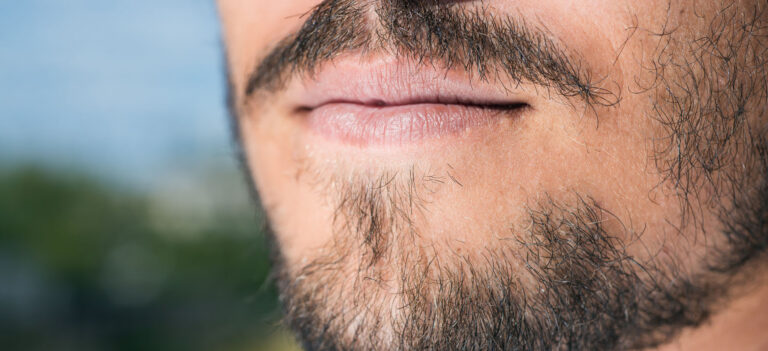
Modern facial hair transplant using the FUE method

Beard hair transplant

dr n. med. Piotr Turkowski (PWZ: 2786580) wrzesień 2026

A beard hair transplant is a procedure designed for individuals wishing to fill in gaps in their facial hair or increase its density. The procedure is performed using the FUE method, which allows for the precise transplantation of hair follicles while taking into account the natural direction of hair growth and individual facial proportions. Before the procedure, every patient undergoes a consultation during which a specialist assesses the feasibility of the treatment and discusses the expected results.

  • Individual planning of the beard line and density, taking facial anatomy into account.
  • The FUE method, which does not require a long skin incision and does not leave a characteristic linear scar.
EXPERIENCE
0+
years of experience in facial hair restoration and thickening
PRECISION
0,5 mln+
transplanted follicular units (grafts)
NATURAL ANGLE
0-15°
shallow implantation angle corresponding to the natural growth of facial hair
NATURALNESS
0%
individually designed beard contours and lines

* The parameters presented are based on PT Clinic’s medical standards and ISHRS guidelines for facial hair restoration procedures. The healing process and final aesthetic outcome depend on the patient’s individual biological characteristics and strict adherence to post-procedure instructions.

Durable and natural facial hair thickening

What does a beard hair transplant involve?

A beard hair transplant is a procedure involving the transplantation of hair follicles. Its aim is to fill in gaps in facial hair and increase its density. The procedure can cover areas such as the cheeks, jawline, chin, and mustache. During the treatment, individual follicular units—known as grafts—are harvested, typically from the back of the head, an area where hair is generally more resilient. They are then carefully and precisely implanted into the areas requiring facial hair restoration.

At PT CLINIC, beard hair transplants are performed using the FUE (Follicular Unit Extraction) method, which involves harvesting individual hair follicles without the need to excise a strip of skin. Consequently, there is no risk of developing the characteristic linear scar at the donor site. A doctor determines suitability for the procedure and selects the appropriate technique during the consultation.

One of the most crucial aspects of a facial hair transplant is the proper placement of the transplanted follicles. Beard hair grows at varying angles and in different directions. Therefore, the procedure takes into account natural growth patterns and each patient’s unique anatomical features. The goal is to achieve the most natural-looking facial hair possible, although the final result and density depend on factors such as the quality of the donor hair, anatomical conditions, and the healing process.

Facts about the procedure

What do you need to know?

Before deciding on the procedure, check the key aspects of a beard hair transplant: duration, type of anesthesia, the recovery process, and the longevity of the results—all in one place.

Indications
Patchy facial hair, sparse beard, scars from injuries or acne, need to fill in the cheek and jawlines
Duration
4–8 hours (depending on the number of grafts transplanted)
Anesthesia
Local
Convalescence
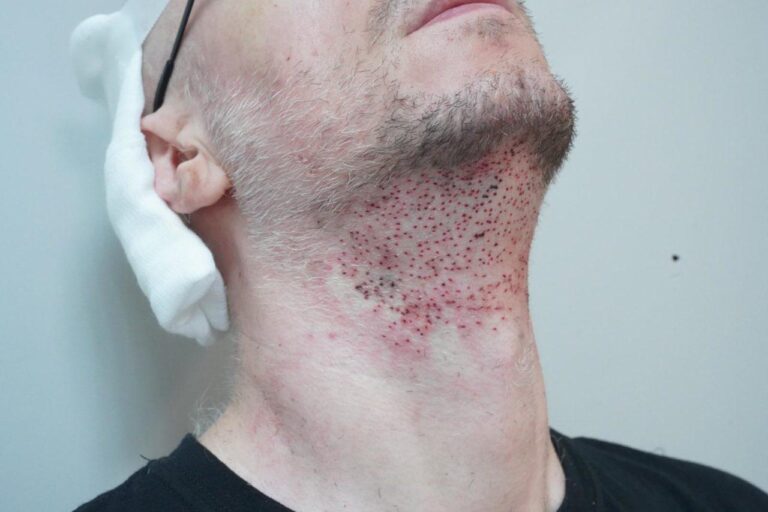
Approx. 7–10 days (resolution of small scabs and redness in the recipient and donor areas)
Final results
Initial regrowth after 3–4 months; final beard growth after 9–12 months.
Durability
Permanent effect (transplanted follicles retain the natural characteristics of hair from the donor area)

“Facial hair is a key element of a man’s appearance. Gaps caused by genetics, scarring, or past injuries can be effectively and permanently corrected using the FUE method. Artistic precision and the perfect replication of the natural angle of hair growth are paramount in this procedure.”

– Dr. Piotr Turkowski, MD, PhD

Who is a beard hair transplant intended for?

Proper assessment for the procedure is one of the most important stages of the entire treatment process. During the consultation, the doctor evaluates the patient’s health, the quality of the donor area, and any indications or contraindications for the transplant. This enables the selection of the appropriate treatment method and a discussion of the realistic results that can be expected in each case.

Who is a candidate for a facial hair transplant?

  • Individuals with naturally sparse facial hair or a complete, permanent, and localized lack of hair density on the cheeks and jawline.
  • Men seeking to correct asymmetry and give their facial hair a desired shape.
  • Patients wishing to increase the density of specific areas of the face, such as the mustache or goatee.
  • Individuals for whom previous hair growth stimulation methods have not yielded the expected results.

When is the procedure not recommended or when does it need to be postponed?

  • There are active, uncontrolled skin conditions in the recipient or donor area (e.g., active inflammation, severe acne).
  • The process of alopecia areata on the face is in an active and unstable phase.
  • The donor area (occipital region) is too sparse to provide a sufficient number of healthy grafts.
  • There are blood clotting disorders or other serious systemic contraindications to surgical procedures.

What should be done if the patient does not qualify for a beard transplant?

Not immediately qualifying for a facial hair transplant does not mean it is impossible to improve the appearance and density of your beard. In many cases, excellent results are achieved through alternative aesthetic medicine methods and supportive therapies that stimulate dormant hair follicles and improve the condition of the facial skin.
Depending on the underlying cause and the condition of the skin, treatments such as platelet-rich plasma (PRP) therapy, needle mesotherapy using specialized hair-growth-stimulating cocktails, and modern regenerative therapies are employed. Regular medical monitoring is crucial. Often, a safe FUE transplant can only be performed once the skin condition has stabilized or any localized issues have been treated.
Find out if you are a candidate for a beard hair transplant. Schedule a consultation where the doctor will assess the condition of your facial skin and the donor area, and propose the best treatment strategy.
Schedule a consultation

Results of a beard hair transplant

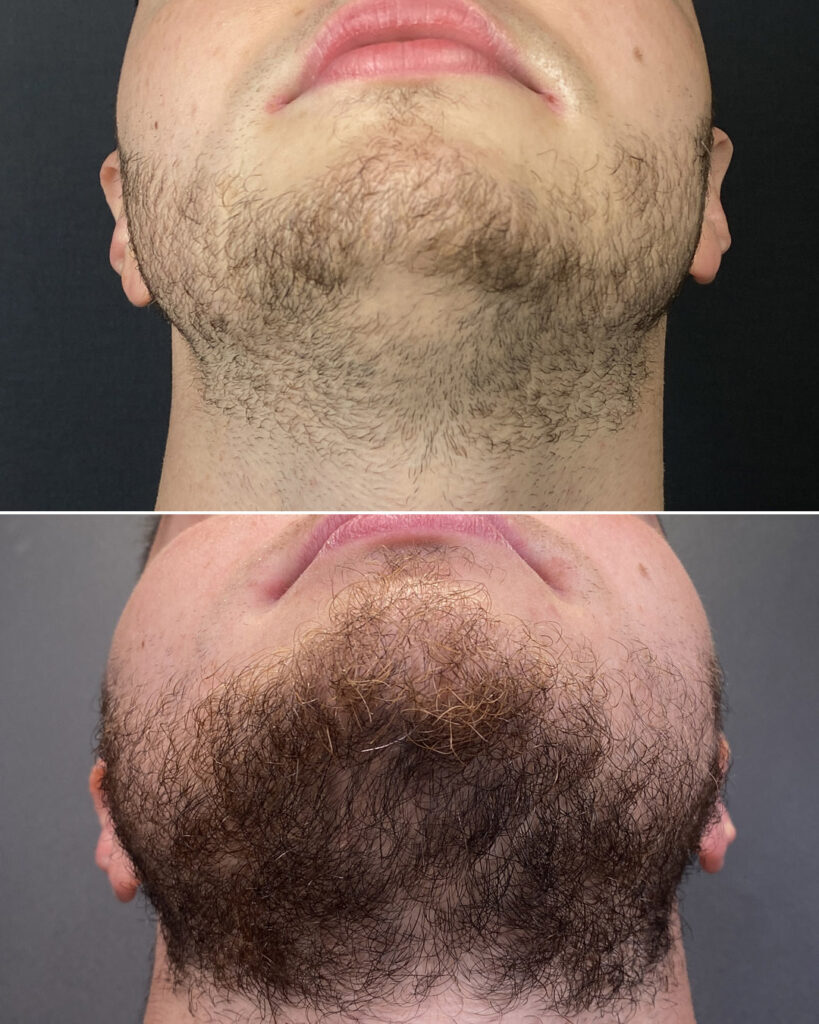
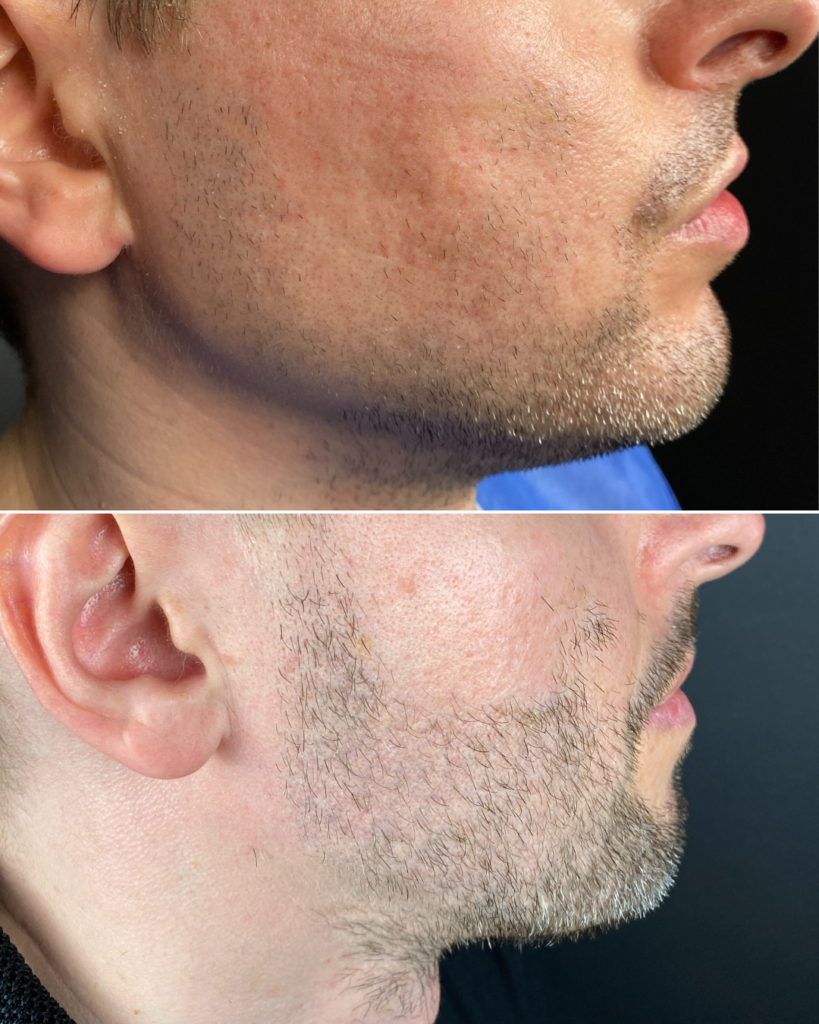
Precisely designed facial hair lines and natural density. See real results from FUE procedures performed at PT Clinic on patients struggling with patchiness and sparse facial hair.
Beard thickening, 1200 grafts, 8 months – Piotr Turkowski Before After
Grafts: 1,200
After the procedure: 8 months
Doctor: Piotr Turkowski
A natural-looking result of facial hair thickening and restoration in a patient 8 months after a hair transplant procedure performed by Dr. Piotr Turkowski. 1,200 grafts were used to achieve a fuller beard.
Beard / Facial hair
Filling in beard gaps – 1,650 grafts – 6 months – Piotr Turkowski Before After
Grafts: 1,650
After the procedure: 6 months
Doctor: Piotr Turkowski
Early result showing the filling of gaps and increased beard density in a 35-year-old patient, 6 months after a procedure using 1,650 grafts.
Beard / Facial hair

How is a beard hair transplant performed?

A facial hair transplant procedure requires the utmost precision, an aesthetic eye, and complete patient comfort. See what the entire process entails, from the consultation to full recovery.

Consultation and design

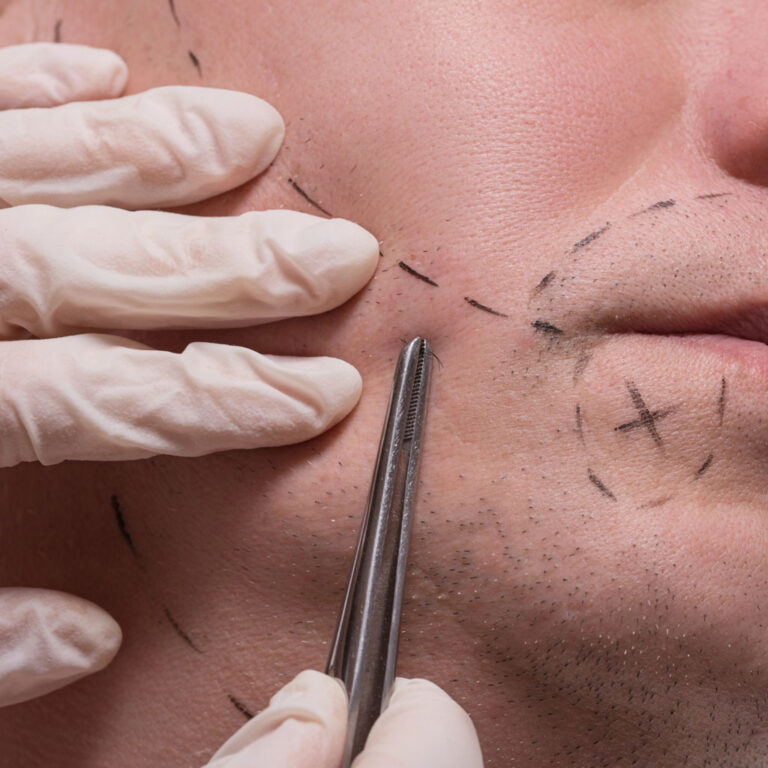
A detailed medical history is taken, the density of the donor area on the scalp is assessed, and expectations are discussed together. The doctor draws the new facial hair line, perfectly tailored to the patient's individual facial features.

Preparation and anesthesia

Before the procedure begins, the skin is properly prepared and disinfected. Local anesthesia is then administered to minimize pain and enhance patient comfort.

Graft harvesting

Extraction of individual follicular units (grafts)—most commonly from the occipital region—using the FUE method and specialized micro-instruments. This technique does not require the excision of a strip of skin, thereby avoiding the characteristic linear scar in the donor area.

Preparation of channels (Recipient site)

Creating micro-incisions in the facial area (cheeks, chin, mustache) at a very acute angle. Replicating the natural direction of beard hair growth is crucial.

Graft implantation

The delicate and meticulous placement of harvested hair follicles into previously prepared channels, maintaining the proper density.

Recommendations and recovery

Providing detailed instructions on facial care for the first few days after the procedure and scheduling follow-up appointments.

Transparent treatment costs

How much does a beard hair transplant cost?

dr n. med. Piotr Turkowski (PWZ: 2786580) wrzesień 2026

The cost of a facial hair transplant procedure is determined on an individual basis and depends primarily on the number of grafts required and the scope of the reconstruction (e.g., cheeks only, a full beard, or scar camouflage).

FAQ

The questions below address the most common concerns of men considering a beard hair transplant—specifically regarding pain, the donor area, healing, and shaving.

The procedure is performed under local anesthesia, designed to minimize pain and enhance patient comfort. A brief burning or pressure sensation may occur during the administration of the anesthetic. Once it takes effect, the extraction and implantation of hair follicles are generally well tolerated, though sensations may vary depending on the patient’s individual sensitivity.

Hair follicles (grafts) are most commonly harvested from the back of the head. Hair from this area is genetically resistant to miniaturization, and its structure blends perfectly with natural facial hair after transplantation.

Yes. Once the recipient area has fully healed and the follicles have taken root (usually about 2–3 months after the procedure), the transplanted hair behaves just like natural facial hair—it can be shaved, trimmed, and styled as usual.

The FUE method does not require the surgical excision of a strip of skin. Consequently, no characteristic linear scar forms at the hair follicle extraction site. Both the donor and recipient areas are left with small puncture marks that, in most cases, heal gradually and remain barely visible. The rate of healing and the final outcome depend on the patient’s individual characteristics and adherence to post-procedure instructions.

In the first few weeks following the transplant, the newly transplanted hair naturally falls out (this is known as the resting phase). Growth of the actual hair begins after approximately 3–4 months, while the final, full, and dense aesthetic result becomes visible after 9–12 months.

The fundamental requirements are good general health, the absence of active inflammation of the facial skin, and adequate hair density in the donor area on the scalp. Final suitability is determined by the doctor during an individual consultation.

Why do patients choose a facial hair transplant at PT Clinic?

The success of a facial hair transplant depends on combining precise microsurgical technology with an artistic sense of facial proportions.

Experienced medical team

The procedures are performed by qualified specialists with many years of experience in hair microsurgery and the FUE method.

Certified FUE technology

We use modern tools and proven techniques. This minimizes tissue trauma and ensures the precise extraction and implantation of hair follicles.

Custom-designed beard line

Each preliminary drawing is created taking into account the patient’s anatomy, facial expressions, and personal preferences.

Comprehensive post-procedure care

We provide full support, follow-up visits, and detailed aftercare instructions at every stage of recovery.

Reviews of beard transplants

Deciding to undergo a facial hair transplant is a step toward greater self-confidence and the look you’ve always wanted. At PT Clinic, we prioritize precision, a calm atmosphere, and complete professionalism at every stage of the procedure. Read genuine reviews from men who trusted the expertise of Dr. Piotr Turkowski and now enjoy a perfect hairline and hair density every day.

★★★★★ ★★★★★

The transplant was performed in an atmosphere of calm and complete professionalism. I appreciate the precision and the lack of haste. The hairline looks great—neither too dense nor too sparse.

Kacper, 28 years old
★★★★★ ★★★★★

The transplant was performed in an atmosphere of calm and complete professionalism. I appreciate the precision and the lack of haste. The hairline looks great—neither too dense nor too sparse.

Eryk, 33 years old
★★★★★ ★★★★★

The doctor dispelled my concerns right at the consultation. The entire process was well-planned, and the result was very satisfying.

Zbyszek, 44 years old
★★★★★ ★★★★★

I am glad I decided to have this procedure. The whole process went smoothly, and the final result is very satisfying.

Mariusz, 42 years old
★★★★★ ★★★★★

The procedure was virtually painless, and the final result very natural. An individual approach to the patient and attention to every detail are evident.

Paweł, 32 years old
★★★★★ ★★★★★

The entire process—from the consultation to post-procedure care—was top-notch. Communication with the clinic was seamless, and instructions were clearly conveyed.

Michał, 41 years old
Consultation and treatment plan

Preliminary qualification

Take the first step towards a full head of hair and regain your confidence. Fill out a short form—our medical team, led by Dr. Piotr Turkowski, will analyze the condition of your scalp and donor area, then prepare a personalized FUE treatment plan for you, complete with a precise price quote.

Our team usually responds within 24 hours.

Substantive verification

The medical content on this site has been verified by a doctor – Piotr Turkowski, MD, PhD (PWZ: 2786580).

Legal notice: The content of this website is for educational and informational purposes only. It does not constitute professional medical advice, diagnosis, or treatment. It does not constitute a commercial offer within the meaning of Article 66 § 1 of the Civil Code.