Effective restoration of the frontal hairline

Eyebrow transplant

dr n. med. Piotr Turkowski (PWZ: 2786580) wrzesień 2026
Sparse or irregular eyebrows—or their complete absence due to genetics, over-plucking, injury, or illness—significantly affect the framing of the eyes and overall facial symmetry. An FUE eyebrow transplant allows for the precise reconstruction of the eyebrow arch, providing the desired volume and a lasting, aesthetically pleasing shape. Each procedure is preceded by a medical assessment, during which the doctor designs the placement and angle of the hair follicles on an individual basis, tailoring them to the patient’s facial features and expectations.
  • Custom-planned eyebrow arch thickening.
  • Precise design of the eyebrow shape, taking into account the natural direction of hair growth.
EXPERIENCE
0+
years of experience in microsurgery and hair transplantation
PROFILING
0-15°
very shallow implantation angle, lying perfectly flat against the skin
CONVALESCENCE
0-7 day
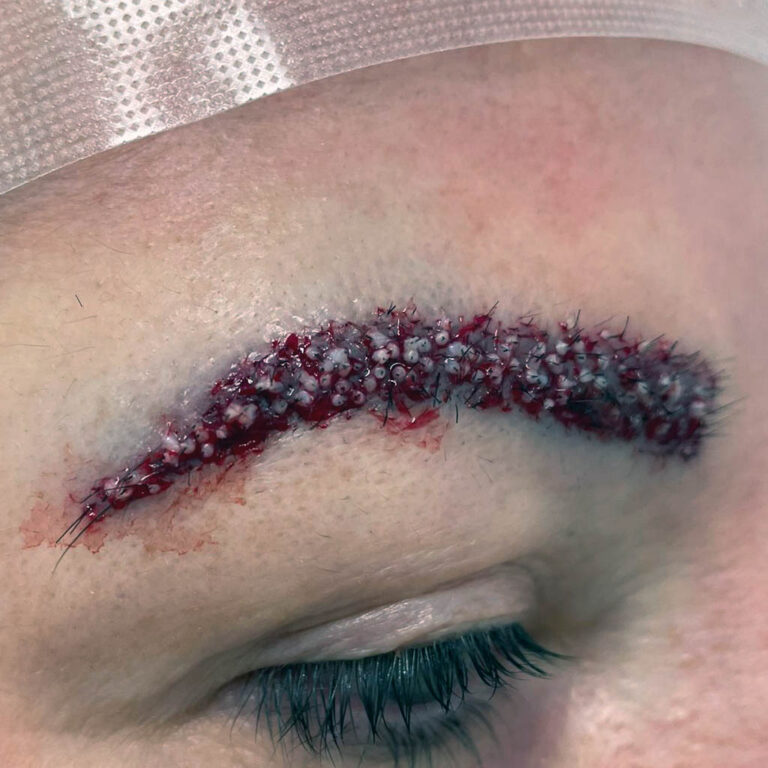
of the estimated time for the absorption of micro-scabs in the eye area
STRUCTURE
0%
selection of exclusively single, delicate micrografts

*The procedure parameters presented are based on PT Clinic’s medical standards and international ISHRS guidelines for eyebrow reconstruction procedures. The final aesthetic outcome, direction of hair growth, and recovery time depend on the patient’s individual biological characteristics and strict adherence to post-procedure instructions.

What does an eyebrow transplant involve?


An eyebrow transplant is a precise procedure involving the transplantation of hair follicles. It is performed to restore or thicken the eyebrows in individuals experiencing thinning or loss. The procedure entails harvesting individual follicular units—known as grafts—typically from the occipital region or behind the ear, followed by their precise implantation into the eyebrow area.

A crucial stage of the procedure is the personalized planning of the eyebrow arch shape. During the consultation, the doctor takes into account facial proportions, the anatomy of the eye area, the patient’s age, and the characteristics and density of the natural hair. This allows for the selection of a treatment plan tailored to individual needs.

During the implantation of hair follicles, particular attention is paid to maintaining the appropriate angle and direction of hair growth in order to replicate their natural arrangement as faithfully as possible. Single follicular units (single grafts) are often used in the frontal area and along the edges of the brow arch, which helps achieve a natural appearance once the healing process is complete.

The procedure is performed under local anesthesia using the FUE method, which does not require the surgical excision of a strip of skin. Consequently, there is no characteristic linear scar at the donor site, and the healing process and final result depend on factors such as the patient’s individual characteristics and adherence to post-procedure instructions.

Facts about the procedure

What do you need to know?

Before deciding on the procedure, check the key details regarding FUE eyebrow transplantation—such as the duration of the procedure, the type of anesthesia, the recovery process, and the longevity of the results—all in one place.

Indications
Sparse or thinning eyebrows, lack of density in the brow arch, asymmetry, and eyebrow loss due to over-plucking, trauma, illness, or scarring in the brow area.
Duration
3–5 hours (depending on the number of grafts required for the full reconstruction of the eyebrow arches).
Anesthesia
Local
Convalescence
Approx. 5–7 days (rapid return to daily professional activities and an aesthetic appearance).
Final results
Initial regrowth is visible after approximately 3–4 months, with the full and final result of natural thickening achieved after 10–12 months.
Durability
Permanent result (the harvested hair follicles retain their properties and continue to grow throughout one's life).

“Eyebrow reconstruction requires the utmost precision; replicating the anatomical shape and the precise angle at which the hairs emerge from the skin is crucial. Only in this way can a completely natural result be achieved—one that perfectly complements the patient’s eye area.”

– Dr n. med. Piotr Turkowski

Who is a good candidate for an eyebrow transplant?

Restoring the eyebrows requires an individual medical assessment. Patients are deemed suitable for the procedure following a thorough analysis of the causes of eyebrow loss, the condition of the skin in the treatment area, and the potential of the donor site at the back of the head.

Who is a candidate for an eyebrow transplant?

To ensure the eyebrow transplant yields the expected results, an initial medical assessment is required. A suitable candidate for the procedure is a patient who:
  • There is thinning or a partial or total absence of eyebrows (e.g., due to plucking, injuries, burns, or genetic factors).
  • The donor area (the back or sides of the head) is characterized by adequate density and quality of hair follicles.
  • The process of eyebrow loss has been halted or stabilized by appropriate treatment.
  • Expectations regarding eyebrow shape and density are realistic and consistent with anatomical possibilities.
  • The skin in the eyebrow area is healthy and free from active inflammation.

When is an eyebrow transplant not recommended?

In some cases, eyebrow reconstruction via a procedure should be postponed or replaced by another therapy. An eyebrow transplant is not indicated when:
  • The loss of eyebrows is rapid and active (e.g., alopecia areata in the active phase) and has not previously been medically stabilized.
  • Active inflammatory skin diseases are present in the facial or scalp area (e.g., seborrheic dermatitis, psoriasis, active acne).
  • The potential of the donor area is insufficient to safely harvest an adequate number of individual grafts.
  • Diagnostics indicate uncontrolled hormonal disorders or generalized autoimmune diseases.
  • The patient did not complete the initial stage of conservative treatment to halt active hair loss.

What should be done if the patient does not qualify for an eyebrow transplant?

Not qualifying for the procedure immediately does not mean that eyebrow restoration is not possible. In many cases, the implementation of supportive and conservative therapies—which halt further hair loss and improve skin condition—proves crucial. Dr. Piotr Turkowski develops an individualized treatment plan that may include pharmacotherapy, needle-based mesotherapy, or platelet-rich plasma (PRP) therapy. Often, an eyebrow transplant can only be performed once the underlying causes of hair loss have been brought under control.
Check if you are a candidate for an eyebrow transplant. Schedule a consultation during which the doctor will assess the condition of your skin and the donor area, and propose an optimal treatment strategy.
Schedule a consultation

Eyebrow transplant results

The results of an eyebrow transplant are not visible immediately after leaving the clinic. The process of growth and rooting for the newly implanted hair follicles occurs in stages and requires time for the skin to fully heal. The patient will notice the first visible changes and new hair growth after approximately 3–4 months, while the final, full result—featuring dense, naturally shaped eyebrows—can be assessed 10–12 months after the procedure.

How is an eyebrow transplant performed?

Eyebrow restoration involves a comprehensive medical assessment, precise determination of the new shape, and professional post-procedure care. At PT Clinic, eyebrow transplantation is performed using the FUE method, which entails extracting individual hair follicles from a donor area and implanting them into areas requiring greater density. Every stage of the procedure is tailored to the individual during a consultation with Dr. Piotr Turkowski.

Eyebrow shape consultation and design

The process begins with a medical consultation to assess the condition of the skin and the quality of the donor area at the back of the head. Based on this, the doctor precisely designs the new eyebrow shape and establishes their symmetry. An estimated number of grafts is determined, with the arch profile tailored to the patient's facial features and the natural direction of hair growth.

Preparation and anesthesia

On the day of the procedure, the donor area and the eyebrow region are properly prepared for the transplant. Local anesthesia is administered to minimize pain and enhance the patient's comfort during the procedure. The patient remains conscious throughout the transplant and can communicate with the medical team. Sensations associated with the procedure vary from person to person.

Harvesting hair follicles (grafts)

The next stage involves extracting individual follicular units (grafts) from the donor area, most commonly the occipital region or the area behind the ear. With the FUE method, each graft is harvested individually using micro-instruments. This avoids surgical incisions and protects the donor area from linear scarring.

Preparation and implantation in the eyebrow area

The harvested hair follicles are sorted—with only individual hairs being selected—and prepared for implantation. The follicular units are precisely implanted into the brow ridge, maintaining a minimal angle of inclination relative to the skin surface. The correct angle of implantation is crucial for ensuring the eyebrows look natural and aesthetically pleasing once the hair grows back.

Completion of the procedure and post-procedure recommendations

Following the eyebrow hair follicle implantation procedure, the patient receives detailed written instructions regarding skin care, cleansing, and aftercare. In most cases, hospitalization is not required, and the patient can return home shortly after the procedure. The healing process varies from person to person, depending on the patient's individual characteristics and adherence to the post-procedure instructions provided by the doctor.

Results and follow-up care

Following the procedure, hair in the eyebrow area regrows gradually, in accordance with the natural biological cycle. Temporary shedding of the hair shafts (so-called "shock loss") may occur during the first few weeks; this is a normal stage of the regeneration process. New growth begins after approximately 3–4 months, and the final result of the eyebrow thickening is assessed after 10–12 months. Throughout this period, the patient remains under the team's continuous care and attends follow-up appointments.

How much does an eyebrow transplant cost?


The cost of an eyebrow transplant procedure is determined on an individual basis during the medical assessment. The final price depends primarily on the extent of hair loss in the eyebrow area and the number of grafts required to achieve the desired density and a natural shape that frames the eyes. At PT Clinic, we evaluate each case individually, taking into account the patient’s needs and anatomical characteristics.

The cost of an eyebrow transplant in Warsaw varies depending on the scope of the procedure—ranging from subtle thickening to the complete reconstruction of the arches. This procedure requires the utmost precision regarding the angle and direction of individual graft implantation to ensure a natural result, avoiding any “artificial” look. At PT Clinic, the procedure is performed by Dr. Piotr Turkowski using the advanced FUE method.

To get an estimate of the cost of an eyebrow transplant in your specific case, we encourage you to schedule a medical consultation or request a preliminary quote based on photos; this will allow us to precisely determine the number of grafts required.

FAQ

Below, we have compiled answers to the most frequently asked questions regarding eyebrow transplantation using the FUE method. We explain aspects related to the safety of the procedure, the eyebrow reconstruction process, the recovery period, and the longevity of the results, to help the patient make an informed and safe medical decision.

The eyebrow transplant procedure at PT CLINIC is performed under local anesthesia to minimize pain and enhance patient comfort during the treatment. A brief sensation of burning or pressure may occur during the administration of the anesthetic. Once the anesthesia wears off, temporary discomfort may arise, the intensity of which varies from patient to patient. If necessary, the doctor provides post-procedure instructions, including guidance on the use of painkillers.

During the first 2–4 weeks following the procedure, natural and temporary shedding of the hair shafts occurs—a phenomenon known as “shock loss”—which is a normal stage of the recovery process. However, the hair bulbs and follicles themselves remain in place. Properly rooted grafts begin to produce new, permanent hair after approximately 3–4 months.

Yes. The hair follicles harvested for eyebrow reconstruction come from the donor area on the scalp, meaning they retain their natural growth cycle. The hairs in the eyebrow area will grow faster than natural eyebrow hair, so the patient must trim and style them regularly (usually once every 1–2 weeks). Over time, this process slows down slightly.

The first new hair growth in the eyebrow area appears approximately 3–4 months after the procedure. The eyebrows become denser with each passing month. The final, full, and natural aesthetic result is assessed 10–12 months after the procedure.

Transplanted hair follicles are typically harvested from a donor area characterized by greater resistance to the processes associated with androgenetic alopecia. Consequently, in many cases, the transplanted hair retains its properties even after being moved to the eyebrow area. However, the final result and its longevity depend on the patient’s individual characteristics, the healing process, and adherence to post-procedure instructions.

The number of grafts required depends on the extent of hair loss and the desired shape and density. Typically, 150 to 300 grafts are used for subtle thickening or symmetry correction, whereas a full reconstruction of both eyebrows requires between 400 and as many as 800 individual follicular units.

After the procedure in the eyebrow and upper eyelid area, mild swelling and redness may occur; this is the body’s natural reaction to the micro-incisions. These symptoms are temporary and typically resolve on their own within 3–7 days of the treatment.

Most patients return to work just 3–5 days after the procedure. If the job requires a flawless aesthetic appearance without visible signs of healing (such as small scabs), it is recommended to plan for about 7 days off.

Do not apply any makeup or use dyes (e.g., henna) on the eyebrow area for a minimum of 3–4 weeks after the procedure, until the skin has fully healed and the hair follicles have taken root.

Eligibility for the procedure always requires an individual medical consultation. Contraindications may include, among others, active phases of autoimmune diseases (e.g., unstable alopecia areata), uncontrolled hormonal disorders, facial skin inflammation, and the lack of a suitable donor area.

Why do patients choose eyebrow transplants at PT Clinic?

Precise eyebrow reconstruction is a procedure that bridges the gap between microsurgery and aesthetic medicine, requiring an exceptional sense of proportion and technical mastery. At PT Clinic, we do not rely on one-size-fits-all solutions. Every procedure is preceded by a detailed assessment overseen by Dr. Piotr Turkowski, during which we analyze facial structure, skin condition, and the patient's aesthetic goals. This ensures that the eyebrow transplant is planned with careful consideration of the patient's individual features and established medical standards. Our aim is to achieve a result that perfectly complements the patient's facial features while ensuring a natural eyebrow appearance.

A team specializing in eyebrow microsurgery

Restoring the eyebrow arch requires great precision and experience in the implantation of individual follicular units. Our medical team has extensive experience in performing such procedures, and the treatment plan is always tailored to the patient’s facial anatomy and individual characteristics. The goal of the procedure is to achieve a harmonious eyebrow shape and proportions that complement the patient’s facial features.

Precise FUE micro-technique with no visible traces

The procedure utilizes modern micro-instruments designed for the precise extraction of individual follicular units from the donor area. The FUE method does not require the surgical excision of a strip of skin, thereby avoiding the formation of characteristic linear scars. The procedure is performed under local anesthesia to minimize pain and enhance patient comfort. The minimally invasive nature of the procedure and the recovery time required to return to daily activities vary by individual, depending primarily on the patient’s specific characteristics and adherence to post-operative instructions.

Arch of the arch and natural growth direction

The key to an excellent result lies in the precise placement of the grafts. We implant the hairs at a very acute, minimal angle relative to the skin so that they lie flat against the face, mimicking natural eyebrows. We ensure smooth density transitions and the correct growth direction across every section of the arch, eliminating the risk of an artificial or exaggerated appearance.

Dedicated medical care and comprehensive monitoring of the healing process

Patient safety and comfort are our top priorities at every stage of the treatment. We perform procedures in sterile conditions, adhering to rigorous medical standards. Following the procedure, the patient receives a personalized set of post-treatment instructions and maintains ongoing contact with the clinic through complimentary follow-up visits to monitor regrowth progress.

Reviews of eyebrow transplants

Eyebrows frame the entire face. Their loss often hinders our daily lives, forcing us to constantly conceal the gaps with makeup. For the PT Clinic team, eyebrow reconstruction combines microsurgical precision with a keen aesthetic sense. Read how the procedure performed by Dr. Piotr Turkowski transformed our patients’ appearance and well-being.

★★★★★ ★★★★★

After an accident, I was left with a distinct scar across my eyebrow, which meant no hair grew there at all. At PT Clinic, I was offered a procedure to fill in the gap using the FUE method. The result exceeded my wildest expectations—the gap is gone, and the newly transplanted hairs grow at exactly the same angle as the rest. I’ve regained my full sense of comfort.

Tomasz, 38 years old
★★★★★ ★★★★★

I was worried about an exaggerated, artificial look, but the doctor’s approach completely put my fears to rest. The procedure itself flew by—surprisingly fast and without any pain. There was some slight redness for the first few days, but the healing process was incredibly quick. Now I have full, soft arches that perfectly complement my features. I can finally leave the house without filling in my eyebrows.

Marta, 29 years old
★★★★★ ★★★★★

After years of over-plucking, my eyebrows had almost stopped growing, and my morning makeup routine had become a chore. I went to Dr. Turkowski on a recommendation, and it was the best decision I ever made. The doctor spent a great deal of time perfectly mapping out the shape, checking every single millimeter. It has been a year now—the hairs lie softly and naturally, and none of my friends even suspect that it’s the result of a procedure.

Karolina, 34 years old

Videos about eyebrow transplants

Want to know what the procedure looks like in practice? Watch the materials we’ve prepared, in which Dr. Piotr Turkowski explains the medical aspects of eyebrow reconstruction. See the procedure up close—from the initial sketching of the brow arch in the clinic and the healing process to the successful results achieved by our patients.

Eyebrow transplant – how to enhance the brow arch?

What does permanent eyebrow thickening and reconstruction using modern transplantation methods look like? Watch the video in which Dr. Piotr Turkowski explains the procedure and its results.

CONSULTATION AND TREATMENT PLAN

Initial consultation

Take the first step toward thick, perfectly defined eyebrows and a striking eye frame. Fill out the brief application form to begin the consultation process. Our medical team, led by Dr. Piotr Turkowski, will analyze your situation and individual needs. Based on this, we will develop a personalized preliminary eyebrow reconstruction strategy, estimate the scope of the procedure, and present a tailored treatment plan.

Our team usually responds within 24 hours.

Substantive verification

The medical content on this site has been verified by a doctor – Piotr Turkowski, MD, PhD (PWZ: 2786580).

Legal notice: The content of this website is for educational and informational purposes only. It does not constitute professional medical advice, diagnosis, or treatment. It does not constitute a commercial offer within the meaning of Article 66 § 1 of the Civil Code.