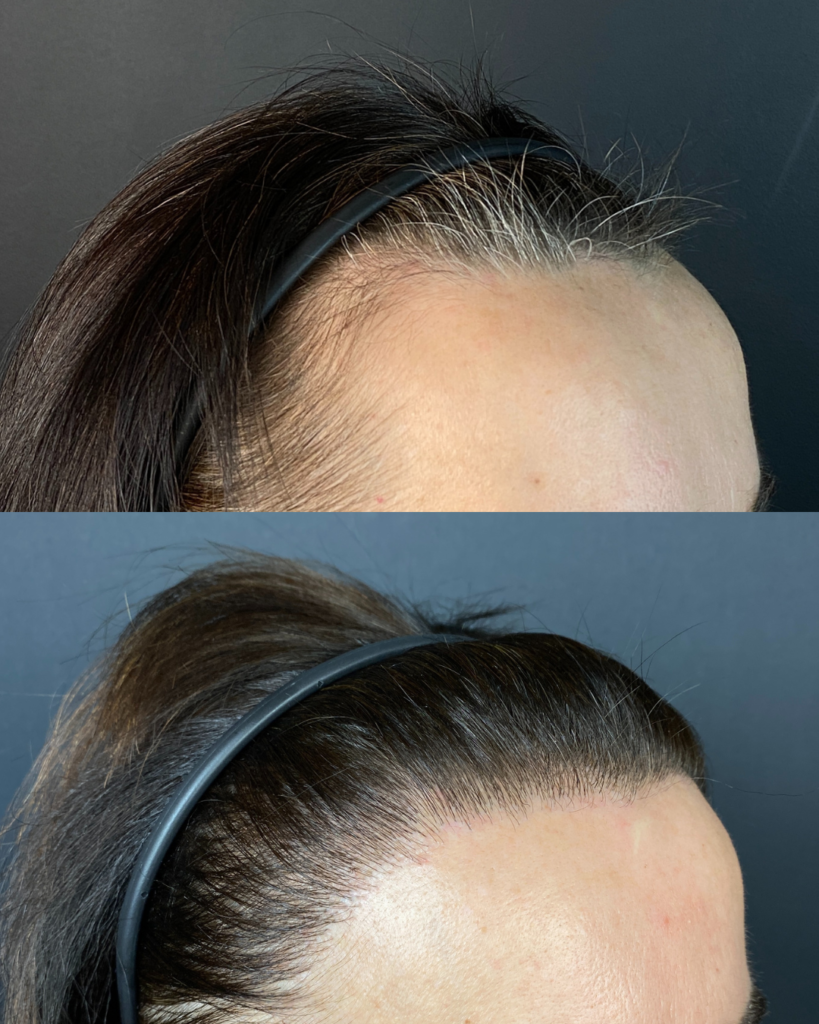
Surgical Treatment of Hair Loss in Women

Hair transplant for women

dr n. med. Piotr Turkowski (PWZ: 2786580) wrzesień 2026

Hair transplantation in women is a highly specialized form of surgical treatment performed for strictly defined clinical indications. This procedure differs significantly from those performed on men—regarding the distinct causes of hair loss, the specific diffuse pattern of thinning, and the entirely different criteria for medical eligibility.

  • Treatment of selected forms of hair loss in women
  • Qualification based on diagnosis of causes
  • Personalized transplant planning
EXPERIENCE
0+
years of experience in micro-thickening treatments for women
PRECISION
0,8 mm
precision micro-tools that protect existing hair
CONVALESCENCE
0-10 day
estimated healing time of post-procedure micro-wounds
AESTHETICS
0%
custom-designed female hairlines

*The parameters and scope of the procedure outlined here are based on PT Clinic’s medical standards and international medical literature (ISHRS). The estimated healing time and course of recovery depend on the patient’s individual biological characteristics and strict adherence to post-procedure instructions.

What does a hair transplant for women involve?

Hair transplantation for women is a modern medical procedure that involves the precise extraction of healthy hair follicles—most often from the back of the head (the donor area)—followed by their implantation into areas affected by thinning or hair loss.

This procedure requires a completely different approach than that used for men. In women, hair loss is often diffuse; therefore, correctly identifying the cause of the hair loss and assessing whether the loss of hair follicles is permanent are of crucial importance. The procedure is most commonly used to address visible hair loss along the parting, the frontal hairline, or at the temples.

At PT CLINIC, treatment for women struggling with hair loss always begins with a consultation and a medical assessment. Based on the patient’s medical history and an evaluation of the scalp and the nature of the hair loss, the doctor determines whether a hair transplant is the appropriate solution and develops an individualized treatment plan. The procedures are tailored to the patient’s specific needs and medical indications.

Facts about the procedure

What do you need to know?

If you are considering a hair transplant, first familiarize yourself with the key information regarding the procedure. We have gathered answers to the most frequently asked questions in one place, covering the duration of the transplant, anesthesia, post-procedure recommendations, and the healing process.

Indications
Female pattern hair loss, thinning in the frontal and parietal areas, receding temples, high hairline
Duration
4–8 hours (depending on the number of grafts transplanted)
Anesthesia
Local
Convalescence
Approx. 7–10 days (with the option to discreetly conceal the donor area under longer hair)
Final results
Initial regrowth after 3–4 months, final density after 12 months.
Durability
Permanent effect (transplanted follicles are resistant to miniaturization)

“Hair transplantation in women requires individual assessment and precise planning. Only the right timing and a correct diagnosis of the cause of hair loss determine the appropriateness of surgical treatment.”

– Dr n. med. Piotr Turkowski

Can women undergo a hair transplant?

Hair transplantation in women is not a procedure performed routinely or according to a standardized protocol. The decision to proceed with surgery is based on the nature of the hair loss, its stability, and the potential for reconstruction, rather than the degree of thinning alone.

In what situations might a transplant be considered?

Hair transplantation in women can be part of the treatment when:
  • hair loss is permanent and localized,
  • the hair loss process is stabilized and predictable,
  • The thinning affects, among other areas, the frontal hairline, the temples, or the parting,
  • the available donor area allows for the safe harvesting of hair follicles,
  • Surgical treatment serves a reconstructive function, rather than acting as a substitute for other therapies.

When is a hair transplant not recommended for women?

Performing a transplant is not the optimal solution, or should be postponed, when:
  • active, diffuse hair loss is present,
  • the disease process has not yet stabilized,
  • inflammatory diseases of the scalp are present,
  • the quality or density of the donor area is insufficient,
  • Causal or conservative treatment remains the priority.

Most common causes of hair loss in women

In women, hair loss rarely has a single, simple cause. Most often, it is a complex process in which hormonal, genetic, and systemic factors play a significant role, affecting the hair growth cycle and the condition of the hair follicles.

In clinical practice, androgenetic alopecia in women often presents as diffuse hair loss, leading to gradual thinning—particularly along the hair part. Telogen effluvium follows a different pattern; it is often temporary and associated with specific life stages—such as pregnancy, the postpartum period, or menopause—as well as with systemic diseases or chronic stress.

In some female patients, hair loss may be associated with inflammatory processes of the scalp or with rarer, scarring forms of alopecia. In such cases, hair transplantation is not the first-line treatment and may only be considered once the underlying condition has stabilized.
The cause of hair loss is crucial for selecting the treatment method. Correctly identifying it makes it possible to determine whether a hair transplant could be the next stage of therapy.
Schedule a consultation

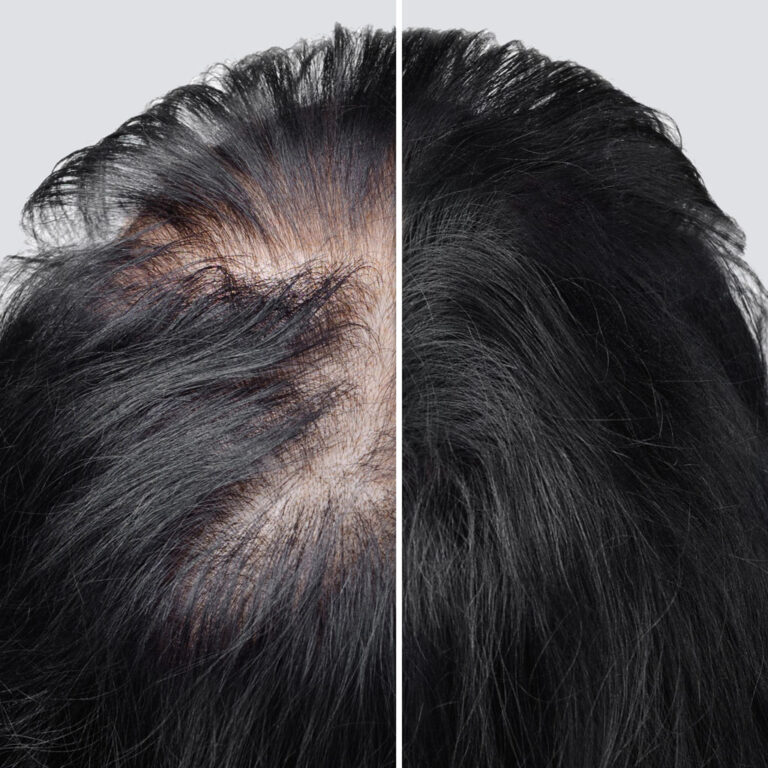
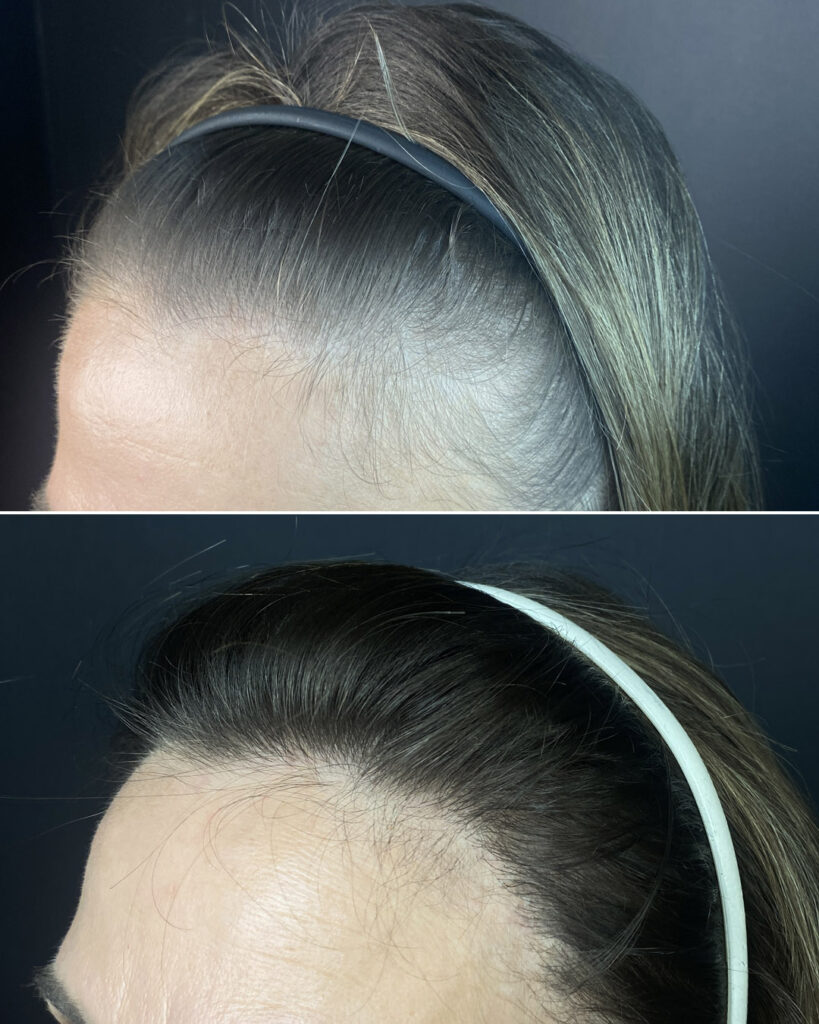
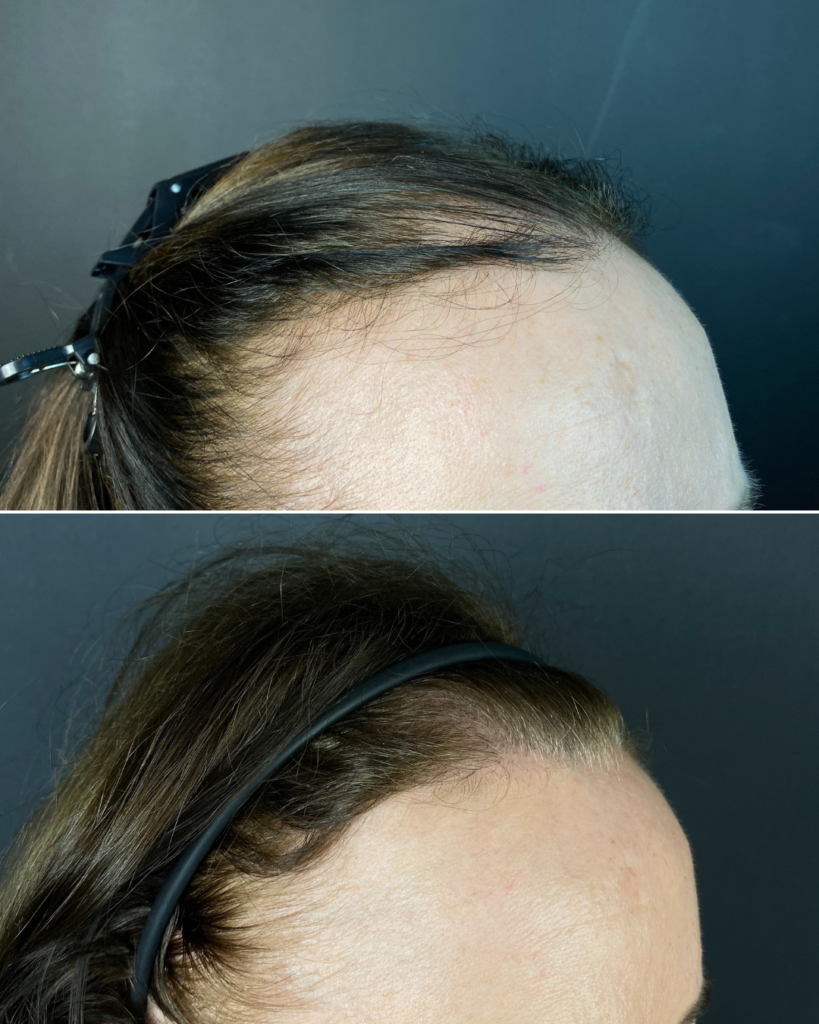
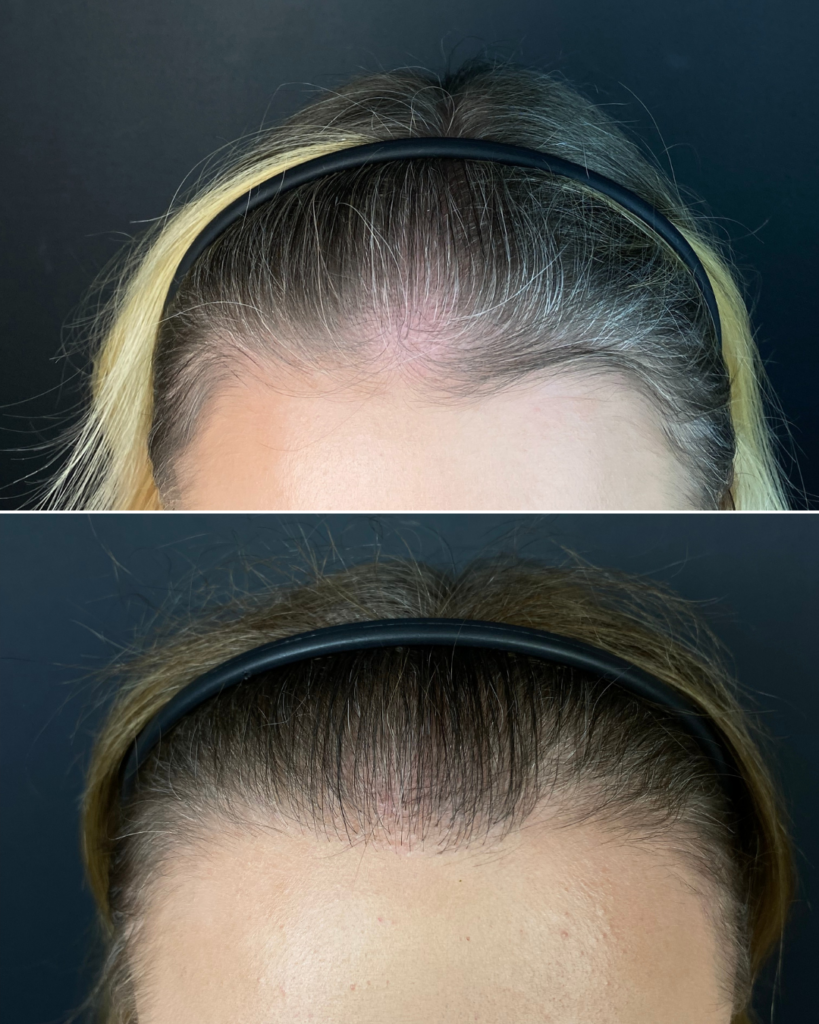
Results of hair transplants in women

The results of a hair transplant in women are not visible immediately after the procedure. Hair regrowth occurs in stages, following the natural growth cycle, and the scalp requires time to recover from the procedure. The first noticeable changes usually appear after a few months, manifesting as the gradual filling in of the transplanted areas. During this period, the hair may vary in thickness and growth rate, which is a normal physiological phenomenon. A reliable assessment of the transplant results is typically conducted about 12 months after the procedure, once the growth process has stabilized and the distribution and scalp coverage can be objectively evaluated.

How is a hair transplant performed in women?

Hair transplantation for women is a procedure planned on an individual basis, taking into account the nature of the thinning, the hairline, and the capacity of the donor area. The procedure is performed on an outpatient basis and does not require hospitalization.

Qualification and planning

The process begins with an assessment of the type of hair loss and the planning of areas requiring restoration. At this stage, the scope of the procedure and the hair placement strategy are determined to ensure a natural-looking hairstyle.

Preparation for the procedure

On the day of the procedure, the scalp is properly prepared, and the treatment is performed under local anesthesia. Depending on the scope of the treatment, it is possible for some patients to undergo the transplant without the need for complete shaving of the hair.

Hair follicle transplant

The harvested follicular units are placed in areas affected by thinning or hair loss. Their placement and growth direction are crucial, as they must match the natural hair growth pattern in women.

Post-procedure period and recovery

Following the procedure, the scalp gradually regenerates, and the patient receives personalized instructions for the initial days after the transplant. This period is designed to ensure proper healing conditions and protect the transplanted hair follicles.

Hair regrowth stage

Over the following weeks and months, the hair goes through natural growth phases. This is a gradual process—the pace of which can vary from person to person—and does not provide a basis for an early assessment of the treatment's results.

Assessment of treatment outcomes

A final assessment of the results of a hair transplant in women is possible after a sufficient period of time, once hair growth has stabilized. At this stage, the distribution of the hair and its integration with the natural hair are evaluated.

How much does a hair transplant for women cost?

The cost of a hair transplant for women is not fixed and cannot be determined without a prior medical assessment. This is because the procedure is planned in a more individualized manner for women than for men, regarding both its scope and the technique employed.

The final cost of treatment is influenced by factors such as the area requiring restoration, the nature of the thinning, the potential of the donor areas, and the method used for the procedure—including the option of performing the transplant without shaving the hair. Each of these elements plays a role in planning the procedure and determining its cost.

For this reason, the price of a hair transplant for women is determined individually, following an assessment of the suitability of surgical treatment and the scope of the planned procedure.

Graft calculator

Use the interactive calculator, mark the areas of thinning, and find out how many grafts you need to regain thick, full-volume hair.

Grafts: 0
Hair 0

The values presented are estimates and are for informational purposes only. The final number of grafts and the treatment plan are determined individually during a medical consultation.

Schedule a consultation

FAQ

The questions below address the most common concerns of women considering a hair transplant—specifically regarding suitability, the natural look of the results, and the procedure’s impact on further hair loss.

Planning a hair transplant for women always takes into account the hairline, as well as the direction of hair growth and individual hair characteristics. Particular attention is paid to the frontal hairline and the placement of transplanted hair follicles in areas requiring restoration. The goal of every consultation is to plan the procedure in a way that ensures the most natural-looking result possible.

A hair transplant does not affect the hormonal mechanisms responsible for hair loss. The procedure targets only areas where permanent loss of hair follicles has occurred and does not halt hair loss caused by hormonal imbalances.

Yes. A hair transplant does not stop the natural process of hair loss in other areas of the scalp. That is why it is so important to identify the cause of hair loss and plan the treatment appropriately.

In most cases, diffuse hair loss is not an indication for surgical treatment. A transplant may be considered only when there are areas of permanent thinning and the hair loss process has stabilized.

Not always. For some patients, it is possible to perform the transplant without completely shaving the hair. The decision depends on the scope of the procedure and the location of the areas requiring restoration.

The scope of the procedure is planned on an individual basis. For some patients, a single treatment is sufficient, while others require a staged approach, particularly in cases of progressive hair thinning.

Age in itself is not a contraindication for the procedure. The nature of the hair loss, its stability, and the condition of the scalp and donor area are of key importance.

Why do female patients choose hair transplants at PT Clinic?

In the case of hair transplants for women, success depends not only on the technique itself but, above all, on proper patient selection, the team's experience, and the ability to address the female pattern of hair loss. At PT Clinic, treatment is planned individually, taking into account the cause of hair loss, scalp anatomy, and the patient's expectations.

Experienced clinical team

The hair transplant procedure is performed by a medical team specializing in the diagnosis and treatment of various forms of hair loss, including hair loss in women. Each patient undergoes a preliminary consultation and medical assessment to evaluate the indications for the procedure and develop an individualized treatment plan.

Personalized transplant planning for women

Each procedure is preceded by detailed planning, which includes an assessment of the hairline, the direction of hair growth, and the areas requiring restoration. In the case of women, particular emphasis is placed on maintaining a natural-looking hairstyle and facial proportions.

The FUE method used for appropriate indications

At PT Clinic, hair transplantation is performed using the FUE method, which allows for the precise extraction and implantation of individual hair follicles. This technique is selected exclusively in cases where surgical treatment is medically justified.

Safety and continuity of care

The procedure is performed under conditions that meet medical safety standards. Patients remain under the care of the team both during the procedure and in the post-treatment period, allowing for the monitoring of the healing and hair growth process.

Reviews of hair transplants for women

The issue of thinning hair or receding hairlines affects women too, often becoming a source of deep-seated insecurities. At PT Clinic, we understand just how delicate and personal this matter is. Read the stories of our patients who decided to undergo a hair transplant and can now enjoy a full head of hair and complete confidence, without the need to hide the problem.

★★★★★ ★★★★★

The hair transplant procedure performed by Dr. Piotr was excellent. I can finally look in the mirror with joy, free from receding hairlines.

Lena, 30 years old
★★★★★ ★★★★★

Great clinic! Professional service and an excellent approach to the patient.

Małgorzata, 28 years old
★★★★★ ★★★★★

My procedure with Dr. Turkowski was more than just an aesthetic correction. For years, I struggled with an insecurity that deeply affected my life—I avoided having my photo taken, dressed in a way that hid the issue, and had virtually no self-confidence. After much deliberation, I decided to book a consultation, and I felt a tremendous sense of relief right then and there.

Katarzyna, 34 years old
★★★★★ ★★★★★

A year has passed since my procedure, and I can confidently say it was worth it. My hair is thick and growing healthily, and I no longer have to worry about a receding hairline. Dr. Turkowski is the best specialist!

Justyna, 31 years old
★★★★★ ★★★★★

I am very pleased with the results of the procedure at this clinic. The service was professional, the pre-procedure consultation was thorough, and the post-transplant care was top-notch. The results exceeded my expectations; my hair looks natural and thick. I highly recommend it!

Nina, 27 years old
★★★★★ ★★★★★

The consultation was very straightforward and free of pressure—everything was explained in detail. The procedure went smoothly, and the post-operative care was excellent. The results became visible after a few months, and the look is very natural.

Magda, 39 years old

Videos on hair transplants for women

The videos illustrate the hair transplant procedure for women, as well as the stages of healing and hair regrowth. They feature real patient cases, discuss suitability for the procedure, and explain what to expect in the months following the treatment.

Podcast: Hair Transplants – The Female Perspective: A Conversation with Dr. Darya Andreichuk

What do hair transplants and aesthetic medicine look like from the perspective of women in the field? Listen to a conversation between Dr. Piotr Turkowski and Dr. Darya Andreichuk about the challenges and career paths within this specialty.

Hair transplant for women – indications, patient selection, and results

What causes hair loss in women, and when is a transplant an effective solution? Watch this expert video in which Dr. Piotr Turkowski discusses the diagnostic process and the criteria for qualifying for the procedure.

Consultation and treatment plan

Preliminary qualification

Take the first step towards a full head of hair and regain your confidence. Fill out a brief form, and our medical team—led by Dr. Piotr Turkowski—will analyze the condition of your scalp and donor area, then prepare a personalized FUE treatment plan for you, complete with a precise cost estimate.

Our team usually responds within 24 hours.

Substantive verification

The medical content on this site has been verified by a doctor – Piotr Turkowski, MD, PhD (PWZ: 2786580).

Legal notice: The content of this website is for educational and informational purposes only. It does not constitute professional medical advice, diagnosis, or treatment. It does not constitute a commercial offer within the meaning of Article 66 § 1 of the Civil Code.