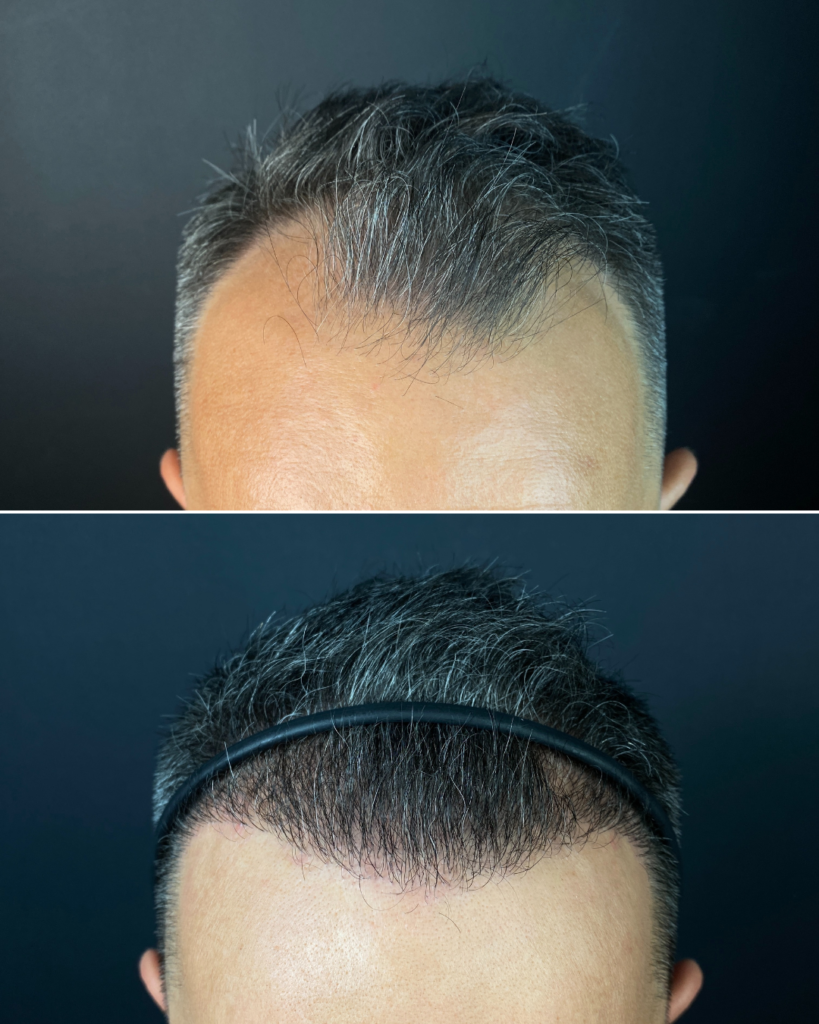
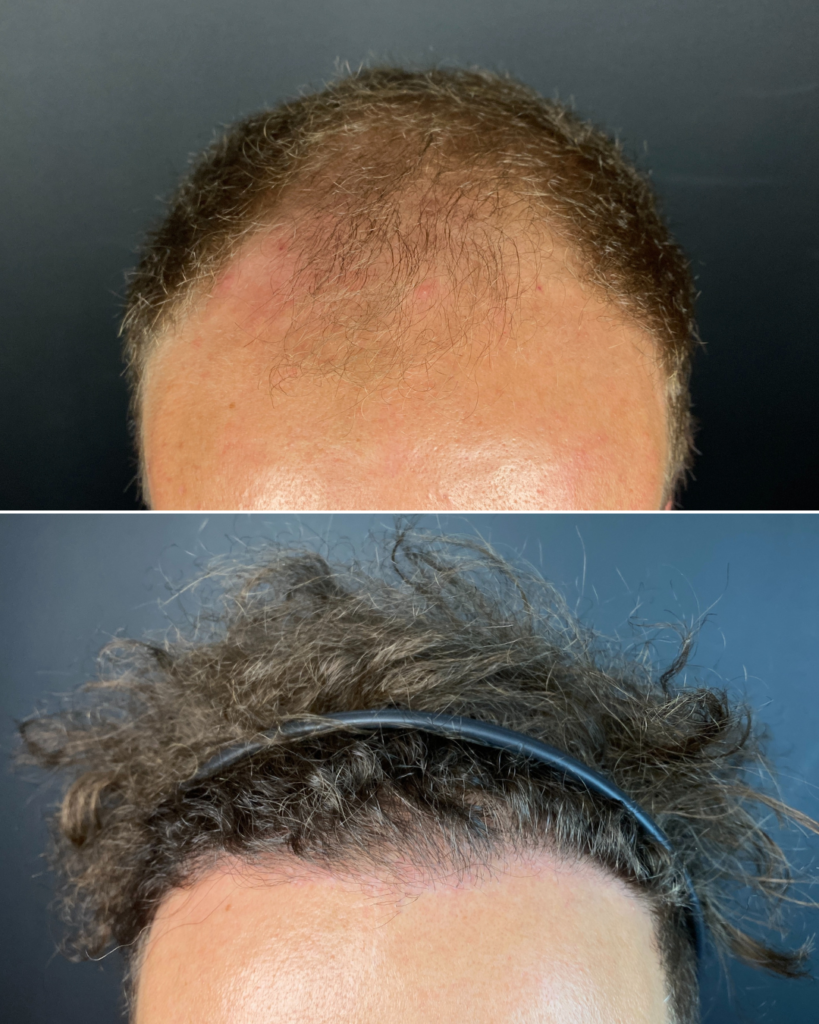
Front Hairline Restoration

Hair transplant for receding hairline/temples

dr n. med. Piotr Turkowski (PWZ: 2786580) wrzesień 2026
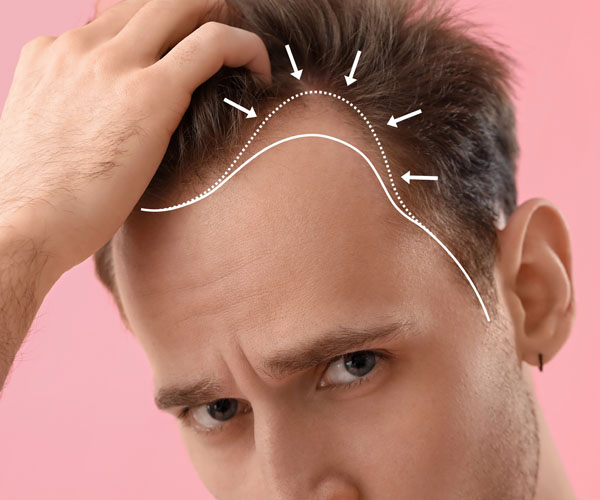
Deepening receding areas at the temples and a receding hairline are among the most common signs of androgenetic alopecia. A hair transplant in the temple areas can help restore the hairline and add density to thinning areas at the temples. Every procedure is preceded by a consultation during which the doctor assesses the feasibility of the treatment and plans the new hairline, taking into account the patient’s age, facial proportions, and natural hair growth direction.
  • Increasing the density of the receding hairline using follicles from a donor area characterized by natural resistance to DHT.
  • Customized hairline design, taking into account facial anatomy and the natural direction of hair growth.
EXPERIENCE
0+
years of experience in reconstructing the male fronto-temporal hairline
PERSONALIZATION
0%
hairline designs determined individually with the doctor
THICKENING
0-50
grafts per cm² for visual thickening of the frontal zone
INITIAL RESULTS
0-4
months until the first new hair appears

*The procedure parameters presented are based on PT Clinic’s medical standards and international ISHRS guidelines for procedures in the fronto-temporal area. The final aesthetic outcome, regrowth density, and the timing of initial hair growth depend on the patient’s individual biological and genetic factors, as well as adherence to post-procedure recommendations.

What does a temple-area hair transplant involve?


A hair transplant for receding temples is a precise microsurgical procedure aimed at restoring the receding fronto-temporal hairline. The treatment involves harvesting healthy, baldness-resistant hair follicles (known as grafts) from a donor area—typically the back or sides of the head—and meticulously implanting them into the areas affected by thinning.

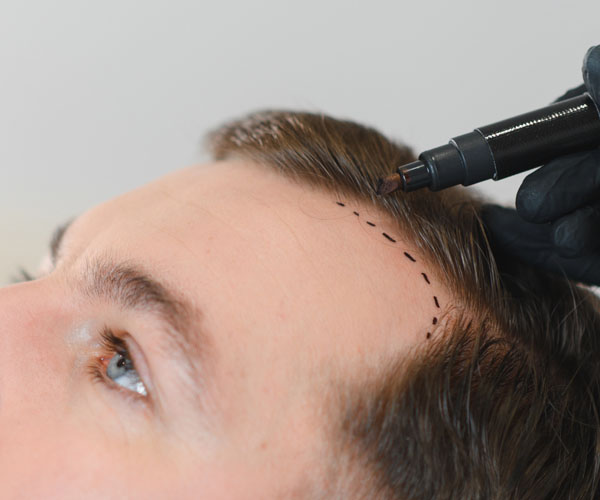
A key element of reconstructing the receding hairline areas is the personalized design of the new hairline. In doing so, the physician takes into account the patient’s facial proportions, age, anatomical structure, and natural hair density.

When reconstructing the frontal zone, the proper placement of hair follicles and the preservation of the natural angle and direction of hair growth along the front hairline are of great importance. Single follicular units (single grafts) are frequently used, enabling a highly natural appearance once the healing process is complete.

The procedure to transplant hair to the receding hairline areas is performed under local anesthesia using the FUE method, which does not require the surgical excision of a strip of skin. Consequently, no characteristic linear scar forms at the donor site, and the healing process and final outcome depend on factors such as the patient’s individual characteristics and adherence to post-procedure instructions.

Facts about the procedure

What do you need to know?

Before deciding on the procedure, check the key details regarding a hair transplant for the receding hairline area: the duration of the procedure, the type of anesthesia, the recovery process, and the longevity of the results.

Indications
Male and female pattern androgenetic alopecia, receding frontal hairline, deepening temporal recession, frontal hairline asymmetry, scarring in the frontal area.
Duration
4–8 hours (depending on the number of grafts required to fully densify the temporal area).
Anesthesia
Local
Convalescence
Approx. 7–10 days (rapid return of the patient to daily professional activities).
Final results
Initial regrowth is visible after approximately 3–4 months, with the full and final thickening result achieved after 12 months.
Durability
Permanent result (harvested hair follicles from the donor area are resistant to the hormone DHT and do not fall out).

“Restoring the receding hairline involves not only filling in areas where hair has thinned but, above all, precisely planning a new hairline. During the initial assessment, the patient’s facial anatomy, the quality of the donor area, and individual hair growth characteristics are evaluated to determine the optimal treatment plan. During the procedure, each hair follicle is implanted with careful attention to the natural angle and direction of growth.”

– Dr n. med. Piotr Turkowski

Who is a hair transplant for receding hairlines intended for?

Restoring the fronto-temporal area requires an individual medical assessment. Patients are deemed suitable for the procedure following a thorough analysis of the extent of hair loss, the causes of receding hairlines, the progression of the balding process, and the potential of the donor area at the back of the head.

Who is a candidate for a receding hairline transplant?

Medical assessment is one of the most important stages in planning a hair transplant for the frontal area. During the consultation, the doctor evaluates the patient’s health, the nature of the hair loss, and the quality of the donor area. It also involves a thorough assessment of the procedure’s feasibility. A patient may be a candidate for temple reconstruction if:
  • Stabilized androgenetic alopecia is present, causing the formation or deepening of receding hairlines at the temples.
  • The donor area (back and sides of the head) is characterized by adequate density and quality of hair follicles.
  • The hair loss process was halted or stabilized by conservative treatment.
  • Expectations regarding hairline restoration and hair density are realistic and consistent with anatomical possibilities.
  • The scalp is healthy and free from active inflammation.

When is a receding hairline transplant not recommended?

In some cases, restoring the hairline via a procedure should be postponed or replaced with a different therapy. A hair transplant to address receding temples is not indicated when:
  • The hair loss is rapid and active, and has not previously been medically stabilized.
  • Active inflammatory scalp diseases are present (e.g., scarring alopecia, psoriasis).
  • The potential of the donor area is insufficient to safely increase the density of the receding hairline area.
  • Diagnostics indicate uncontrolled hormonal or systemic disorders.
  • The patient did not complete the initial stage of conservative treatment to halt hair loss.

What should be done if the patient does not qualify for a temple-area hair transplant?

Not being immediately eligible for a procedure does not mean that receding hairlines cannot be treated. In many cases, implementing supportive and conservative therapies proves crucial for halting further hair loss and improving scalp health.
Dr. Piotr Turkowski develops an individualized treatment plan that may include pharmacotherapy, scalp mesotherapy, and platelet-rich plasma (PRP) or exosome therapy. Often, a hair transplant can only be considered once the balding process has stabilized and the scalp has been properly prepared. The decision regarding eligibility for the procedure and the optimal timing for it is always made by the doctor, based on an assessment of the patient’s condition and the progression of the condition.
Check if you are a candidate for a receding hairline transplant. Schedule a consultation where the doctor will assess your scalp and donor area, and propose an optimal treatment strategy.
Schedule a consultation

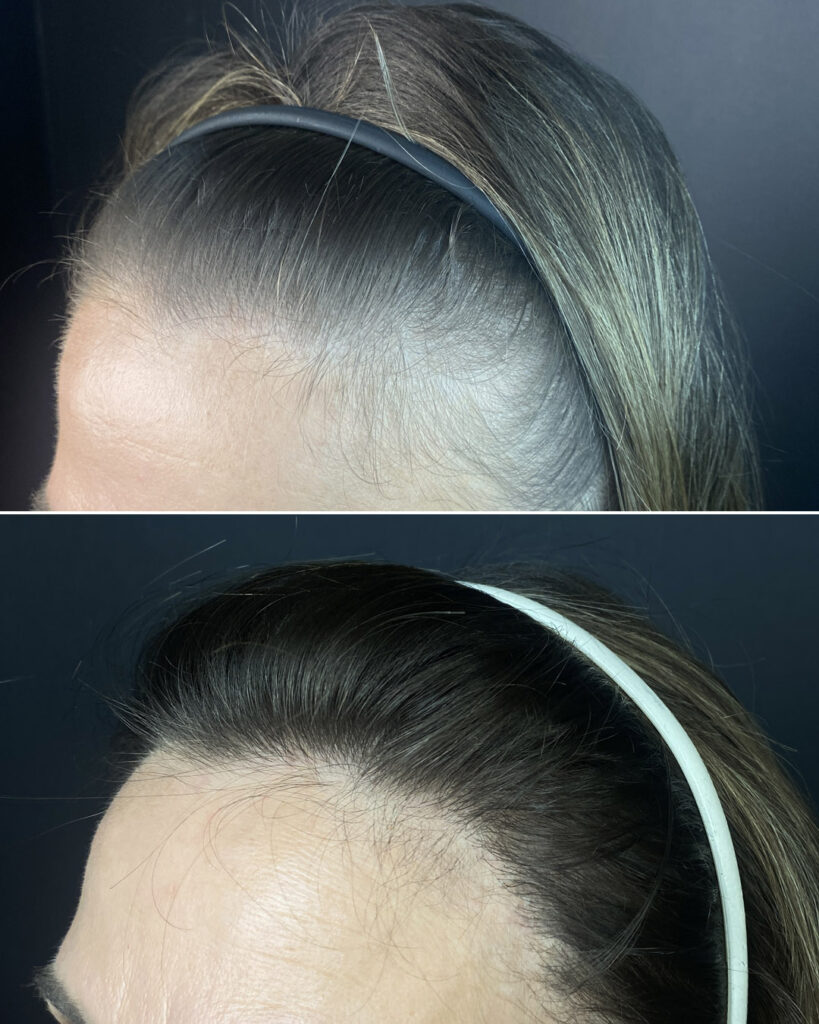
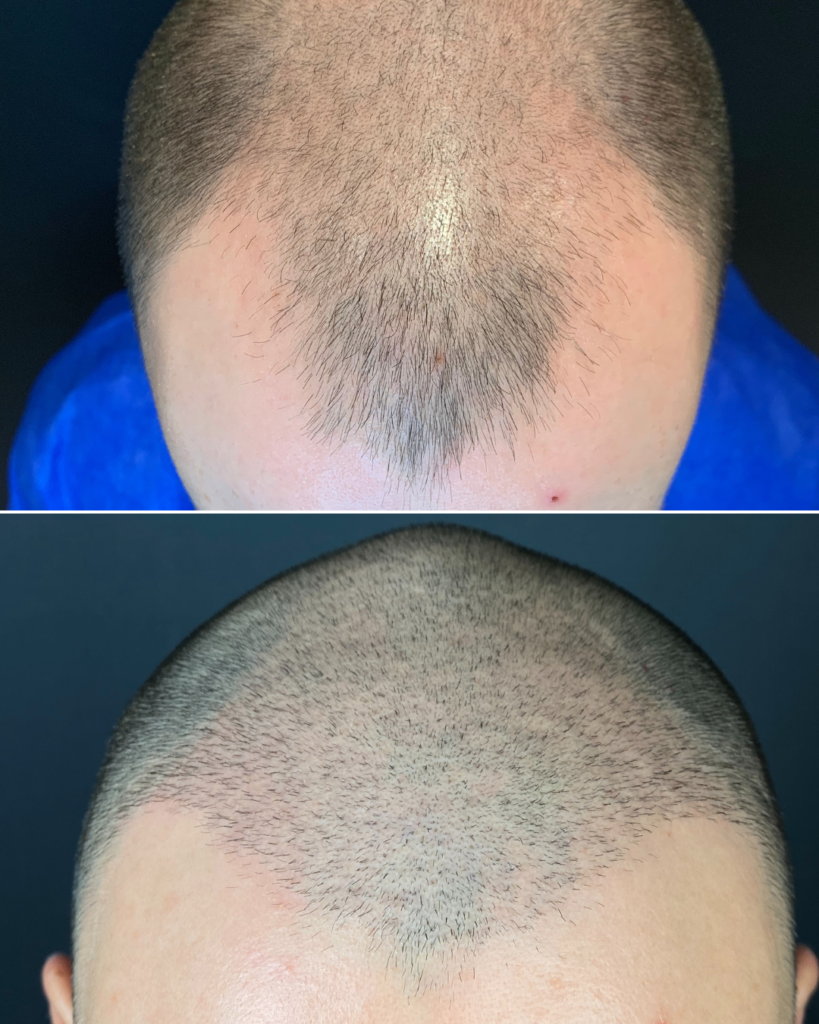
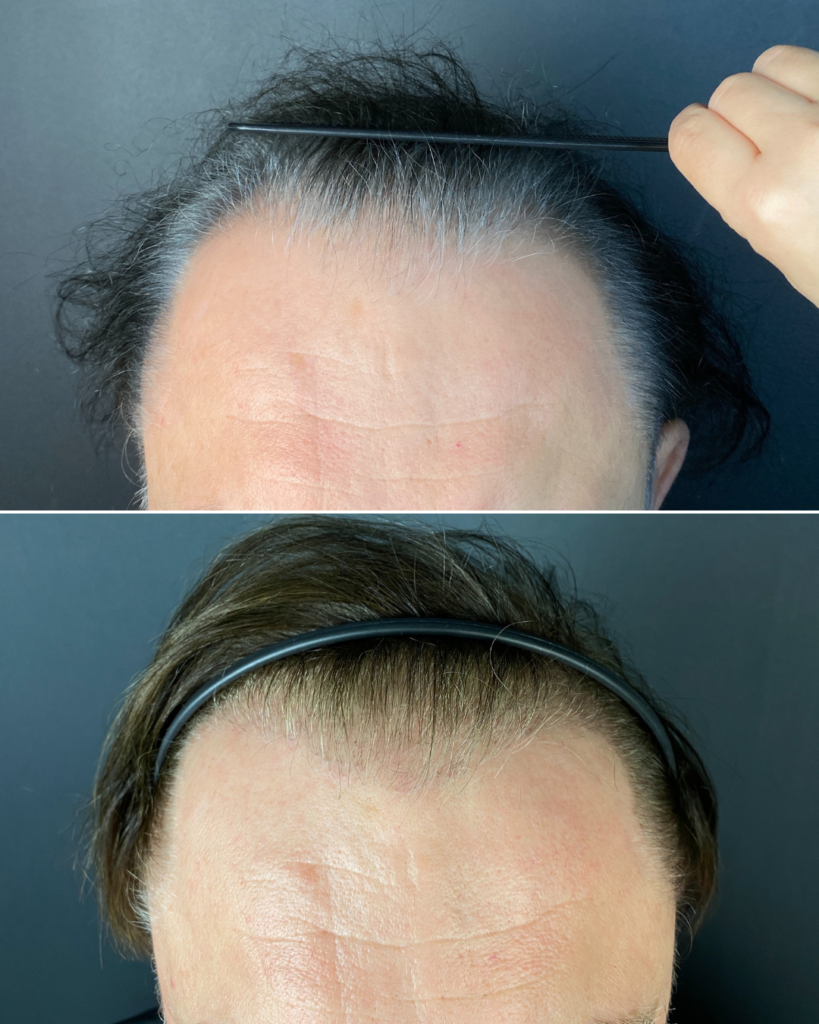
Results of a hair transplant for receding temples

Hair transplant results in the receding hairline area are not visible immediately after leaving the clinic. The process of growth and rooting of the newly transplanted hair follicles in the fronto-temporal region occurs in stages and requires time for the scalp to fully regenerate. The patient will notice the first visible changes in the receding hairline area after approximately 3–4 months, while the final, full result—featuring a dense and naturally shaped hairline—is assessed 12 months after the procedure.

What does a hair transplant for receding temples involve?

Restoration of the fronto-temporal area involves comprehensive medical assessment, precise planning of the new hairline, and professional post-procedure care. At PT Clinic, hair transplantation to address receding temples is performed using the FUE method, which entails extracting individual hair follicles from the donor area and implanting them into the areas requiring increased density. Every stage of the procedure is tailored to the individual during a consultation with Dr. Piotr Turkowski.

Consultation and hairline design

The process begins with a medical consultation to assess the stage of hair loss, the condition of the scalp, and the quality of the donor area at the back of the head. Based on this assessment, the doctor precisely designs the new hairline and determines the extent of the receding areas to be restored. An estimated number of grafts is established, with the hairline shape selected to harmonize with the patient's facial features and the anticipated progression of hair loss.

Preparation and anesthesia

On the day of the procedure, the donor area and the site designated for hair follicle implantation are properly prepared. Local anesthesia is then administered to minimize pain and enhance the patient's comfort during the procedure. The patient remains conscious throughout the process and can communicate with the medical team.

Harvesting hair follicles (grafts)

The next stage involves extracting individual follicular units (grafts) from the donor area, most commonly the back of the head. With the FUE method, each graft is harvested individually using micro-instruments. This avoids surgical incisions and protects the donor area from linear scarring.

Preparation and implantation in the receding hairline area

The harvested hair follicles are sorted and prepared for transplantation. Follicular units are precisely implanted into the receding hairline area, maintaining the natural direction, angle, and density of the hair. Single grafts are placed along the edge of the new hairline, which is crucial for a natural appearance and aesthetic outcome once the hair grows back.

Completion of the procedure and post-procedure recommendations

Upon completion of the hair follicle implantation in the receding hairline area, the patient receives detailed written instructions regarding scalp care, washing, and the appropriate regimen for the days immediately following the procedure. Typically, the procedure does not require hospitalization, and the patient can return home. The healing process varies from person to person, depending on factors such as the patient's individual characteristics and adherence to post-operative guidelines.

Results and follow-up care

Following the procedure, hair in the temple areas regrows gradually, in accordance with the natural biological cycle. Temporary shedding of the hair shafts (so-called "shock loss") may occur during the first few weeks; this is a normal stage of the regeneration process. New growth begins after approximately 3–4 months, and the final result of the increased density in the temple areas is assessed after 12 months. Throughout this period, the patient remains under the team's continuous care and attends follow-up appointments.

How much does a receding hairline transplant cost?


The cost of a hair transplant procedure for the receding hairline area is determined individually during the medical consultation. The final price depends primarily on the extent of the fronto-temporal recession and the number of grafts required to achieve the desired density and a natural-looking new hairline. At PT Clinic, we assess each case individually, taking into account the patient’s needs and anatomical characteristics.

The cost of a hair transplant for the receding hairline area in Warsaw depends on the scope of the procedure, the size of the area requiring restoration, and the patient’s individual expectations. Transplantation in the frontal zone requires precise planning and the implantation of hair follicles while taking into account the natural angle and direction of hair growth. The goal is to achieve a result that best complements the facial anatomy and ensures a natural-looking hairline. At PT CLINIC, the procedure is performed by Dr. Piotr Turkowski using the FUE method, following a preliminary medical consultation and assessment of suitability.

To get an estimate of the cost of a hair transplant for receding temples in your specific case, we encourage you to schedule a medical consultation or request a preliminary quote based on photos; this will allow us to precisely determine the number of grafts required.

FAQ

Below, we have compiled answers to the most frequently asked questions regarding hair transplantation in the fronto-temporal area. We address issues concerning procedure safety, the process of restoring receding hairlines, recovery, and the longevity of results to help patients make an informed decision.

The procedure is performed under local anesthesia to minimize pain and enhance patient comfort. A brief sensation of pressure or burning may occur during the administration of the anesthetic. Once it takes effect, the extraction and implantation of hair follicles are generally well tolerated. Sensations may vary depending on the patient’s individual sensitivity.

Hair follicles harvested from the donor area (the back and sides of the head) are genetically resistant to the effects of dihydrotestosterone (DHT), the hormone responsible for androgenetic alopecia. Only the hair shafts may fall out in the weeks following the procedure—a phenomenon known as “shock loss“—but this is a natural stage of regeneration. The hair bulbs themselves remain in the scalp and produce new, healthy hair that does not fall out.

The first new hairs in the receding hairline area appear approximately 3–4 months after the procedure. Noticeable thickening of the frontal hairline is visible after 6–8 months, and the final, natural result is assessed after 12 months.

The hair follicles to be transplanted are typically harvested from a donor area characterized by greater resistance to the hormones responsible for androgenetic alopecia. Consequently, in many cases, the transplanted hair retains its properties even after being moved to the receding hairline area. However, the final result and its longevity may depend on the patient’s individual characteristics, as well as the progression of hair loss and adherence to post-procedure medical recommendations.

The number of grafts (follicular units) required depends on the depth of the receding hairline at the temples and the desired density of the new hairline. Typically, between 800 and 2,000 grafts are implanted in the fronto-temporal area. The exact number is determined by the doctor during the patient’s individual assessment.

The patient can return to light office work as early as 2–3 days after the procedure. If the work involves physical exertion or wearing headgear, it is recommended to wait about 7–10 days, allowing the micro-incisions in the temple areas to heal fully.

Light walking is recommended from the very first days; however, strenuous workouts, gym sessions, and activities causing heavy sweating should be postponed for 14 days. It is recommended to resume swimming or using the sauna after 3–4 weeks.

FUE hair transplantation is a minimally invasive procedure performed under local anesthesia. At PT CLINIC, the procedure is carried out by Dr. Piotr Turkowski and a qualified medical team, in accordance with established procedures and standards. Prior to the transplant, every patient undergoes a medical consultation and assessment to evaluate indications, contraindications, and potential risks associated with the procedure.

Most patients with stabilized androgenetic alopecia and a suitable donor area are eligible for the procedure. Contraindications may include active scalp conditions, as well as uncontrolled hormonal or systemic disorders. The patient’s health status is always assessed during the consultation.

Why do patients choose a hair transplant for receding temples at PT Clinic?

Choosing the right clinic for a receding hairline procedure is crucial for the final appearance of the new hairline and the safety of the entire process. At PT Clinic, every procedure is preceded by a thorough consultation and medical assessment overseen by Dr. Piotr Turkowski. We carefully evaluate individual needs, develop a detailed plan for hairline restoration, and uphold the highest medical standards at every stage of treatment.

Experienced team

The procedure to restore receding hairlines is performed by an experienced medical team specializing in the diagnosis of androgenetic alopecia and hair transplantation. Years of practice and adherence to standardized procedures enable precise planning of the hairline restoration, taking into account the type of hair loss, the patient’s facial anatomy, and the potential of the donor area.

Advanced methods of bend reconstruction

At PT Clinic, we perform hair transplants for receding hairlines using the minimally invasive FUE method. This procedure involves extracting individual follicular units (grafts) using microneedles. The technique eliminates the need for surgically excising a strip of skin from the back of the head, minimizes tissue trauma, and significantly shortens the patient’s recovery time.

Naturally designed hairline

The design and restoration of receding hairlines always take into account the natural architecture of the forehead, the proper angle and direction of hair growth, and the planned density along the edge of the new hairline. Single follicular units are utilized to achieve an effect that best replicates the natural appearance of the hairline; however, the final result depends on the patient’s individual characteristics, the quality of the donor area, and the healing process.

Safety and monitoring of treatment

Every procedure addressing receding hairlines is performed in a sterile clinical setting, adhering to the strictest medical standards. The patient remains under the constant care of a medical team throughout both the procedure and the entire recovery period. The healing process and the gradual regrowth of hair in the fronto-temporal area are regularly monitored during follow-up visits.

Opinions about hair transplantation

A receding hairline and thinning in the temple area directly impact facial appearance and daily self-confidence. At PT Clinic, we fully appreciate the importance of naturally restoring the hairline and ensuring procedural precision. Discover the testimonials and stories of patients who chose to restore their frontal hairline under the care of Dr. Piotr Turkowski—regaining their comfort and a smile that beams every time they look in the mirror.

★★★★★ ★★★★★

Before deciding on the procedure at PT CLINIC, I consulted with several other providers, but it was the doctor’s matter-of-fact approach and the detailed explanation of the entire process that really convinced me. Dr. Turkowski explained how many grafts would be needed and why it is important to properly plan the use of the donor area. I am very pleased with the result; in my opinion, the hair transplant looks natural and has met my expectations.

Paweł, 45 years old
★★★★★ ★★★★★

The procedure to thicken the hair in the receding hairline areas was completely painless and took place in a very comfortable atmosphere. The recovery period itself turned out to be much easier than I had expected—after a week, there was practically no trace of the micro-incisions. The result after 12 months exceeded my wildest expectations. Definitely the best investment in myself.

Michał, 29 years old
★★★★★ ★★★★★

Restoring my receding hairline with Dr. Turkowski was about much more than just aesthetics. For years, I struggled with insecurities, constantly avoiding the wind and wearing hats to hide the thinning areas. Today, my hairline is full and even. I have regained my full self-confidence and peace of mind.

Tomasz, 36 years old
★★★★★ ★★★★★

I had many concerns before the procedure, but the entire process went smoothly and took place in a friendly atmosphere. Thanks to local anesthesia, the procedure was well-tolerated, and the recovery period turned out to be shorter than I had expected. After about 12 months, I was able to assess the final result, and I am very pleased with it. It was a decision I do not regret.

Marcin, 41 years old
★★★★★ ★★★★★

The procedure to add density to my receding hairline, performed by Dr. Piotr, was flawless. A natural shape was my top priority, and I can finally look in the mirror with joy, without having to style my hair to hide anything.

Kamil, 32 years old
Consultation and treatment plan

Preliminary qualification

Take the first step toward restoring your receding hairline and regaining your full confidence. Simply fill out a brief medical form and submit photos of your hairline. Our medical team, led by Dr. Piotr Turkowski, will thoroughly analyze the condition of your scalp, the extent of the recession, and the potential of the donor area at the back of your head. Based on this assessment, we will prepare a personalized strategy for reconstructing your frontal hairline, including a precise cost estimate and the projected number of grafts.

Our team usually responds within 24 hours.

Substantive verification

The medical content on this site has been verified by a doctor – Piotr Turkowski, MD, PhD (PWZ: 2786580).

Legal notice: The content of this website is for educational and informational purposes only. It does not constitute professional medical advice, diagnosis, or treatment. It does not constitute a commercial offer within the meaning of Article 66 § 1 of the Civil Code.