



Hair transplantation is an advanced restorative surgery procedure that requires not only excellent technical facilities and surgical precision but, above all, thorough medical preparation. Although the procedure is primarily associated with the aesthetic restoration of hair density, it is a genuine surgical intervention that involves disrupting tissue continuity. For this reason, a crucial pre-operative stage at our Warsaw clinic involves detailed laboratory diagnostics and a comprehensive assessment of the patient’s health. Before the transplant is performed, it is essential to evaluate the condition of the hair and scalp as well as the patient’s general health. Pre-transplant tests allow for the assessment of factors such as blood clotting parameters, blood count, and any potential elements that might increase the risk of complications. The specific tests are selected by the doctor on an individual basis, taking into account medications being taken, medical history, and the planned procedure. What else needs to be checked before a hair transplant?
What tests are performed before a hair transplant?
In the case of surgical hair restoration, there is no single, rigid, universal set of laboratory tests applicable to every patient without exception. The scope of necessary tests is always determined on an individual basis, taking into account the patient’s age, general health, underlying medical conditions, and any medications taken regularly. The primary goal of preoperative diagnostics is to confirm that the body possesses adequate regenerative capacity and that the procedure does not entail an elevated risk of complications.
Depending on the recommendations of the qualifying physician, preoperative diagnostics may include:
- a complete blood count (CBC) with a differential,
- selected biochemical parameters assessing internal organ function (including glucose levels, electrolytes, and kidney and liver markers),
- coagulation tests assessing the clotting system (PT, APTT, INR),
- testing for viral infections (including HIV, HBsAg, and HCV),
- specialized tests aimed at managing chronic diseases, such as diabetes or hypertension.
Complete blood count and biochemical parameters
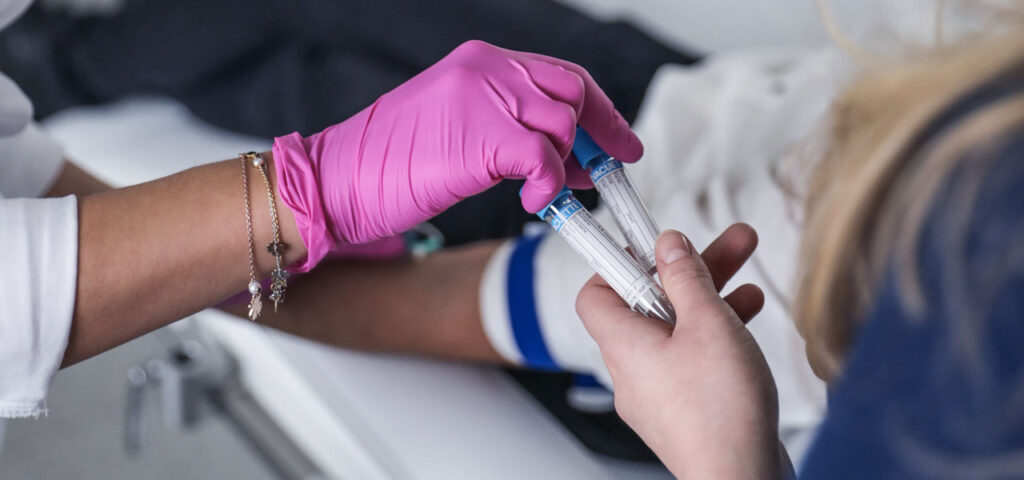
Performing a basic complete blood count (CBC) is the foundation of an initial health assessment. This test provides key information regarding red blood cell counts, hemoglobin levels, white blood cells, and platelets. These parameters make it possible to rule out conditions such as occult anemia, inflammation, or immune system disorders that could negatively affect tissue healing in the donor and recipient areas.
It is worth noting that complete blood count (CBC) results are not used to assess hair quality or the density of the occipital area. Such an assessment requires a specialized in-office examination—specifically trichoscopy—which allows for the microscopic evaluation of hair follicles and scalp pores. Any abnormalities in laboratory results may simply indicate a need to temporarily postpone the procedure until the body’s physiological parameters have been normalized.
Coagulation system and bleeding risk management
Every surgical procedure involves micro-punctures and the disruption of blood vessels in the scalp. Therefore, an assessment of hemostasis and the coagulation system is mandatory. Patients taking medications that affect blood clotting—including anticoagulants and antiplatelet agents—require special attention.
The International Society of Hair Restoration Surgery (ISHRS) emphasizes the importance of fully informing the surgeon about any bleeding tendencies or medications currently being taken. Medications prescribed by a cardiologist or other specialist must never be discontinued without professional guidance; any modification to the treatment regimen prior to the procedure requires consultation and strict medical supervision.
Viral markers and medical history
As part of the safety procedures in place at modern surgical centers, tests for viral markers (HIV, hepatitis) may be performed prior to a procedure. These tests aim to ensure the highest standards of sterility and safety for both the patient and the medical staff. They are procedural in nature and do not, in themselves, constitute grounds for disqualification.
An equally important part of the qualification process is an in-depth trichological consultation, during which the doctor discusses the patient’s hair loss history, family history of balding, past illnesses, and lifestyle. This is also the time to assess whether the underlying cause of the problem is a hormonal imbalance requiring the prior implementation of targeted hair loss treatment.
Chronic diseases, medications, and the importance of medical history
Laboratory testing alone does not replace a thorough medical history. Patients should always inform their doctor of any significant medical conditions and all medications they are taking—including over-the-counter drugs and supplements. Conditions relevant to transplantation include, among others, cardiovascular disease, clotting disorders, liver disease, uncontrolled hypertension, immune-system disorders, scalp diseases or inflammation, and active infections.
In some cases, a doctor may decide to postpone a hair transplant procedure until the patient’s health condition has stabilized. However, this does not necessarily mean there is a permanent contraindication for the transplant. If hair thinning recurs, specialized in-office treatments—such as scalp mesotherapy or platelet-rich plasma (PRP) therapy—can also be beneficial.
Can anyone undergo a hair transplant procedure?
Hair transplantation is not a procedure suitable for every patient. Eligibility is determined by a physician following a detailed assessment of the patient’s health, the quality of the donor area, the cause of hair loss, and the patient’s expectations. Furthermore, there are medical contraindications to hair transplantation, which may be either absolute or temporary. Conditions such as an active infection, certain uncontrolled diseases, or blood clotting disorders may necessitate postponing the procedure, performing additional steps, or seeking further consultation.
It is also important to bear in mind that a hair transplant is a surgical procedure, not merely a cosmetic treatment. The ISHRS (International Society of Hair Restoration Surgery) emphasizes the importance of proper medical preparation, procedure planning, and having all surgical aspects performed by a suitably trained physician.

Contraindications and safety of the surgical procedure
Hair transplantation is an advanced microsurgical procedure, which means there are specific factors that preclude its immediate performance. Contraindications may be absolute or temporary. The most common include active scalp infections, uncontrolled hypertension, severe blood clotting disorders, and uncompensated systemic diseases.
If reversible inflammation or test abnormalities are detected, the physician may decide to postpone the surgery until the patient’s health has stabilized. Patient safety and high graft survival rates are always the absolute priority in professional clinical practice.
At PT CLINIC, the hair transplant qualification process is never approached in a formulaic manner. A comprehensive analysis of laboratory test results and scalp condition allows us to fully ensure the safety of the procedure and guarantee natural, long-lasting aesthetic results.
