


Atopic dermatitis (AD) can affect various parts of the body, including the scalp, where the condition can be quite difficult to diagnose. Its symptoms often resemble those of other disorders. Typical signs include dryness, redness, and persistent itching, which frequently lead to intense scratching and further skin damage. If symptoms recur or worsen, it is advisable to consult a specialist. Find out what you should know about scalp atopic dermatitis.
What is atopic dermatitis, and what are the causes of the condition?
Atopic dermatitis is a chronic, inflammatory disease with an immunological basis. Its development is largely linked to genetic predisposition. Impaired epidermal barrier function plays a significant role in the course of the condition; as a result, the skin loses moisture much more easily and becomes more susceptible to external factors and dryness.
Atopic dermatitis can follow a course characterized by periods of remission and flare-ups. It is not a contagious disease; therefore, it cannot be contracted through contact with an affected individual. When the condition affects the scalp, an accurate diagnosis is particularly important. Similar symptoms may also appear in other dermatological conditions, such as seborrheic dermatitis or psoriasis. Consequently, the appearance of the scaling skin alone is not always sufficient to determine the underlying cause of the problem.
Atopic dermatitis – scalp symptoms
One of the typical symptoms of atopic dermatitis on the scalp is severe skin dryness and persistent itching. Although scratching provides temporary relief, it often damages the epidermis. This creates a vicious cycle of itching and scratching: the more the skin itches, the more frequently one scratches, which usually exacerbates inflammation and irritation.
Furthermore, the following may appear on the scalp:
- small lumps,
- redness of the skin (erythema),
- peeling of the epidermis,
- a sensation of burning and tightness,
- irritation and cracking of excessively dry skin.
Symptoms of atopic dermatitis on the scalp vary among patients. Attention should be paid to the nature of the lesions. Unlike the characteristic symptoms of psoriasis, atopic dermatitis does not present with thick, sharply demarcated silvery plaques.
If excessive hair loss also occurs, it may stem from chronic inflammation as well as mechanical damage to the hair. However, this does not automatically imply permanent damage to the hair follicles.
What can trigger an AD flare-up?
The course of atopic dermatitis (AD) may involve an intensification of symptoms, depending on factors such as the body’s individual response. Flare-ups are often linked to skincare practices and environmental factors. Such episodes are most commonly triggered by:
- intense or chronic stress,
- allergens,
- dry air,
- rapid temperature changes,
- using irritating cosmetics,
- excessive dryness of the skin.
Not every one of the listed factors will trigger a disease flare-up in a given patient. This is an individual matter; therefore, careful observation can be helpful in cases of recurring problems.
Scalp diagnosis – why is it so important?
Scalp redness, itching, or flaking are not symptoms exclusive to atopic dermatitis; they also appear in other conditions such as psoriasis, contact dermatitis, seborrheic dermatitis, and various other dermatoses. Therefore, one cannot assume that every instance of an itchy or dry scalp indicates atopic dermatitis. A correct diagnosis allows for the selection of appropriate treatment and avoids the repeated use of random products.
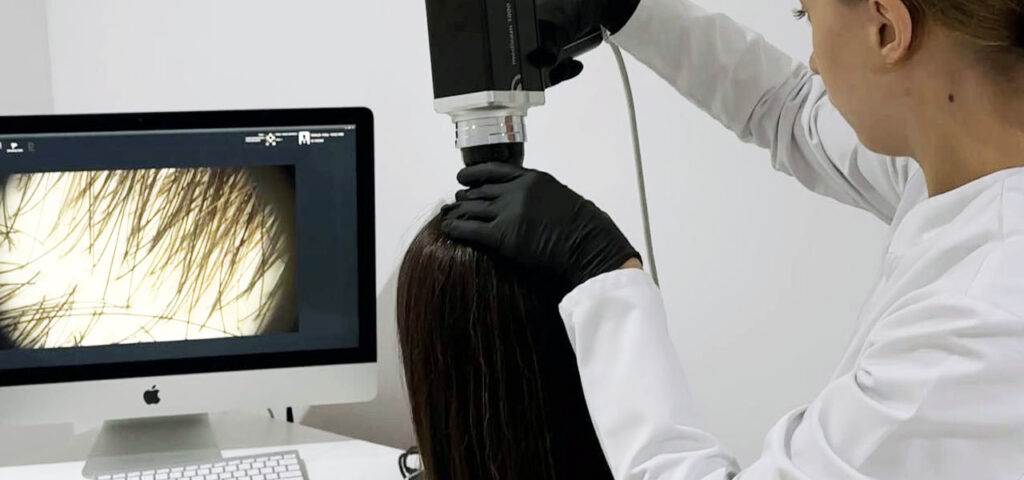
During a consultation, a specialist can assess the condition of the scalp and hair and, where appropriate, utilize trichoscopy. This examination provides a magnified view of the scalp and hair, aiding in differential diagnosis and the assessment of features indicative of a specific condition.
Treating atopic dermatitis of the scalp – why a shampoo might not be enough?
In the case of atopic dermatitis, using random skincare products and shampoos from the drugstore typically fails to solve the problem. Although such products may temporarily alleviate discomfort, they generally do not address the root cause of the issue or the underlying disease mechanism.
The appropriate course of action should always be tailored to the current condition of the scalp and hair. Depending on the severity of the lesions, a physician may recommend specific topical treatment or a care regimen focused on restoring and protecting the epidermal barrier.2
Proper emollient care is crucial in cases of atopic dermatitis of the scalp. Products should be carefully selected to meet the skin’s needs and used according to a specialist’s recommendations. During flare-ups, it is essential to limit factors that further irritate or dry out the skin.
It is also important to avoid the prolonged use of topical medications without medical supervision, particularly preparations containing active ingredients that require careful selection. A doctor should always determine the type of therapy, the duration of treatment, and the method of application for specific products.
Atopic dermatitis and hair loss – is there a link?
Atopic dermatitis does not necessarily cause permanent hair loss. However, this problem can arise when the skin remains inflamed for a prolonged period and is subjected to intense scratching. Mechanical damage to both the hair and the skin can worsen their condition.
If hair thinning accompanies skin changes, it is worth discussing this issue during a medical consultation. A specialist can then examine both the scalp and the hair follicles to determine whether atopic dermatitis is responsible for the hair loss or if there is another underlying cause.
Treatments supporting scalp regeneration
During periods of atopic dermatitis remission—when inflammation has subsided and the skin requires deep structural repair and nourishment—modern aesthetic medicine offers procedures that support tissue regeneration.
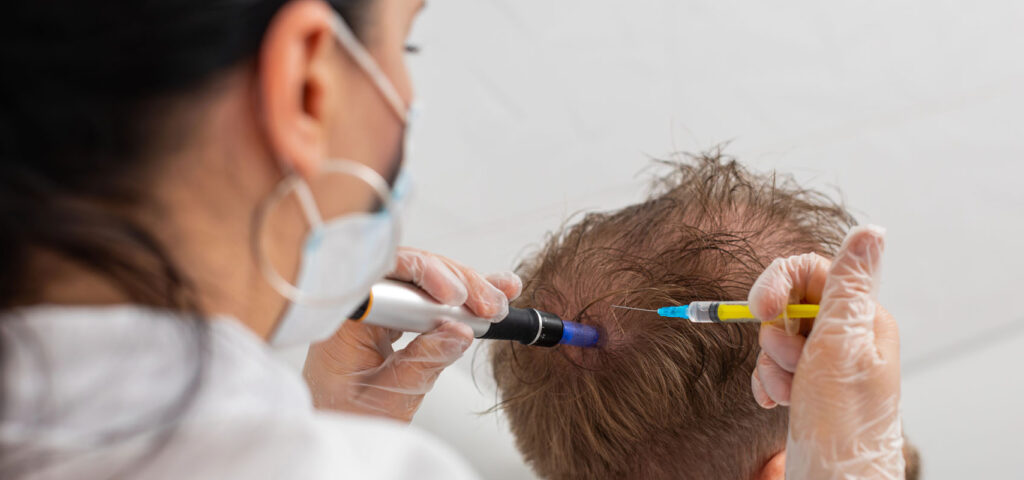
Precisely tailored scalp mesotherapy enables the delivery of revitalizing substances, while exosome hair therapy exhibits potent anti-inflammatory effects and stimulates epidermal cell renewal. Treatment safety always depends on an individual clinical assessment.
When is it worth consulting a specialist about the changes?
A consultation is particularly advisable if itching persists over an extended period and the lesions recur, accompanied by redness or skin cracking. It is also best to avoid frequently switching shampoos or cosmetic products without first identifying the underlying cause of the problem. The scalp often reacts with irritation to the ingredients in various products, and self-treatment can make it difficult to properly assess the condition of the skin.
At PT CLINIC, scalp and hair diagnostics typically involve a clinical assessment and trichoscopy. These procedures aim not only to identify abnormalities but also to distinguish atopic dermatitis from other conditions, subsequently allowing for the selection of an appropriate treatment plan for the specific case.
Atopic dermatitis is a chronic inflammatory disease primarily associated with a compromised epidermal barrier and genetic predisposition. It is often accompanied by dryness, scaling, erythema, and intense itching. Scratching can exacerbate inflammation and worsen symptoms.
Since the symptoms of atopic dermatitis (AD) resemble those of other scalp conditions, a professional differential diagnosis is important. This enables the selection of the appropriate course of action. Treatment can then be tailored to the severity of the symptoms and often involves topical therapy as well as a suitable emollient care regimen. If symptoms persist or are accompanied by hair loss, it is advisable to consult a specialist in this field as soon as possible.
Frequently Asked Questions (FAQ)
Bibliography and medical sources
- Bieber, T. (2008). Atopic dermatitis. New England Journal of Medicine, 358(14), 1483-1494.
- Silverberg, J. I. (2017). Atopic Dermatitis: The Comprehensive Guide. Springer.
- Guttman-Yassky, E., & Krueger, J. G. (2017). Atopic dermatitis and psoriasis: two different immune diseases driven by different cytokine subsets. Journal of Allergy and Clinical Immunology, 139(6), 1765-1772.
