


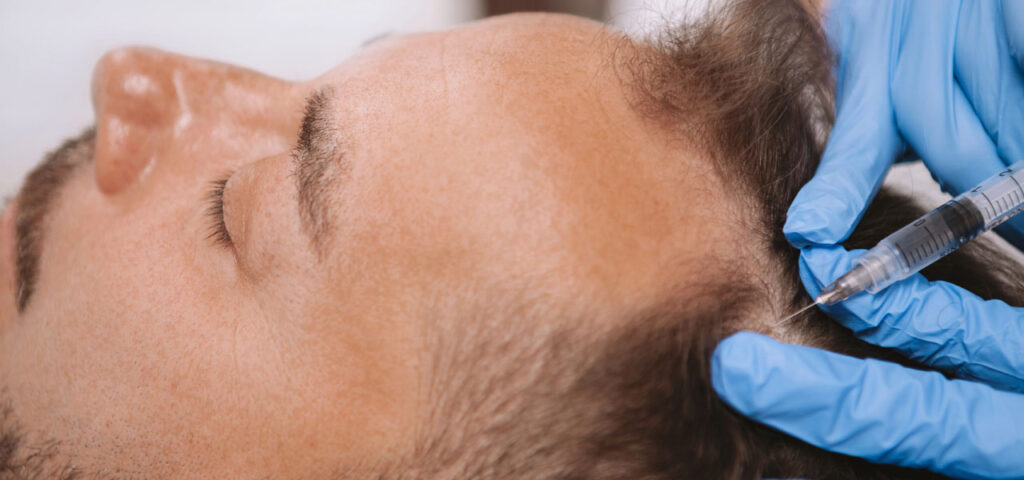
FUE hair transplantation is considered the gold standard for surgically restoring density to areas affected by hair loss. However, the transplant procedure itself is merely the beginning of the journey toward full satisfaction with one’s new hairstyle. The biological tissue regeneration process and the stimulation of dormant follicles to grow take many months. It is hardly surprising, then, that patients increasingly ask about the value of complementary therapies. Among the most popular options are post-transplant platelet-rich plasma (PRP) therapy and specialized scalp mesotherapy. Do these treatments truly offer tangible benefits? When should they be implemented, and are they a mandatory part of recovery? Discover an expert perspective based on current medical knowledge.
How does platelet-rich plasma (PRP) support recovery after FUE?
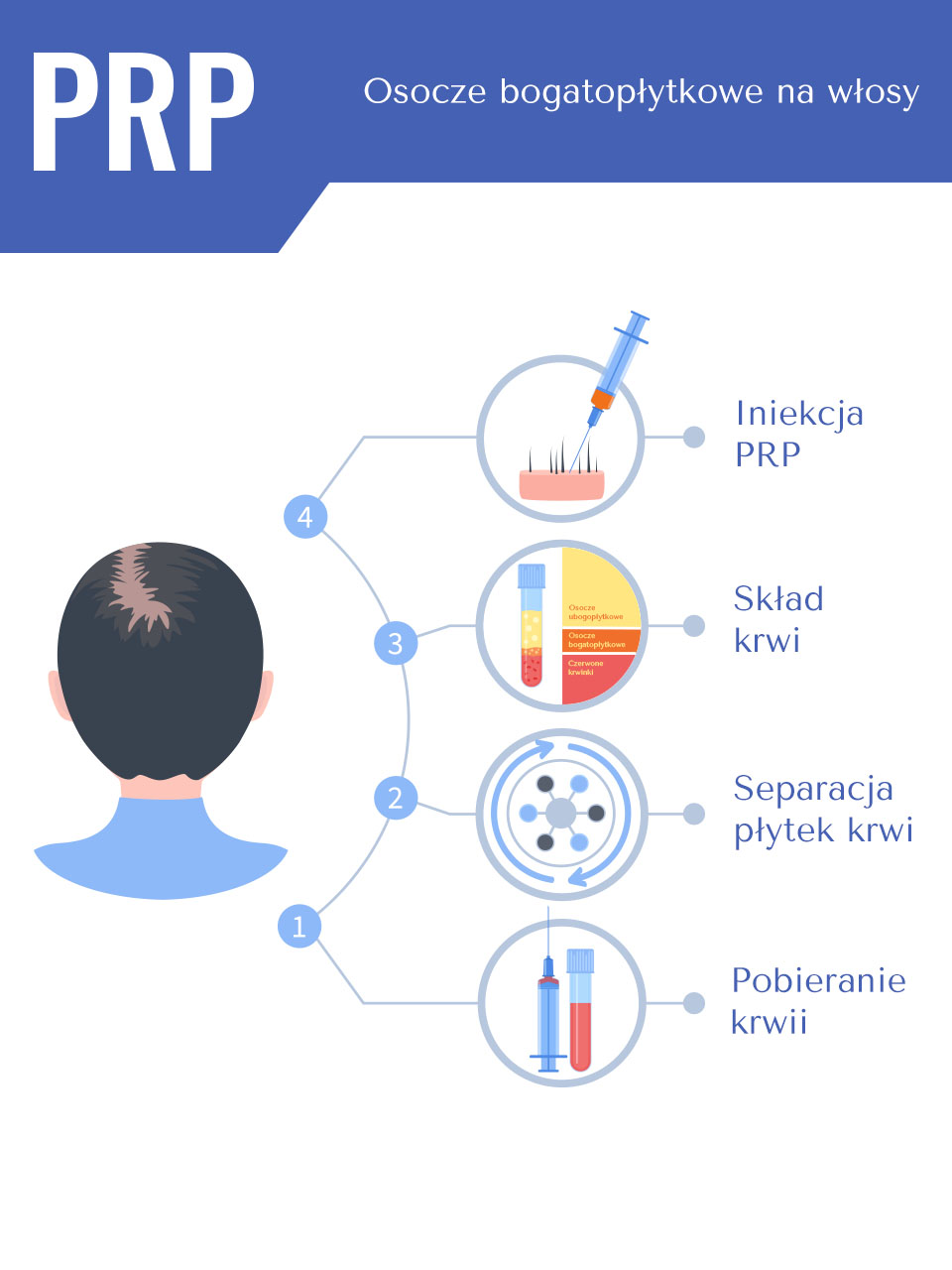
Platelet-rich plasma is prepared directly from the patient’s own blood via a centrifugation process. The resulting autologous concentrate is characterized by a high concentration of platelets which, once deposited in the tissue, release valuable growth factors (such as PDGF, TGF-beta, and VEGF). These substances stimulate repair processes, angiogenesis (the formation of new blood vessels), and stem cell proliferation.
In the context of hair restoration surgery, PRP is being extensively studied as a method capable of supporting the survival of implanted grafts, shortening the healing time of the recipient area, and accelerating the transition of hair follicles into the growth phase. Clinical studies indicate that, in some patients, plasma can contribute to the faster resolution of post-operative redness and mitigate the severity of “shock loss.” However, it is important to remember that human biology varies, and the therapy’s effectiveness depends on the individual’s physiological characteristics.
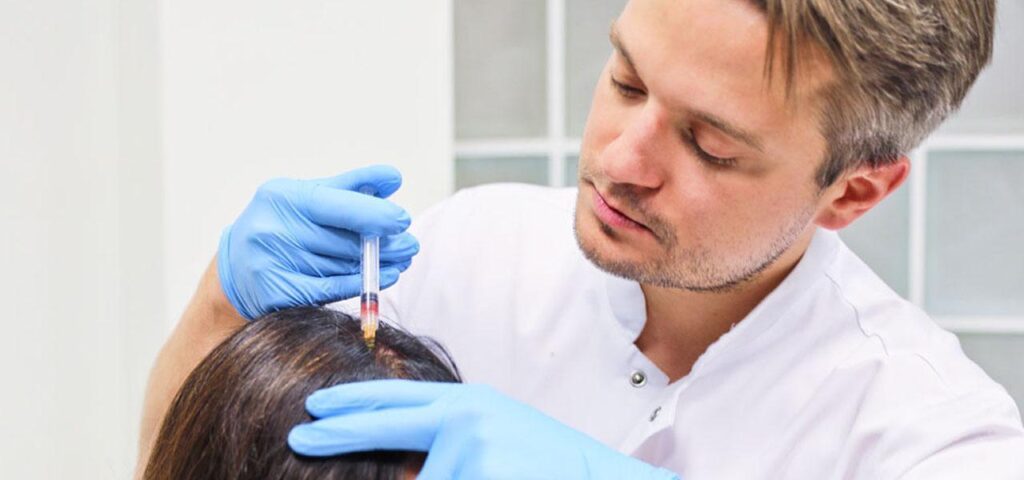
Platelet-rich plasma after a transplant – when can it be used?
There is no single, rigid, universal treatment schedule suitable for every patient. The decision regarding when to administer platelet-rich plasma (PRP) after a transplant depends on numerous clinical variables, including the rate of tissue healing, the extent of the transplanted area, and the general condition of the scalp. In medical practice, protocols vary:
- some clinics choose to administer PRP to prepare the scalp prior to a planned FUE procedure,
- many physicians perform intraoperative injections immediately after graft implantation to provide immediate support for their blood supply,
- treatments can also be scheduled as a supplementary series during the later stages of recovery (e.g., after the new hair has healed and stabilized).
It is strictly forbidden to independently decide to perform injections into a scalp that is still healing, without the express consent of the attending physician based on a physical examination. A premature or unskilled intervention could damage the delicate, newly implanted follicles.
Scalp mesotherapy after a hair transplant – what is it and when does it make sense?
Scalp mesotherapy is a broad term encompassing a wide range of procedures that involve the precise delivery of nutrients, vitamins, amino acids, or peptides directly into the dermal layers. While the treatment is highly effective for preventing hair loss and stimulating weakened native hair, it requires the utmost caution when performed on a scalp that has recently undergone a transplant.
Not every product available on the market is suitable for application to the area undergoing transplantation. It is crucial to select biocompatible substances that will not trigger an inflammatory response or irritation near the sensitive grafts. The choice of the specific cocktail, the administration technique, and the safe timing for the procedure is always determined by the physician.
Individual schedule of supportive treatments
Planning a series of stimulating treatments following an FUE transplant requires an in-depth medical analysis. During the follow-up consultation, the specialist considers key factors:
- the total extent of the transplant performed and the graft density,
- indywidualne tempo oraz jakość gojenia się skóry głowy,
- the condition and biology of non-transplanted hair (including the presence of miniaturization processes),
- presence and severity of androgenetic alopecia,
- the primary goal of adjunctive therapy (e.g., accelerating healing or preventing further hair loss).
Determining the right timing for the treatment is crucial for patient safety and the ultimate aesthetic outcome. Before proceeding with the procedure, it is also necessary to rule out any medical contraindications or hypersensitivity to the active ingredients in the products.
Are PRP and mesotherapy mandatory after a hair transplant?
Many myths have arisen surrounding stimulating treatments. The most significant concerns the alleged necessity of undergoing them after every transplant. In reality, neither platelet-rich plasma (PRP) nor mesotherapy is strictly required to achieve a satisfactory, dense result.
The foundation of a successful transplant lies in proper medical assessment, flawless surgical technique performed by an experienced surgeon, and the patient’s meticulous adherence to postoperative instructions. Therapies such as PRP represent an extremely valuable, modern adjunct to treatment capable of optimizing regenerative processes; however, the decision to incorporate them must be based on genuine clinical needs rather than marketing pressure.
You can read more about the FUE hair transplant procedure itself, the qualification details, and the expected medical results directly on our page dedicated to FUE hair transplantation.
Targeted support for the best results
Combining FUE hair transplant surgery with well-planned biological therapies (such as PRP or targeted mesotherapy) can yield tangible benefits for the patient by supporting tissue healing and improving hair condition. However, an individualized medical approach remains the key to success. Rather than making hasty, independent decisions, it is best to rely on a specialist who can objectively assess the condition of the scalp and propose a safe, effective course of action.
Frequently Asked Questions (FAQ)
Bibliography and medical sources
- Gentile, P. et al. (2015). The Effect of Platelet-Rich Plasma in Hair Loss: A Randomized Controlled Trial. Stem Cells Translational Medicine, 4(11), 1317-1323.
