


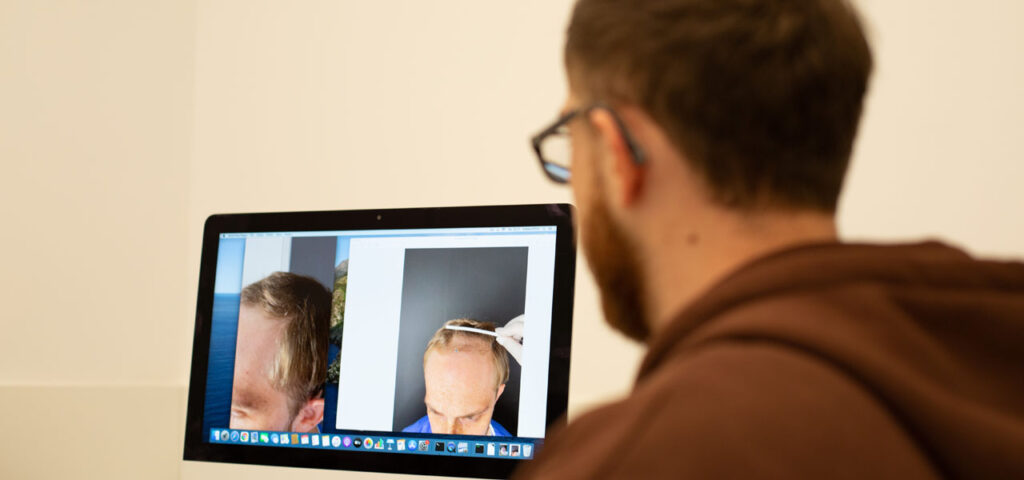
The FUE (Follicular Unit Extraction) hair transplant method is one of the most advanced and precise surgical techniques for treating hair loss. The procedure involves the individual extraction of healthy follicular units from a donor area, followed by their precise implantation into areas affected by thinning. However, the ultimate aesthetic success depends not only on the procedure itself but, above all, on a properly managed recovery process.
What does a hair transplant using the FUE method involve?
The procedure involves harvesting individual structures known as follicular units (grafts)—typically from the occipital (back) and lateral (side) regions of the head—which are genetically resistant to miniaturization. This is a minimally invasive procedure; unlike the older FUT method, it does not require the excision of a strip of skin, and therefore does not result in extensive, linear scarring.
It is worth emphasizing that, before a patient is cleared for a procedure at PT CLINIC, they always undergo a thorough diagnostic process, including specialized examinations such as trichoscopy, which allows for the assessment of scalp condition and the density of the donor area.
What does a hair transplant using the FUE method look like in practice?
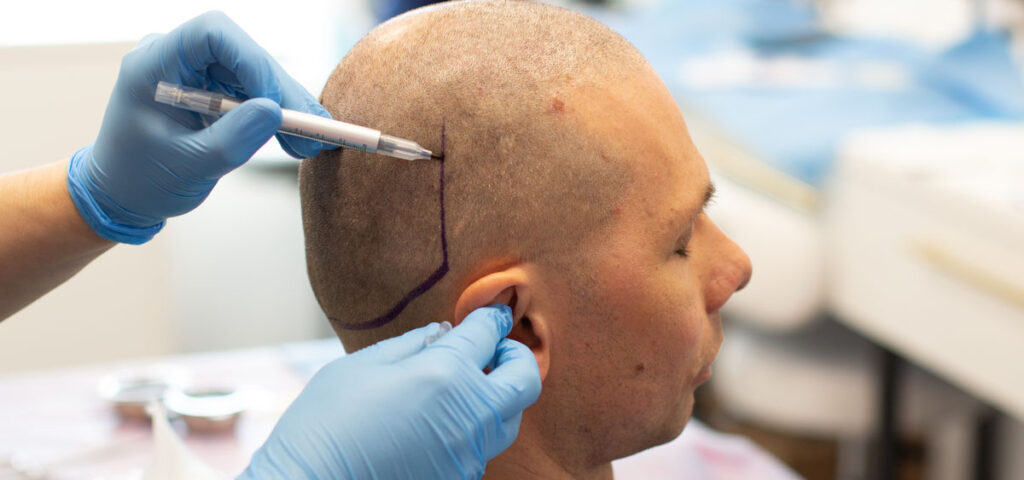
The procedure begins with the precise planning of the hairline and the preparation of the treatment areas. The patient is typically asked to trim their hair, which helps the practitioner visualize the direction of hair growth. After the administration of a safe local anesthetic, the surgeon proceeds to extract the grafts using specialized micro-instruments.
In the recipient areas, micro-incisions are made with precisely controlled depth and angle, ensuring the recreation of a natural, physiological hair pattern. For patients seeking comprehensive information about the procedure itself, we have prepared a detailed guide.
Healing after an FUE transplant – recovery timeline
Scalp recovery following a transplant is a process that unfolds over time, requiring both patience and discipline. During the first couple of weeks, the newly implanted follicular units adapt to their new vascular environment.
Days 1–3: The period immediately following the procedure and the beginning of healing
Immediately following the procedure, mild discomfort and localized redness may occur in both the donor and recipient areas. During this time, it is crucial to avoid touching the scalp and to strictly follow the instructions for using the recommended antiseptic preparations. Proper care during the first few days prevents inflammation and protects the delicate grafts from being accidentally dislodged.
Days 4–7: Scab shedding and hygiene
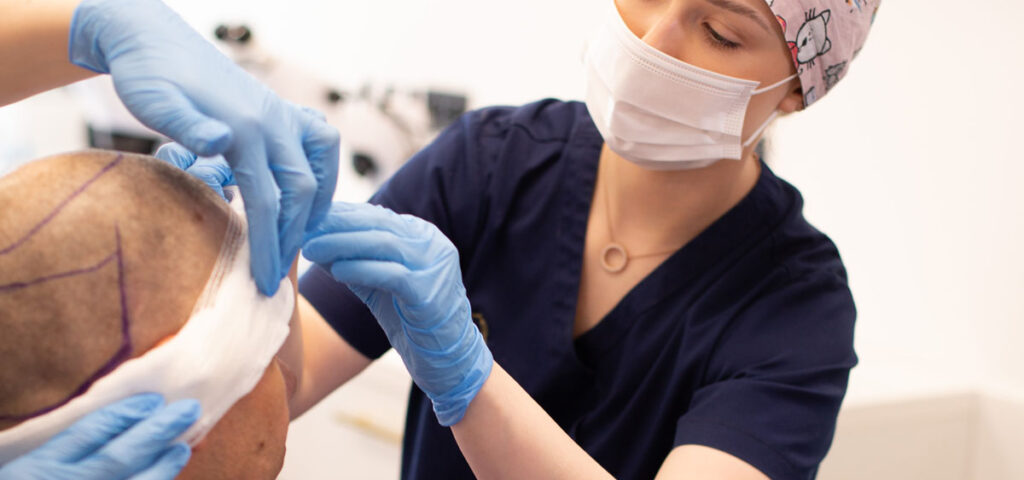
After a few days, small scabs form at the implantation sites. Following the instructions of the attending physician, you may begin gently washing your hair around the fifth to seventh day, using lukewarm water and specialized, mild shampoos that facilitate the safe removal of the scabs without the risk of dislodging the hair follicles.

Weeks 2–4: Graft stabilization and resting phase
By the second week, the structures are sufficiently embedded in the tissue, and the risk of them being mechanically dislodged drops drastically. During this period, however, patients often observe the shedding of the hair shafts from the transplanted grafts. This is a completely physiological transitional phase, in which the hair follicles enter the telogen (resting) stage.
If you notice increased hair loss in other areas of your scalp following the procedure, it is advisable to consult a specialist. In such cases, additional in-office treatments—such as scalp mesotherapy or the use of biostimulating platelet-rich plasma (PRP)—can help restore the condition of weakened hair structures.
Regrowth and final results of a transplant
Between the second and third month following the procedure, the patient enters a crucial stage in which new, healthy hair begins to sprout from previously dormant follicles. Initially, these hairs may be thin and delicate, but as the weeks progress, their structure becomes thicker.
- Months 4–6: Visible growth of new hair tissue, a clear increase in density along the hairline, and the possibility of basic hairstyling.
- Months 7–12: A period of significant density increase, during which approximately 80% of the transplanted hairs reach visible length and thickness.
- Months 12–18: Final result of the procedure. The hair achieves full density, blending harmoniously with the patient’s natural hair.
Selected transformations
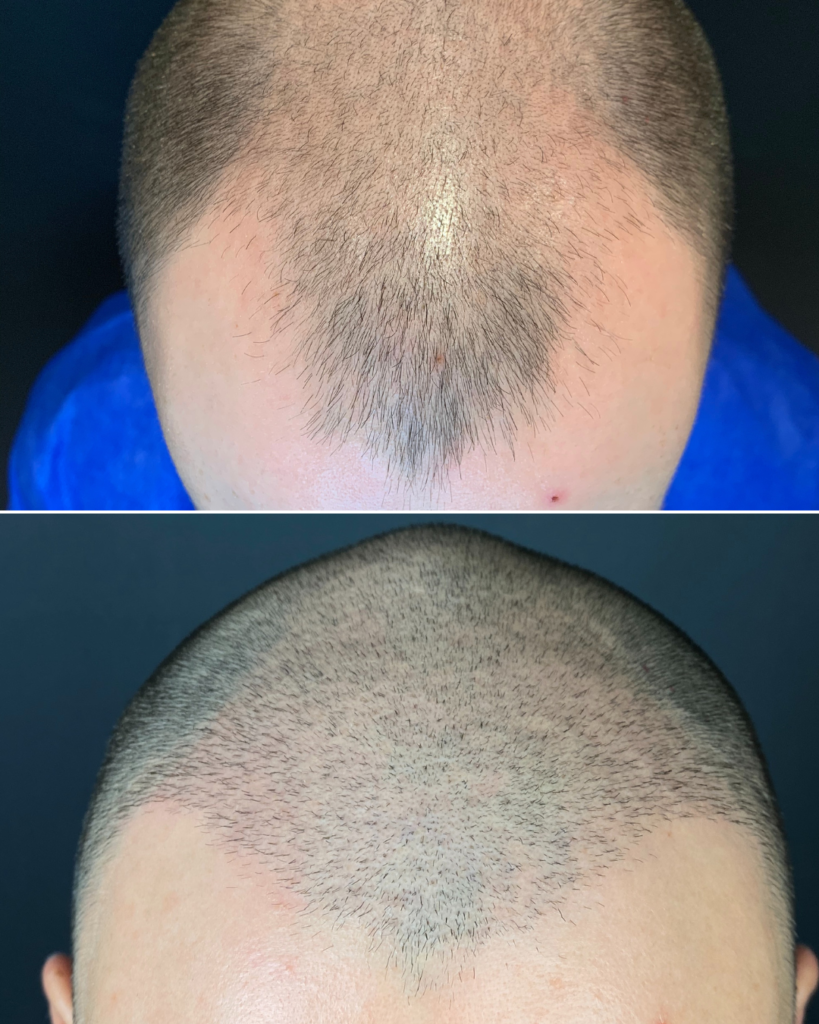 Before
After
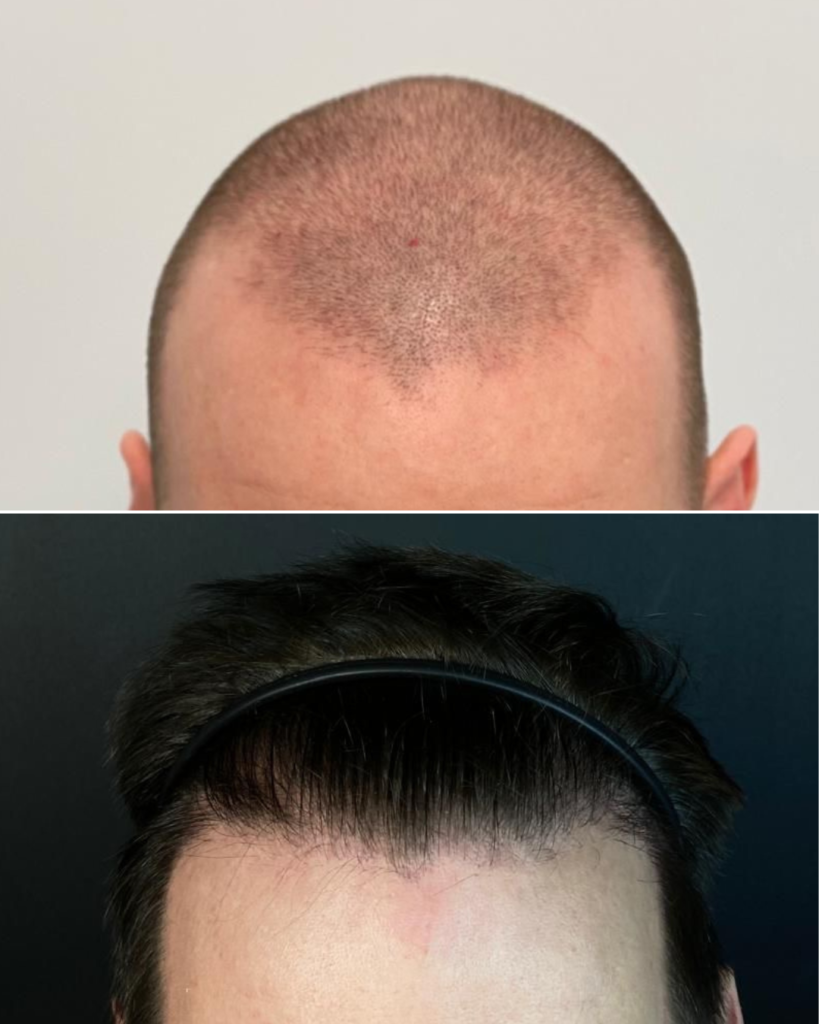 Before
After
Why is post-operative care at PT CLINIC of crucial importance?
Achieving a lasting and aesthetically pleasing result following an FUE procedure requires a synergy between surgical precision and the patient’s responsible adherence to post-operative instructions. Avoiding strenuous physical activity, overheating of the body, or mechanical trauma during the initial weeks helps maximize the graft survival rate.
