

Needle-based scalp mesotherapy is one of the most effective and highly regarded treatments in both trichology clinics and the field of aesthetic medicine. The procedure involves the direct delivery of active substances—such as vitamins, amino acids, peptides, or platelet-rich plasma—into the deeper layers of the dermis, precisely targeting the areas affected by the problem. By bypassing the epidermal barrier, needle-based mesotherapy achieves maximum biological efficacy, stimulating microcirculation and initiating regenerative processes within the hair matrix.
Needle-based mesotherapy – what is it?
Early implementation of preventive measures and specialized scalp care can lead to a noticeable reduction in hair loss after just the first needle-based mesotherapy session. This is due to the direct action of active substances that stimulate still-viable hair follicles to regenerate.
Needle-based scalp mesotherapy remains one of the fastest methods for curbing excessive hair loss. Patients struggling with advanced thinning or balding—including women affected by hormone-related issues—may need to wait several weeks to see visible improvements in hair density. The time required to achieve a therapeutic response depends on the individual condition of the hair, the results of diagnostic tests, the selection of an optimal nutrient cocktail, and strict adherence to medical recommendations.

Indications for needle mesotherapy
This procedure is intended for patients struggling with various forms of hair weakening and excessive hair loss. The primary medical indications include:
- excessive hair loss of telogen or anagen origin,
- androgenetic alopecia (male and female pattern hair loss),
- alopecia areata (during a period of remission/stabilization),
- diffuse thinning and weakened hair condition caused by chronic stress or hormonal imbalances,
- nutritional deficiencies and microcirculation disorders in the scalp,
- prevention of scalp aging and the miniaturization of hair follicles.
Contraindications for needle-based mesotherapy
Despite a high safety profile, there are clinical situations in which the procedure should not be performed:
- pregnancy and the breastfeeding period,
- active neoplastic processes,
- uncontrolled diabetes,
- regular use of anticoagulant medications (increased risk of hematomas),
- active bacterial, viral, or fungal infections of the scalp (e.g., exacerbation of psoriasis, purulent conditions),
- confirmed hypersensitivity or allergy to the active ingredients of the preparation used.
What does a needle-based mesotherapy procedure involve?
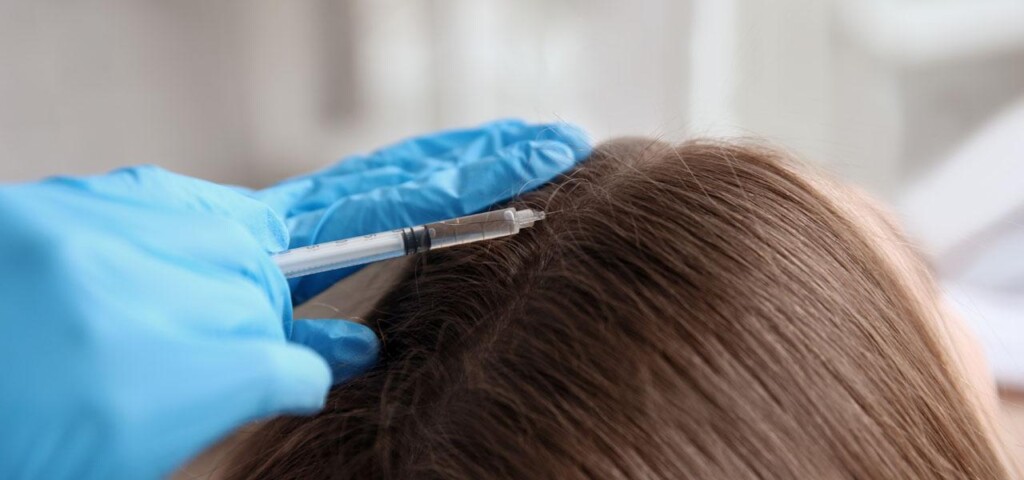
A needle-based mesotherapy procedure is performed using a sterile syringe with a very thin, short needle, or a specialized medical injection gun. Depending on the medical indications, custom-selected nutrient cocktails, peptide complexes, vitamins, or autologous platelet-rich plasma (PRP) are injected into the scalp.
Immediately after the procedure, small dots or marks from the injections may be visible on the skin; these typically resolve spontaneously within 6 to 72 hours, depending on the product used and the injection technique. Injections are generally well tolerated by patients. However, for those with a low pain threshold, a topical anesthetic cream can be applied prior to the procedure. At the end of the session, a gentle scalp massage is performed to ensure an even distribution of the active substances, which continue to stimulate repair processes for several weeks following the visit.
Achieving optimal results requires completing a full therapeutic cycle, which consists of two key phases:
- Intensive phase (treatment): 1 session per week for a period of approximately 2 months. 1 zabieg na tydzień przez okres około 2 miesięcy.
- Maintenance phase (aftercare): 1 treatment per month for a period of 3 to 6 months.
