


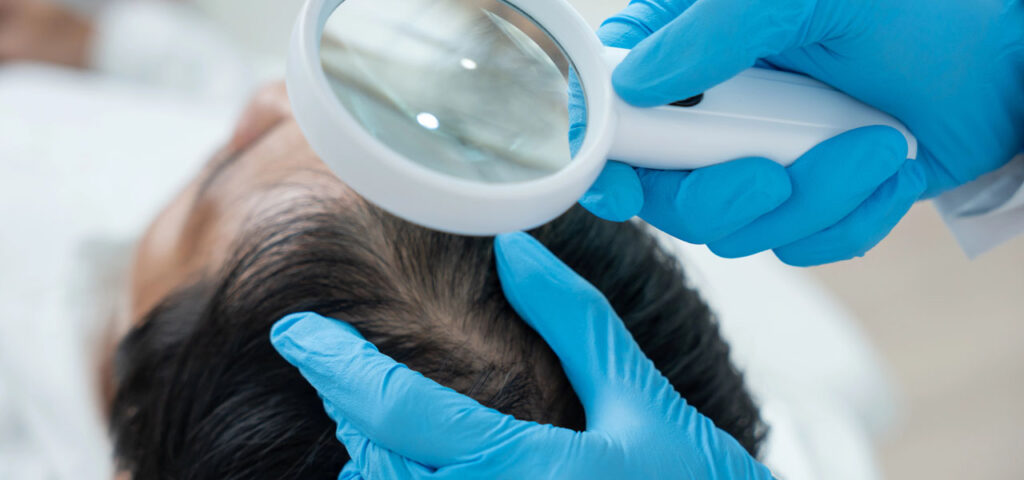
FUE hair transplantation is considered one of the most modern, minimally invasive, and highly effective surgical methods for restoring hair density. However, patients opting for this procedure must be fully aware that the process does not end the moment they leave the treatment room. In the weeks following the transplant, the scalp enters a crucial—indeed, critical—period of recovery and biological remodeling. It is during this time that a phenomenon known clinically as “shock loss” occurs. Although seeing hair fall out in large quantities can be highly distressing and stressful for patients, in the vast majority of cases, it is a completely natural, physiological stage of healing that does not signify a loss of viability in the transplanted follicles. Learn about the mechanisms behind this phenomenon, discover the difference between hair shaft loss and graft damage, and find out how to safely navigate the recovery period under the guidance of specialists at PT CLINIC.
What is shock loss after a hair transplant, and why does it occur?
Post-transplant shock loss (often medically classified as localized post-traumatic telogen effluvium) is a temporary hair loss occurring as a direct bodily defense response to mechanical micro-trauma, tissue disruption, and the sudden tissue stress associated with the surgical procedure. During an FUE transplant, the physician creates thousands of micro-incisions in the recipient area and precisely extracts follicular units from the donor area. This intervention, while extremely precise, triggers a transient disruption of microcirculation and localized inflammation around the hair follicles.
It is worth making a precise distinction between two independent categories of this phenomenon that patients face:
- Shock loss affecting transplanted hair—immediately following the transplant, the hair shafts themselves (growing from the newly implanted grafts) undergo physiological shedding. This is an entirely standard part of the process. The living hair follicle remains safe and deeply anchored within the structure of the dermis, while the weakened “tenant” located above the skin’s surface is released and falls out.
- Shock loss affecting native hair—this reaction also impacts the natural, previously growing hair in the immediate vicinity of the recipient area. Sudden surgical trauma, changes in skin tension, and temporary oxygen deprivation can force surrounding hair follicles to undergo a premature and massive transition from the anagen (growth) phase to the telogen (resting) phase.
It is crucial to understand that the temporary weakening and loss of natural hair surrounding the grafts do not signify their permanent destruction. In the vast majority of cases, once post-operative inflammation has fully subsided and the network of blood vessels has been restored, these follicles re-enter a normal growth cycle and regain their original density.
When does shock loss occur, and how does this stage progress over time?
This process does not occur immediately after surgery – the patient does not wake up with hair loss the next day. The typical, critical period of severe hair loss usually occurs during 2 to 4 weeks after the procedure . During this specific timeframe, the patient may observe a number of changes in the mirror that often trigger anxiety:
- sudden, increased shedding of short hair strands during gentle washing, towel-drying, or even a light touch,
- noticeable, concerning thinning across the entire transplanted area, where the grafts initially appeared to be densely packed,
- temporary hair loss and thinning in the zone of natural hair surrounding the transplant (in the border zone of the recipient area),
- a dynamic change in the hairline geometry—difficult to accept—compared to the first few days after the procedure, when the newly implanted grafts were clearly visible.
This stage can be mentally taxing. Immediately after the procedure, the patient is pleased with the appearance of the new hairline, yet as the days pass, they observe massive hair shedding. This turn of events triggers anxiety that the procedure has failed and the grafts have not “taken.” However, it must be strongly emphasized that the final result of a surgical hair transplant absolutely cannot be judged during the initial weeks of recovery. This is a period of biological remodeling, during which the skin and hair follicles must undergo a natural regenerative cycle.
How can you distinguish a shedding hair from the loss of a living graft?
The panic that arises upon noticing a few stray hairs on a pillow or in one’s hand is entirely understandable, yet in most cases, it is completely unfounded. Understanding hair anatomy is the key to peace of mind. What is shed during the “shock loss” phase is typically just the keratinized hair shaft, while the stem-cell-rich matrix and the hair follicle bulb remain safely and securely anchored in the deeper layers of the dermis.
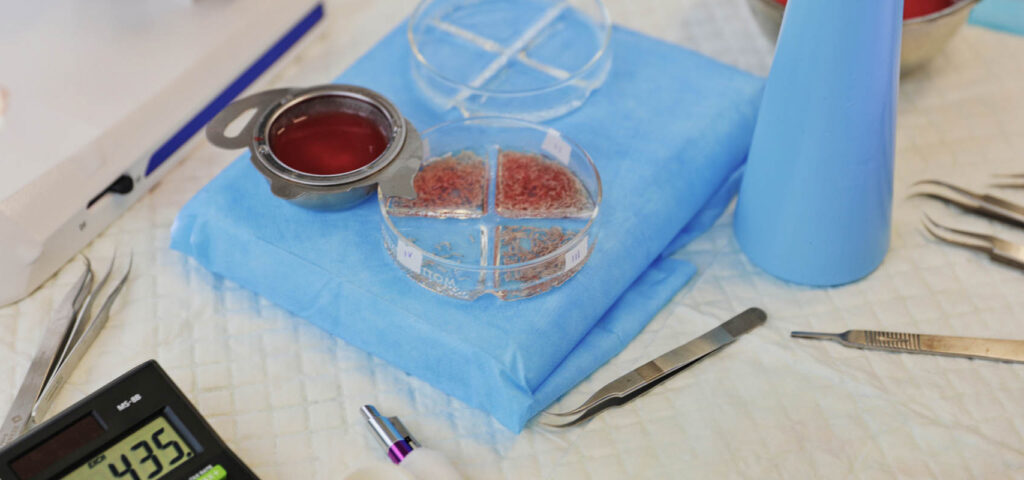
Assessing the viability of transplanted structures solely based on the number of hairs remaining on one’s hand is inherently impossible and prone to error. The appearance of the recipient and donor areas changes rapidly, particularly during the first four weeks. However, if the recovery process is accompanied by concerning clinical symptoms—such as heavy, persistent bleeding, purulent discharge, severe facial or eyelid swelling, throbbing and intensifying pain, or general signs of infection (e.g., fever)—you should contact your attending physician immediately.
It is also worth remembering that the transplant procedure itself does not eliminate genetically and hormonally driven androgenetic alopecia. If the natural hair surrounding the transplant shows a tendency toward progressive miniaturization, the doctor may implement targeted supportive pharmacotherapy—such as topical minoxidil or specialized in-office treatments—as discussed in more detail in our article on halting hair loss in men.
Hair regrowth timeline after a transplant – what to expect?
Following the difficult phase of transitional hair loss, dormant hair follicles require time for full biological regeneration and the initiation of a brand-new anagen cycle. Regrowth does not occur simultaneously across all implanted grafts; therefore, initial results may appear uneven. The standard physiological timeline for hair regeneration and growth following an FUE procedure is as follows:
- 0–1 month: Intensive tissue healing, stabilization of graft structures in the new location, and the occurrence of the phenomenon known as “shock loss.”
- 2–4 months: Gradual awakening of dormant hair follicles and the appearance of the first fine, often colorless hairs (so-called “baby hair”).
- 3–6 months: The growth process gains significant momentum, and the increased density becomes visible to the naked eye.
- Subsequent months (6–12 months): The hair gradually matures, thickens, and acquires natural pigment as well as its proper structure and curl.
A full assessment of density, growth angle, and the final aesthetic outcome is typically conducted twelve months after the procedure. To actively support tissue healing, stimulate microcirculation, and accelerate new hair growth, it is worth considering professional platelet-rich plasma (PRP) treatment or modern, highly advanced exosome therapy for hair.
Practical recommendations: what to do when your hair starts falling out?
When a patient notices that transplanted hair is falling out in large quantities, the most important rule is to avoid panic and refrain from any self-directed experiments. The recovery period requires strict adherence to the postoperative regimen and medical recommendations. During this time, the patient should, in particular:
- avoid scratching the scalp, picking at scabs, and any mechanical damage or friction in the area of the newly implanted grafts,
- care for and wash the scalp very gently and in accordance with the doctor’s instructions, using specialized, mild shampoos,
- use only products recommended by the clinic, avoiding harsh drugstore cosmetics,
- regularly attend scheduled follow-up appointments at the clinic,
- report any concerns or unusual symptoms to the doctor on an ongoing basis.
You can find more valuable information about the FUE method itself, suitability for the procedure, and the detailed recovery process directly on our dedicated webpage.
Shock loss does not necessarily mean a failed transplant.
Temporary hair loss following a transplant is a completely natural stage of tissue healing—inherent to human biology—and serves as a preparatory phase for the start of a new growth cycle. This phenomenon, known as “shock loss,” affects both transplanted and natural hair; consequently, the scalp’s appearance in the weeks immediately following the procedure does not allow for a reliable assessment of the transplant’s final outcome.
The key to achieving a fully successful aesthetic outcome and peace of mind is exercising unwavering patience, strictly adhering to post-operative instructions, and maintaining constant contact with the medical team. If any concerns arise during recovery, it is best to consult the doctor directly; they can objectively assess the healing process and put any worries to rest.
