


If you are considering a hair transplant, you have likely come across the term DHI. This acronym frequently appears in clinic offers, yet the name itself does not explain exactly what the technique entails. How does DHI differ from FUE? What do graft extraction and implantation look like? And is this method right for you? In this article, we explain the key points worth knowing before your consultation.
What is the DHI method?
DHI stands for Direct Hair Implantation. It is important to emphasize that DHI is not a separate method for harvesting hair follicles. In practice, the grafts used during the DHI procedure are most often obtained via the FUE method, and the term DHI refers primarily to the technique used to place them in the recipient area.
During a hair transplant consultation, it is advisable to ask not only about the names of the techniques used but also about the entire procedure: the method of graft extraction, their processing, and the implantation technique.
What does a DHI hair transplant look like?
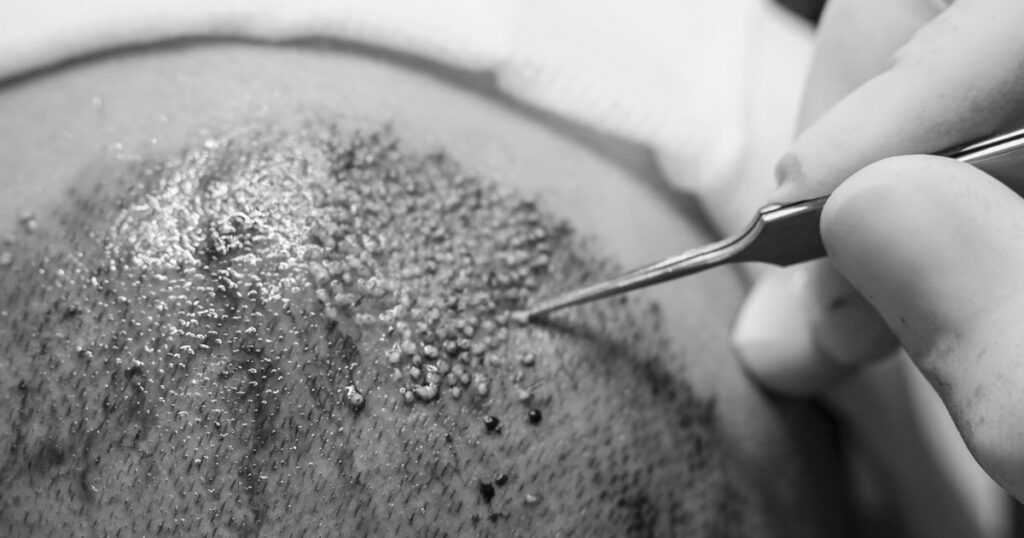
The procedure begins with protecting and anesthetizing the area from which the follicular units will be harvested. Next, individual grafts are extracted using an appropriate instrument, typically employing the FUE technique. The subsequent stage involves preparing the harvested units for implantation.
In the DHI method, the graft is loaded into a special instrument known as an implanter. The physician then inserts the tip of the instrument into the skin at the intended site of the follicular unit and places the graft in the chosen location. With a so-called “sharp implanter,” the incision and graft placement are performed in a single movement of the instrument.
This implantation method differs from the technique in which channels are first created in the skin, and prepared grafts are subsequently placed into them.
What is the Choi pen?
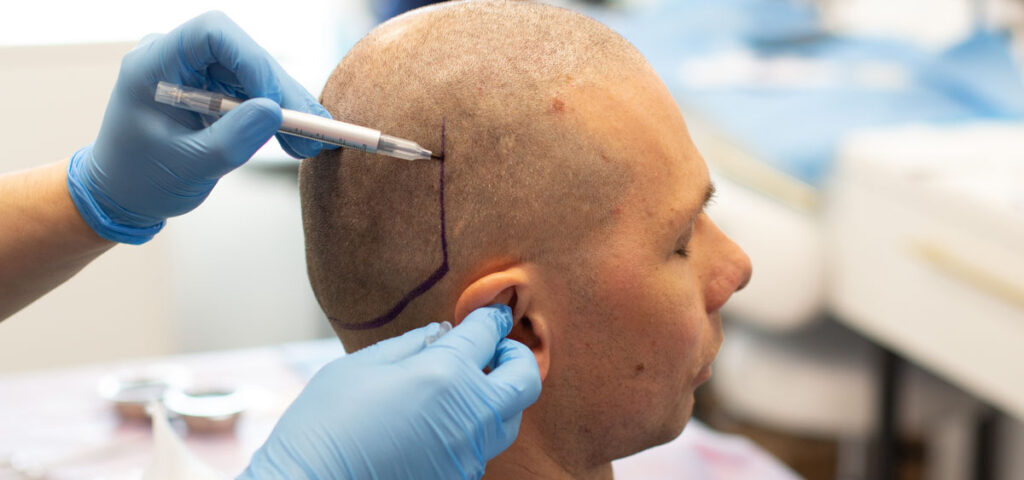
The Choi pen is a type of instrument used for the direct placement of grafts. The implanter resembles a thin pen tipped with a specialized needle, inside which a single follicular unit is placed. The physician can then insert the graft directly into the chosen site, controlling, among other factors, the direction and angle of placement.
Selecting the appropriate size of the implanter tip is crucial. It should match the characteristics of the specific graft; a tip that is too small may hinder the proper placement of the unit, while one that is too large will not ensure a proper fit.
DHI vs. FUE – what is the difference?
If you are comparing DHI and FUE hair transplants, you might get the impression that they are two completely different methods. In reality, however, this comparison is not entirely accurate, as these terms refer to different stages of the procedure.
FUE refers primarily to the method of harvesting follicular units from the donor area, whereas DHI describes the method of their implantation. Therefore, it is possible to combine FUE-based graft harvesting with subsequent placement using a DHI implanter.
Are skin incisions made during the DHI procedure?
It depends on the implantation method used. One feature of the technique employing a sharp implanter is the ability to simultaneously create an opening in the skin and place the graft within it. However, this does not mean that the skin’s integrity remains undisturbed during the procedure; implantation still requires inserting the tip of the instrument into the recipient area.
If you want to fully understand the procedure, ask the doctor during the consultation to explain in detail how the implantation will be performed and how the direction of hair growth will be planned.
What should you consider before choosing DHI?
In hair transplantation, it is important not only to select the appropriate method for graft harvesting and implantation but also to properly plan the entire procedure.
During the consultation, the specialist should discuss the cause of your hair loss, the condition of your scalp, and the potential of the donor area with you. It is also important to determine the number of grafts required and the extraction method. The doctor should take into account factors such as the direction of hair growth, hair texture, and the characteristics of the follicular units.
It is also worth asking about the implantation method and the recommended post-procedure care. This will allow you to assess, prior to the procedure, whether the proposed solution is suitable for your situation.
Is DHI suitable for everyone?
There is no single hair transplant technique suitable for everyone. The feasibility of the procedure depends on factors such as the type and extent of hair loss, the quality and density of hair in the donor area, the condition of the scalp, and the patient’s individual characteristics.
If the hair loss is relatively recent or the cause has not yet been determined, additional diagnostic tests may be required before deciding on a transplant. The mere fact that thinning is occurring does not automatically mean a transplant is necessary.
Why is a doctor’s experience important?
When deciding to undergo a hair transplant, it is essential to consider the experience of the physician performing the procedure. Technology is one component of the process, but it cannot replace proper patient assessment, planning, or manual skill.
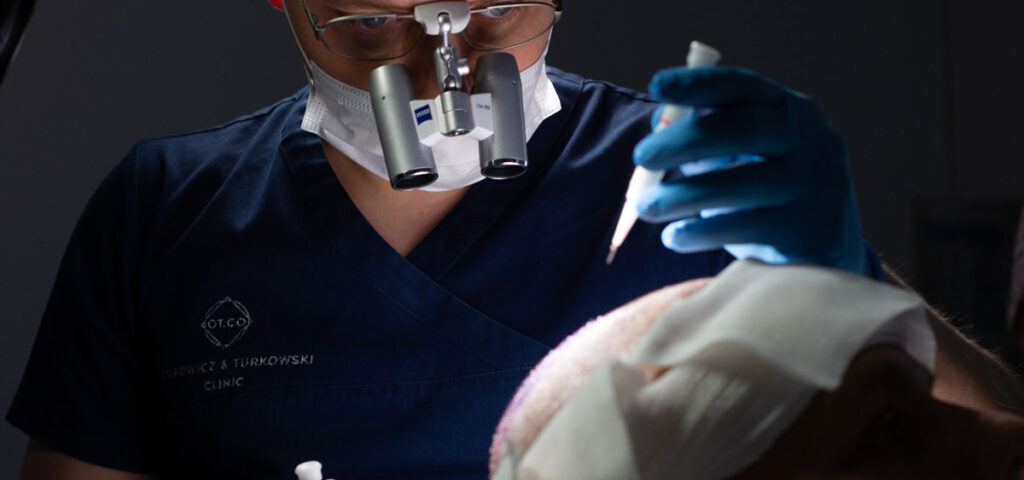
A good example of a specialist who has been involved in hair surgery for many years is Piotr Turkowski, MD, PhD . He has 13 years of experience in the field and has performed over 1,000 hair transplants, led scientific sessions at the ISHRS World Congress in Berlin, and co-authored the first Polish textbook on hair transplantation.
During the consultation, ask the doctor not only about the chosen technique but also why it was recommended specifically for you. A well-planned procedure should take into account both the donor area and the method of restoring hair in the area undergoing implantation.
DHI – what is worth remembering?
If you are considering the DHI method, it is crucial to understand that the term refers primarily to the way grafts are implanted using a specialized implanter. The extraction of follicular units themselves can be performed using the FUE method.
Therefore, DHI should not be regarded as a completely distinct transplantation method, let alone as a solution that is automatically suitable for every patient. Many factors determine the course of the procedure; consequently, before making a decision, it is advisable to discuss the feasibility of the transplant—as well as the available extraction and implantation techniques—with a doctor.
