


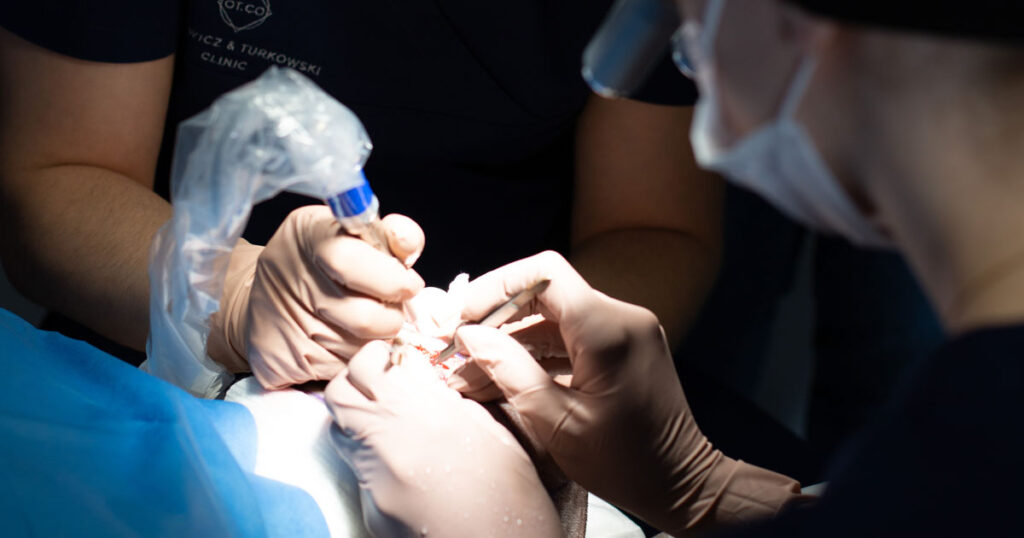
If you are considering a hair transplant, you are likely paying attention not only to the procedure itself but also to the method used to extract hair follicles. Precision is particularly crucial during this stage. One solution employed in modern hair restoration surgery is the WAW FUE system, which utilizes the oscillatory movement of a specialized instrument. In this article, we explain how this technology works and what you should know before deciding to undergo the procedure.
What is WAW FUE?
During a hair transplant procedure, individual follicular units are harvested from the donor area—most commonly the back and sides of the head. The prepared grafts are then transferred to areas where hair is thinning or missing. When undergoing an FUE hair transplant, you may encounter various technological solutions used for graft extraction; WAW FUE is one of them.
The WAW system utilizes the oscillatory motion of a micro-blade known as a “punch.” The tool performs short, reciprocating movements rather than rotating continuously in a single direction.
Precision of graft harvesting and technology
During the hair follicle extraction stage, the way the instrument is manipulated is crucial. Follicular units do not always run at the same angle relative to the skin surface, and the direction of hair growth can vary even within a small area.
The oscillatory motion employed in the WAW system allows the operator to work differently than with conventional rotation. The system’s design is intended to limit instrument twisting during extraction, which can influence how the follicular unit is separated from the surrounding tissues.
When considering an FUE hair transplant, it is worth asking during the consultation not only about the number of planned grafts but also about the extraction method.
Why does the hair extraction method matter?
If you want to preserve the highest possible number of properly harvested grafts, it is worth remembering that the sheer number of harvested units does not tell the whole story regarding the quality of the extraction.
During extraction, transection—that is, damage to a portion of the follicular unit—may occur. The risk of such an event depends on various factors, including the direction of hair growth, the angle of the hair beneath the skin, the type of instrument used, and the experience of the person performing the procedure.
WAW technology was specifically designed to provide greater control over the movement of the punch. However, bear in mind that no extraction method guarantees the complete elimination of the risk of graft damage.
Oscillating or rotary motion – which to choose?
When comparing various hair transplant techniques, one might wonder whether an oscillating motion is a better solution than the classic rotational approach. There is no single answer to this question. The choice of technique should take into account factors such as hair structure, growth direction, skin properties, and the characteristics of the donor area. During a consultation, it is worth asking the doctor why a specific graft extraction technique is being recommended for your case.
The WAW system enables the physician to utilize oscillatory motion and—depending on the device version—other operating modes as well. This allows the instrument handling technique to be adapted to the specific conditions of the procedure.
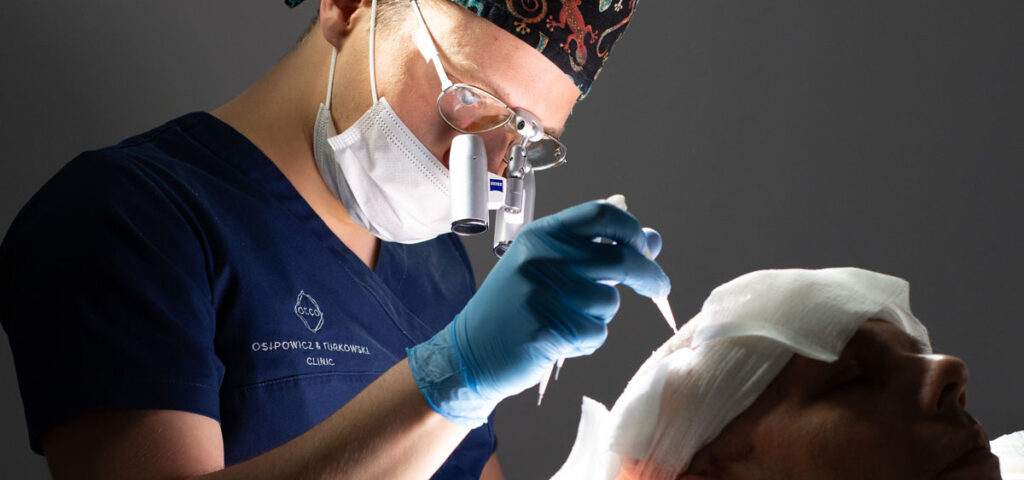
Does WAW FUE mean a safer hair transplant?
If safety is one of your key criteria for choosing a method, it is worth viewing the transplant as a comprehensive process rather than focusing solely on the device used. Proper patient selection, assessment of the donor area, appropriate planning of the graft count, and the operator’s experience are just as important as the technology employed for extraction.
In conventional rotary motion, the punch rotates around its own axis. In the WAW system, however, it can perform short oscillatory movements—moving alternately in both directions. Continuous rotation of the punch generates torsional forces, whereas oscillatory motion alters the way the tool interacts with the tissue.
Why is this important? The hair follicle unit lies beneath the skin and does not always run perfectly perpendicular to the surface. Hair can also change its growth direction, making it necessary to guide the instrument with the utmost precision. Precision is crucial because, when harvesting the graft, the physician needs to maintain maximum control over separating it from the surrounding tissues.
This does not mean that the oscillatory motion completely eliminates the possibility of follicle damage. Such a risk is inherent to the FUE procedure itself and depends on factors including the patient’s anatomy, hair growth direction, skin characteristics, the choice of instrument, and the operator’s experience. Although the oscillatory motion was developed to enable safer extraction of follicular units, it does not entirely eliminate the risks associated with the procedure.
What should you pay attention to before a hair transplant?
When preparing for a hair transplant, do not limit yourself to asking only about the procedure’s cost or the number of planned grafts. During the consultation, it is worth determining the cause of your hair loss and whether a transplant is the right course of action for you.
The specialist should also assess the donor area, as its characteristics determine how many follicular units can be safely harvested. It is worth asking how many grafts are planned, how they will be harvested, and what instruments will be used during the extraction process.
Post-procedure care is equally important; before making a decision, it is helpful to know what the recovery process entails, what recommendations you will receive following the transplant, and when follow-up appointments will take place. The more information you gather during the consultation, the easier it will be for you to make an informed assessment of the proposed treatment plan.
When choosing a doctor, pay attention primarily to their experience in hair surgery. Piotr Turkowski, MD, PhD He has been performing hair transplant procedures for 13 years and has over 1,000 transplants to his credit. A specialist’s skills are of particular importance when modern technologies, such as WAW FUE, are employed.
However, the specific approach to the procedure should be tailored to the individual. Factors such as the technology used, the physician’s experience, proper patient selection, assessment of the donor area, and the overall procedural plan all play a crucial role. If you wish to make an informed choice regarding the hair transplant method, it is important to consider the entire process rather than focusing solely on the type of device employed.
Frequently Asked Questions (FAQ)
Bibliography and medical sources
- Turkowski, P., Osipowicz, K. (Red.) (2026). Przeszczepy włosów w ujęciu interdyscyplinarnym PZWL Wydawnictwo Lekarskie.
- Rigopoulos, D., Ioannides, D., Katoulis, A. C. (Red. wyd. polskiego: Czuwaj, J.) (2023). Choroby włosów. Rozpoznanie i leczenie. Edra Urban & Partner.
