


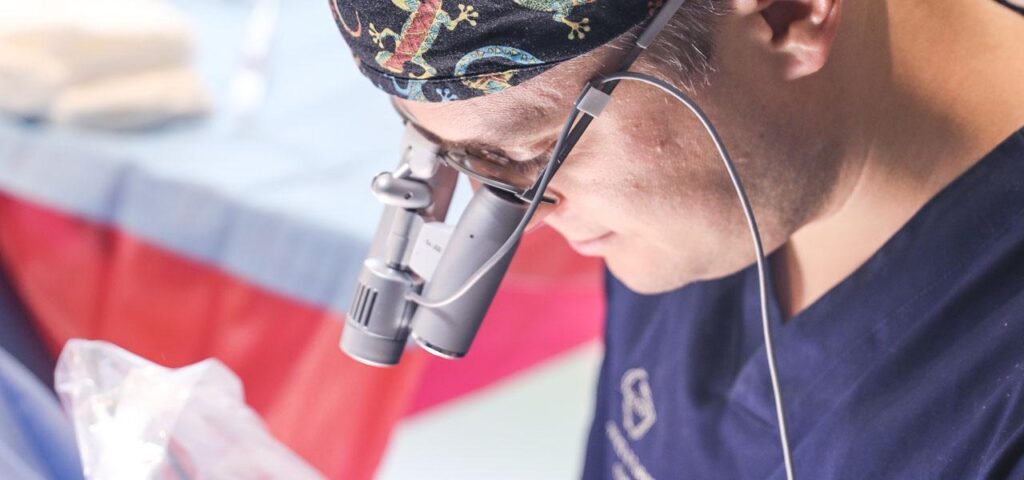
The problem of hair loss and progressive balding affects both men and women of various ages, often causing significant psychological discomfort and a loss of self-confidence. Modern aesthetic medicine and advanced hair restoration surgery offer innovative procedures capable of permanently restoring lost hair density. However, the key to therapeutic success lies not merely in the transplant procedure itself, but primarily in the precise selection of graft harvesting and implantation techniques—meticulously tailored to the patient’s unique anatomical characteristics, skin biology, and the underlying causes of hair loss.
Main medical causes of hair loss
Hair loss is rarely a random occurrence; most often, it is an external symptom of specific systemic disorders, genetic predispositions, or autoimmune processes. In clinical practice, three common types of alopecia are identified among patients seeking consultation:
- Androgenetic alopecia (AGA): The most common, genetically determined form of hair loss, resulting from the hypersensitivity of hair follicles to dihydrotestosterone (DHT)—an active metabolite of testosterone—which leads to the gradual miniaturization of hair follicles.
- Alopecia areata: A condition with a complex autoimmune basis in which the patient’s immune system mistakenly treats its own hair follicles as antigens, causing localized hair loss.
- Telogen effluvium: A disruption of the hair growth cycle characterized by the premature transition of an excessive number of hair follicles into the resting phase (telogen), triggered by factors such as chronic stress, restrictive diets, ferritin deficiency, thyroid disorders, or severe infections.
Excessive hair thinning can also result from improper hair care, mechanical pulling, or hormonal changes during the perimenopausal period. A proper and thorough trichological diagnosis—combined with trichoscopy—is the absolute foundation before making any decision regarding surgical intervention.
FUE (Follicular Unit Extraction) hair transplant – the gold standard
The FUE method is currently considered the gold standard in the surgical treatment of advanced hair loss. The procedure involves the precise extraction of individual follicular units (grafts) directly from the donor area, comprising the back and sides of the scalp. These areas are characterized by the unique genetic resistance of the hair follicles to DHT, ensuring that the transplanted hair retains its viability for a lifetime.
To harvest individual structures, the medical team uses specialized cutting micro-instruments known as micro-punches, typically with a diameter of less than 1 mm (often ranging from 0.75 to 0.9 mm). The harvested transplant material is immediately preserved in a special physiological solution, meticulously checked for cell membrane integrity, counted, and sorted into units containing one, two, three, or four hairs. Since the FUE technique does not require extensive linear incisions or surgical sutures, it leaves no unsightly scarring, allowing patients to wear very short hairstyles once fully healed.
FUE hair transplant using the ARTAS robot
Rapid technological advancements in the field of restorative surgery have led to the implementation of innovative AI-assisted systems, such as the ARTAS robotic system. This advanced device operates using complex optical-analytical algorithms that scan the scalp in real time, identifying and selecting hair follicles of the highest quality for extraction.
The automated graft harvesting process takes place under the constant, rigorous supervision of an experienced surgeon who precisely defines procedural parameters—such as optimal extraction density, the angle of instrument insertion, and safe spacing between harvested units—to prevent thinning of the donor area. Combining the remarkable precision of computer algorithms with the operator’s clinical experience minimizes the follicle transection (damage) rate and ensures consistent, highly aesthetic results.
Hair transplant using the STRIP (FUT) method – traditional approach
The STRIP method (often referred to as FUT—Follicular Unit Transplantation) is a classic, older surgical technique involving the surgical excision of a full-thickness strip of hair-bearing skin from the occipital region of the scalp, measuring over a dozen millimeters in width and over a dozen centimeters in length. The harvested tissue strip is then passed to an assisting team, which uses stereoscopic loupes or microscopes to divide it into individual grafts ready for implantation.
Although this technique allows for the rapid harvesting of a very large number of follicular units in a single surgical session, it is significantly more invasive. Its primary anatomical drawback is the resulting permanent linear scar at the back of the head, which can preclude the wearing of short hairstyles and prolong the post-operative recovery period. For this reason, modern hair restoration medicine largely eschews this method in favor of FUE (Follicular Unit Extraction) techniques.
Comparison of hair transplant methods: FUE vs. ARTAS vs. STRIP
To facilitate an understanding of the differences between key surgical techniques used in modern aesthetic medicine, the table below presents a comparison of key procedural parameters:
| Features / Parameters | FUE Method (Manual/Motorized) | ARTAS Robot (Automated FUE) | STRIP Method (FUT) |
|---|---|---|---|
| Extraction method | Point-by-point extraction of individual grafts using a micro-punch. | Automated extraction controlled by an AI algorithm. | Surgical excision of a strip of skin from the back of the head. |
| Scar in the donor area | Invisible, microscopic dots (completely negligible). | Invisible, pinpoint extraction marks. | Permanent, long, linear scar at the back of the head. |
| Invasiveness of the procedure | Low (no surgical incisions or sutures). | Very low (high computer precision). | High (requires skin incision and sutures). |
| Recovery time | Short (5–7 days for micro-injuries to heal). | Short (rapid localized healing). | Longer (requires suture removal after approx. 10–14 days). |
| Naturalness of the result | Very high (full control over the angle of growth). | High (algorithms optimize placement). | High, with a well-planned hairline. |
Key medical indications for transplantation
Surgical hair transplantation is intended for patients for whom pharmacotherapy, mesotherapy, and other conservative methods no longer yield the expected results, and whose donor area at the back of the head possesses sufficient biological reserve. Key medical and aesthetic indications include:
- Androgenetic alopecia: For both men (correcting receding temples, the crown, and the frontal hairline) and women struggling with thinning along the parting.
- Alopecia areata: Only during a stable period of complete disease remission, after ruling out an underlying inflammatory process.
- Post-traumatic and post-surgical scars: Areas of hair loss resulting from thermal burns, mechanical head injuries, or neurosurgical procedures.
- Aesthetic considerations: The need to naturally lower an excessively high hairline or reconstruct the eyebrows.
How does the doctor help choose the optimal transplant method?
The decision regarding the specific transplant technique must not be arbitrary; it is always based on a detailed medical history and a trichoscopic examination. The specialist assesses the density of the donor area (number of grafts per cm²), scalp elasticity, hair shaft thickness and texture (straight or wavy), and the stage of hair loss according to clinical classification systems. The FUE method remains a versatile choice for patients who value the absence of visible linear scarring and a quick return to daily social and professional activities.
Modern restorative surgery aims to completely conceal the medical intervention; a carefully planned insertion angle, along with the density and graduated thickness of the grafts, ensures that the transplanted hair grows in a completely natural way, indistinguishable from the native hair.

Very useful and interesting FUE hair treatment information. thanks for sharing.
Thank you so much for your kind words! I’m glad you found the information about FUE hair transplantation useful. It’s one of the most effective and precise methods of restoring natural hair growth.
Happy to read this amazing blog. FUE is the most advanced method for hair transplantation and have many benefits as compare to old strip method.
Thank you for your thoughtful comment! I completely agree — FUE is indeed a highly advanced technique that offers natural results, minimal scarring, and a faster recovery compared to the traditional strip method. I’m glad you enjoyed the article!
Amazing blog! hair loss is such a big problem.
Thank you! I truly appreciate your feedback. Yes, hair loss is a common concern that affects both men and women, but the good news is that with the right diagnosis and modern treatments, we can effectively address it.
Thanks for sharing it really helps to choose the best clinic.
Thank you for your kind words! I’m very glad to hear that the article helped you make an informed decision. Choosing the right clinic is indeed one of the most important steps toward achieving satisfying and lasting results.
Useful & interesting blog. It’s a very interesting blog to read about the FUE hair transplant. FUE hair transplant is the perfect solution for people suffering from hair loss. Thank you for sharing such a beautiful blog
Thank you so much for your kind and thoughtful feedback! I’m really glad you enjoyed the article. FUE hair transplantation is indeed an excellent solution for many patients experiencing hair loss — offering natural, long-lasting results with minimal downtime.
Thanks, this is a very intrusting and amazing blog on FUE Hair transplantation I got some important points from this blog
keep it up.
Thank you very much for your kind words! I’m happy to hear that you found the article helpful and that it provided you with valuable insights about FUE hair transplantation. Your feedback means a lot and motivates me to keep sharing useful information.
It is good for you to make your mind what you need to do and what you have to avoid after and before your surgery. If you want to see the best results from your hair surgery then you need to put some efforts as well
You’re absolutely right — preparation and proper aftercare play a key role in achieving the best possible results after a hair transplant. Following medical advice, maintaining a healthy lifestyle, and being patient during the recovery phase are all essential parts of the process.
Helpful & Interesting Blog! Fue hair transplant is somewhat a very productive technique. Everything you mentioned here is very important to know. Keep sharing more..:)
Thank you so much for your kind feedback! I’m really glad you found the information helpful. FUE is indeed a highly effective and refined technique that offers natural results with minimal discomfort. I truly appreciate your support and will keep sharing more insights.
I love to read your blog. You shared useful information who thinking to go with FUE hair transplant. I have one site where i get many use full information regarding hair treatment.
Thank you for your kind words! I’m really glad to hear that you enjoy reading my blog and find the information helpful. Sharing reliable knowledge about hair restoration is something I truly value. It’s great that you’re exploring different sources to learn more — informed patients always achieve the best outcomes.
Thank you very much for publishing this kind of article. I like your article very much.
Thank you so much for your kind message! I truly appreciate your feedback and I’m glad you enjoyed the article. It’s always rewarding to know that the information I share is helpful and well-received.