


Attractiveness and self-confidence are attributes inextricably linked to thick, healthy hair. A man’s image, while evolving, remains strongly defined by the condition of his hair. Unfortunately, many patients seek treatment only at an advanced stage of hair loss, which significantly limits the range of available solutions. Recognizing early signs—such as a receding hairline or deepening temple recession—is crucial for the success of the therapy.
Causes of receding hairlines in men
The causes of hair loss can be found in various areas, one of which is an improper diet. Consuming large amounts of processed foods, sugar, and alcohol leads to a decline in the body’s overall condition, including poor nourishment of the hair (specifically, the hair follicles). A diet rich in all essential nutrients—including macronutrients, trace elements, and vitamins—ensures proper nourishment of the hair follicles and maintains the normal hair growth cycle.
Prolonged, intense stress also has a negative impact on hair health. Under stress, the body functions less efficiently, and various internal processes are impaired. Constriction of the microcirculation occurs, weakening the hair follicle.
Causes of receding hairlines before the age of 30
- Genetics – This is one of the main factors contributing to the early onset of a receding hairline. If your parents or grandparents have a receding hairline, there is a higher probability that you, too, might develop one at a young age.
- Hormones – The hormone dihydrotestosterone (DHT) is the primary culprit behind receding hairlines in men. Excess DHT can cause hair follicle miniaturization, leading to thinner, shorter hair and, ultimately, baldness.
- Lifestyle – Unhealthy habits, such as smoking, excessive alcohol consumption, and lack of sleep, can contribute to hair loss and receding hairlines.
- Stress – High levels of stress can accelerate hair loss, leading to a receding hairline.
Conditions causing male receding hairlines
Excessive hair loss can also be a reaction to antidepressants or chemotherapy. In such cases, it is advisable to consult a doctor who can recommend appropriate treatment and, if necessary, consult the attending physician. A change in medication and the performance of necessary tests may be required. One of the common causes of hair loss is an underlying condition—such as hypothyroidism—that needs to be diagnosed.
Androgenetic alopecia causes receding hairlines
The most common cause of receding hairlines at the temples is male-pattern baldness (androgenetic alopecia). It stems from the hypersensitivity of androgen receptors in hair follicles to dihydrotestosterone (DHT). This process leads to the gradual miniaturization of the follicles: the hair becomes progressively thinner, shorter, and devoid of pigment, eventually resulting in the complete cessation of follicular activity.
An excess of this hormone disrupts the hair growth phase. Hair falls out more frequently, and new hair grows back more slowly. The regrowing hair is much weaker, thinner, and brittle. In advanced stages, a full hair shaft does not grow back; instead, only fine down—similar to the fuzz found on the nose or forehead—appears. While androgenetic alopecia is a condition with genetic and hormonal roots, excessive hair loss can sometimes be caused by other factors.
Preventing receding hairlines in men
It is worth focusing on prevention before a problem arises. Brushing your hair in the morning and evening will prove helpful. You should brush both against and with the direction of hair growth; this removes the oily film, while the scalp is cleansed of dead skin cells and dandruff.
It is possible to prevent receding hairlines by topically applying 5% minoxidil (e.g., Loxon, Alopexy, Minovivax, Piloksidil, Alocutan). It stimulates hair follicles and nourishes them. A well-balanced diet also plays a role in prevention; an adequate intake of iron, vitamins, and both micro- and macro-nutrients properly nourishes the body and the scalp.
Consuming energy drinks is discouraged, as they deplete the body of trace elements. An important preventive measure is daily scalp massage, which stimulates circulation.
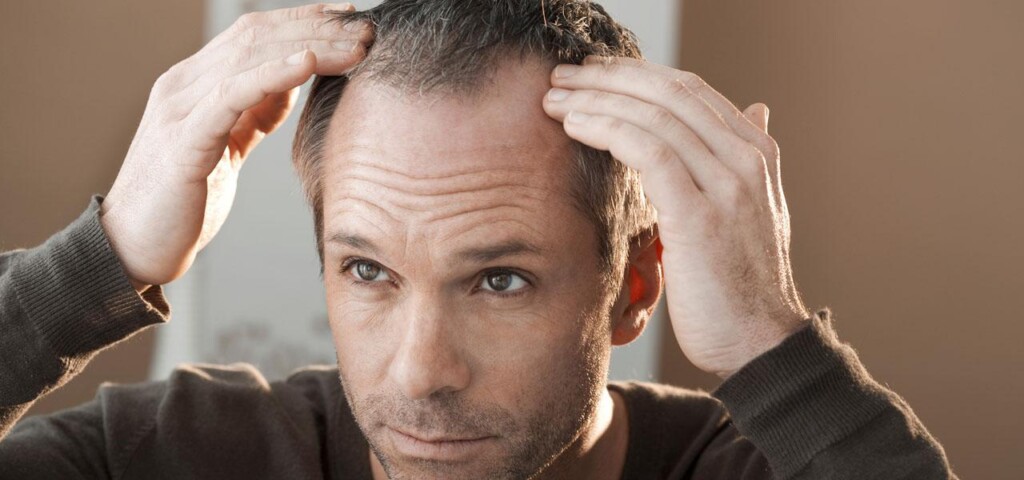
A receding hairline at the temples is the first stage of male pattern baldness.
The first stage of male pattern baldness involves the appearance of small areas of thinning—minor hair loss—at the front of the scalp. Over time, these areas expand, forming receding temples. The hairline shifts, moving higher up the forehead. This results in a so-called high forehead, a classic sign of male pattern baldness. The sooner treatment begins, the faster and better the results. If the balding process is not halted at this stage, hair thinning spreads to the crown of the head. Advanced androgenetic alopecia affects hair across the entire scalp and can lead to total hair loss.
Treating receding hairlines in men
Fortunately, there are many ways to address the problem of receding hairlines at a young age. Here are a few of them:
- Healthy lifestyle – Switching to a healthier diet, exercising regularly, getting enough sleep, and avoiding stress can help reduce the risk of hair loss.
- Medications – Medications such as minoxidil and finasteride can be effective in preventing further hair loss and may even help regrow some hair.
- Surgical procedures – hair transplants are becoming increasingly popular and effective.
- Natural remedies – Some people may find that natural remedies, such as castor oil, tea tree oil, and aloe vera, have a positive effect on the health of their hair.
If the hair follicles still show growth potential, we implement advanced procedures:
- Scalp mesotherapy: Delivery of active ingredients directly into the dermis.
- Platelet-rich plasma (PRP) for hair: Utilizing natural growth factors from the patient’s blood.
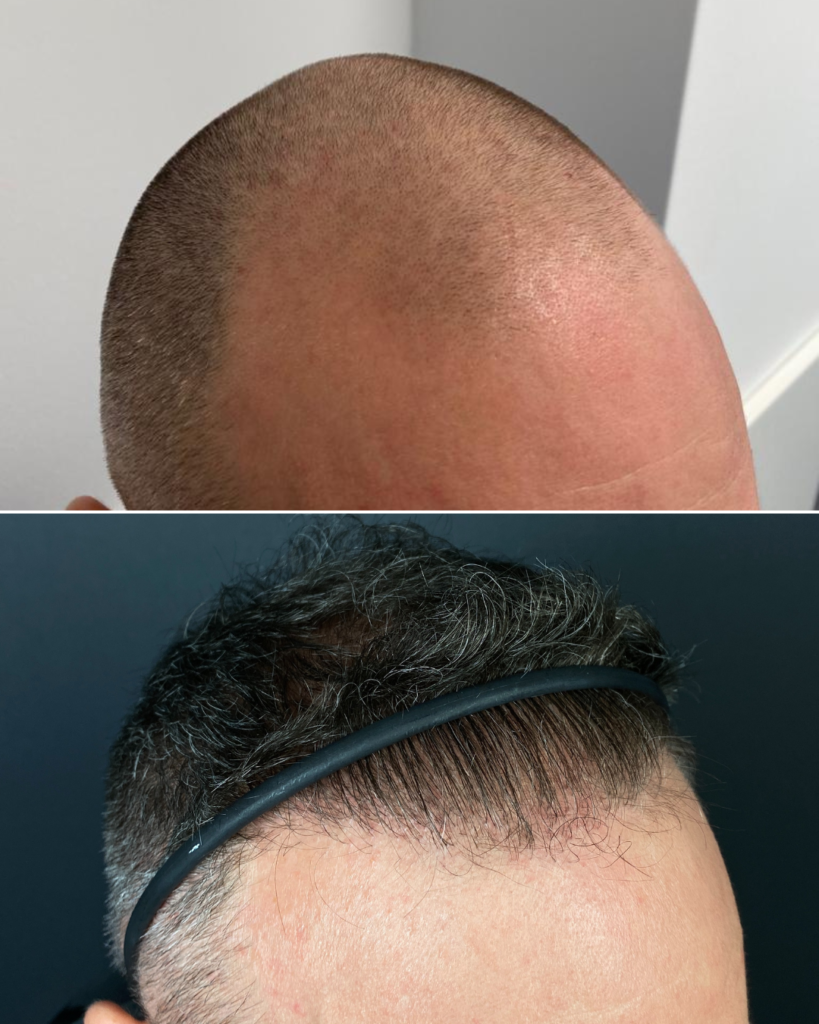
We already know that hair loss can be prevented using various methods. It is worth highlighting that aesthetic medicine addresses patients’ needs by offering hair transplants. The procedure has undergone continuous refinement over the years, leading to the development of the modern FUE hair transplant technique.
The FUE method involves extracting individual hair follicles from an unaffected area (the donor area). The hair transplant is performed using a metal punch, which creates micro-scars invisible to the naked eye. The procedure is carried out under local anesthesia and is an ideal solution for addressing receding hairlines. Depending on the number of follicles being transplanted, the procedure takes between 5 and 8 hours.
Selected transformations
 Before
After
Before
After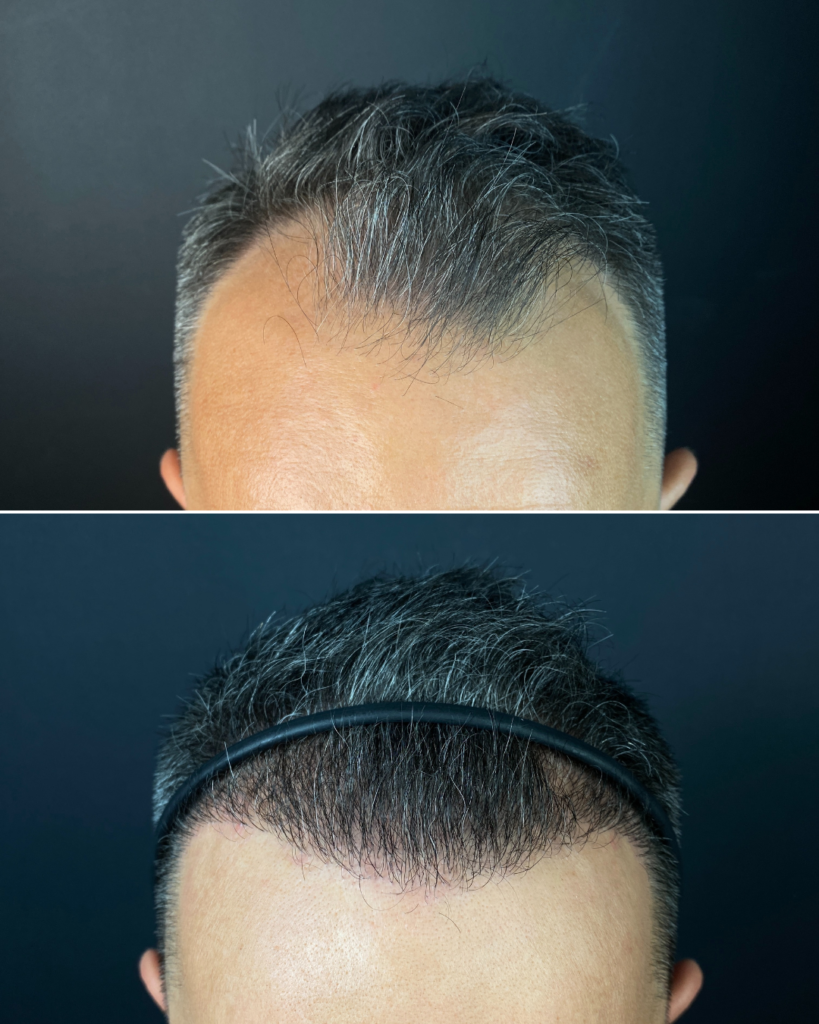 Before
After
Before
After
Choosing the right specialist with extensive experience in the FUE hair transplant method is crucial. Opting for this technique helps avoid post-procedure scarring and a lengthy recovery period. The doctor will select the appropriate recipient and donor sites based on individual needs. The success of the procedure depends largely on adherence to post-operative instructions.

Hi my name is Thibeau Berden.
I’m balding can i have free stuff to get my hair to grow again.
Hi Thibeau, thank you for your message. Unfortunately, I don’t offer free products or treatments, but I can guide you toward effective, evidence-based options for hair regrowth. The first step is to diagnose the cause of your hair loss so we can choose the right therapy for you.